 English
 Türkçe
 Français
 Deutsch

Türkiye’s new Qualified Service Center (QSC) regime was introduced to attract multinational corporations seeking to establish Global Capability Centers (GCCs), Shared Services Centers (SSCs), Global Business Services (GBS) organizations, and Regional Headquarters in Türkiye. The framework provides significant incentives for companies that deliver qualifying services to affiliated entities across multiple countries and generate at least 80% of their revenue from foreign group companies. Eligible activities include finance, technology, artificial intelligence, data analytics, human resources, legal operations, compliance management, cybersecurity, and research coordination. One of the regime’s most attractive features is the availability of substantial corporate tax deductions and employment-related tax benefits for qualified service personnel. Additional advantages are available for QSCs established within the Istanbul Financial Center, including enhanced tax incentives and access to a growing international business ecosystem. Türkiye’s strategic location, skilled workforce, competitive operating costs, and expanding technology sector position it as a potential alternative to established GCC destinations such as India, Poland, Hungary, and the United Arab Emirates. However, successful implementation requires careful attention to transfer pricing, corporate structuring, employment law, data protection, cybersecurity, and regulatory compliance obligations. Bıçak Law Firm assists international investors throughout the establishment and operation of QSC, GCC, SSC, and regional headquarters projects in Türkiye, providing comprehensive legal and regulatory support.
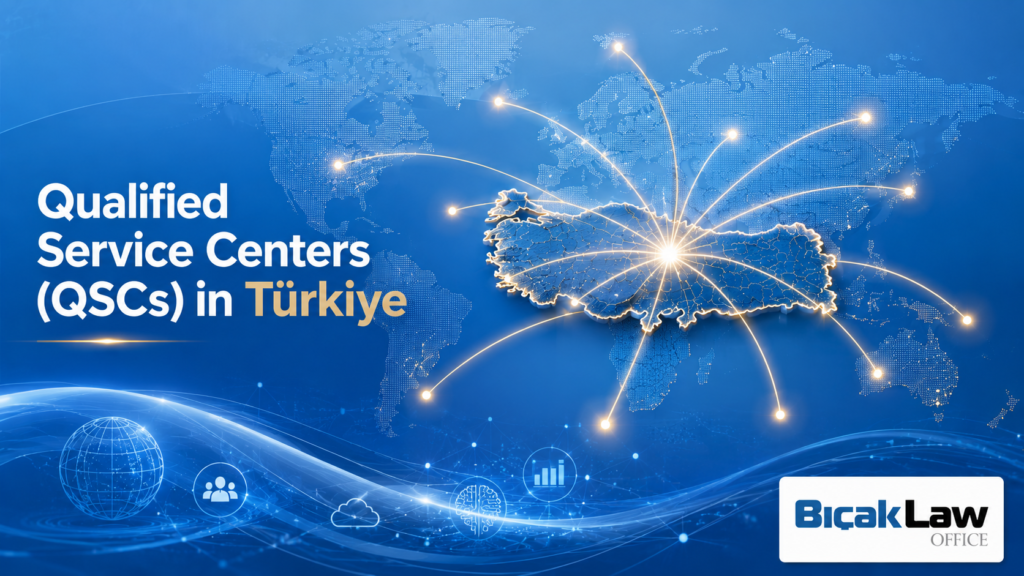
Qualified Service Centers (QSCs) in Türkiye
1. Introduction
Türkiye has introduced a new investment model designed to attract high-value service operations of multinational enterprises: the Qualified Service Center (QSC) regime. Established through amendments to the Foreign Direct Investment Law in 2026, this framework aims to position Türkiye as a regional hub for finance, technology, data analytics, legal operations, compliance, human resources, and other knowledge-intensive business services.
The new regime reflects a broader global trend. Multinational corporations are increasingly consolidating key business functions into centralized structures such as Global Capability Centers (GCCs), Shared Services Centers (SSCs), Global Business Services (GBS) organizations, and Regional Headquarters (RHQs). These centers enable companies to streamline operations, reduce costs, improve governance, and support international growth from strategically located jurisdictions. For many years, countries such as India, Poland, Hungary, the United Arab Emirates, Singapore, and Ireland have successfully attracted such investments through targeted incentives and business-friendly regulatory frameworks. With the introduction of the QSC regime, Türkiye has entered this competitive landscape with a model specifically designed to attract high-value service exports and regional management functions.
The new framework offers significant tax advantages for qualifying companies, including substantial corporate tax deductions and employment-related tax incentives. Additional benefits are available for Qualified Service Centers established within the Istanbul Financial Center (IFC), one of Türkiye’s flagship projects aimed at developing an internationally competitive financial and business ecosystem.
Beyond tax incentives, Türkiye offers several structural advantages for multinational investors. Its strategic location at the crossroads of Europe, the Middle East, North Africa, Central Asia, and the Turkic world enables companies to manage multiple markets from a single location. A large pool of skilled professionals, a growing technology sector, competitive operating costs, and an increasingly sophisticated business services ecosystem further enhance Türkiye’s attractiveness as a regional operations hub.
At the same time, establishing and operating a Qualified Service Center requires careful consideration of various legal and regulatory issues. Corporate structuring, transfer pricing, employment law, data protection, cybersecurity, compliance obligations, and cross-border service arrangements must all be properly addressed to ensure long-term success and regulatory compliance.
This guide provides an overview of Türkiye’s new Qualified Service Center regime from a legal, tax, and operational perspective. It examines the eligibility requirements, available incentives, relationship with the Istanbul Financial Center, comparison with leading international GCC destinations, and the practical steps involved in establishing and operating a QSC in Türkiye. For multinational corporations seeking a strategically located, cost-effective, and incentive-driven jurisdiction for regional service operations, Türkiye’s new Qualified Service Center regime represents a significant development worthy of close consideration.
2. What is a Qualified Service Center (QSC)?
Türkiye introduced the Qualified Service Center (QSC) regime in 2026 to attract multinational corporations seeking to establish Global Capability Centers (GCCs), Shared Services Centers (SSCs), Global Business Services (GBS) organizations, and Regional Headquarters (RHQs). The regime was incorporated into Türkiye’s foreign investment framework as part of a broader strategy to promote high-value service exports, attract foreign direct investment, create qualified employment, and position Türkiye as a regional business hub connecting Europe, the Middle East, North Africa, Central Asia, and the Turkic world.
In practical terms, a Qualified Service Center is a Turkish company established to provide qualifying services to affiliated entities within an international corporate group. The model resembles the GCC and Shared Services Center structures widely used by multinational corporations to centralize finance, technology, legal operations, compliance, human resources, and other business functions.
2.1. Eligibility Requirements
To qualify under the regime, the relevant corporate group must operate in at least three countries and the QSC must derive at least 80% of its annual gross revenue from affiliated entities located outside Türkiye. These requirements demonstrate that the regime is intended to support genuine international service operations rather than domestic service providers.
2.2. Eligible Activities
The scope of qualifying activities is intentionally broad and reflects modern GCC operating models. Examples include:
- Financial planning and treasury operations
- Budgeting and financial reporting
- Technology and digital transformation services
- Software development
- Data analytics and artificial intelligence
- Human resources and training services
- Legal operations and contract management
- Compliance and risk management
- Internal investigations and ethics programs
- Sanctions and export controls compliance
- Procurement and sourcing support
- Research and innovation coordination
- After-sales support services
This broad coverage enables multinational corporations to centralize multiple business functions within a single Turkish platform.
2.3. A Commercial Operating Structure
Unlike traditional liaison offices or regional management centers, a QSC may conduct revenue-generating activities, issue invoices, employ personnel, and provide services on a commercial basis. This distinction is significant because it allows multinational corporations to establish operational service centers while benefiting from dedicated tax incentives.
2.4. Türkiye’s Strategic Objective
The QSC framework reflects a shift in Türkiye’s investment policy toward attracting knowledge-intensive business functions rather than focusing exclusively on manufacturing investments. The regime is designed to support the establishment of finance hubs, technology centers, legal operations centers, compliance hubs, data analytics teams, and regional headquarters capable of serving multiple international markets from a single location.
3. Tax Incentives and the Istanbul Financial Center Advantage
One of the most attractive features of Türkiye’s Qualified Service Center (QSC) regime is the package of tax incentives available to qualifying investors. The framework has been specifically designed to encourage multinational corporations to establish regional service operations in Türkiye and to generate high-value service exports from within the country.
3.1. Corporate Tax Incentives
Under the QSC regime, 95% of the profits derived from qualifying services provided to affiliated entities located outside Türkiye may be deducted from the corporate tax base, subject to the applicable statutory conditions. The incentive is intended to promote the export of knowledge-intensive services and to strengthen Türkiye’s position as a destination for Global Capability Centers, Shared Services Centers, and Regional Headquarters. A notable feature of the regime is its long-term nature. The corporate tax incentive may remain available for up to twenty fiscal years, providing investors with a degree of predictability that is often critical when making long-term location decisions.
3.2. Employment Tax Incentives
The legislation also introduces significant benefits for Qualified Service Personnel. The salaries of employees directly engaged in qualifying QSC activities may benefit from income tax exemptions up to prescribed thresholds linked to the gross minimum wage. These incentives are intended to support the recruitment and retention of highly qualified professionals in areas such as technology, finance, compliance, legal operations, cybersecurity, and data analytics. By reducing employment-related tax costs, the regime improves Türkiye’s competitiveness in attracting talent-intensive service operations.
3.3. Enhanced Benefits within the Istanbul Financial Center
The most advantageous treatment is available to certain Qualified Service Centers established within the Istanbul Financial Center (IFC). For eligible IFC-based QSCs, the corporate tax deduction may reach 100%, creating one of the most attractive incentive structures currently available for multinational service operations in the region. In addition, the employment-related tax benefits available to qualified personnel are enhanced within the IFC framework, allowing a larger portion of compensation to benefit from preferential treatment.
3.4. Beyond a Financial Center
The interaction between the QSC regime and the Istanbul Financial Center is particularly significant because it demonstrates that the IFC is intended to become more than a traditional financial district. The legislative framework encourages the establishment of:
- Treasury Centers
- Finance and Accounting Hubs
- Technology Centers
- Data Analytics Teams
- Legal Operations Centers
- Compliance Hubs
- Regional Headquarters
This broader vision is consistent with international trends observed in business ecosystems such as the Dubai International Financial Centre (DIFC), Abu Dhabi Global Market (ADGM), and Singapore’s financial and professional services clusters.
3.5. Opportunities for Legal and Compliance Hubs
An especially noteworthy aspect of the QSC regime is the recognition of legal operations and compliance functions. Many multinational corporations are increasingly centralizing:
- Contract management
- Legal operations
- Regulatory compliance
- Internal investigations
- Ethics and integrity programs
- Sanctions compliance
- Export controls compliance
within regional service centers. Türkiye’s strategic location, combined with the new QSC incentives, may create opportunities for multinational corporations to establish Legal Hubs and Compliance Hubs serving Europe, the Middle East, North Africa, Central Asia, and the Turkic world.
3..6. A Competitive Incentive Package
The combination of substantial corporate tax benefits, employment incentives, access to a large and skilled workforce, and enhanced opportunities within the Istanbul Financial Center creates a compelling proposition for international investors. Although tax incentives alone rarely determine investment decisions, the QSC framework provides a strong foundation upon which multinational corporations can build regional service operations in Türkiye.
4. Türkiye as a Global Capability Center (GCC) Destination
The introduction of the Qualified Service Center (QSC) regime reflects Türkiye’s ambition to become a competitive destination for Global Capability Centers (GCCs), Shared Services Centers (SSCs), Global Business Services (GBS) organizations, and Regional Headquarters (RHQs). As multinational corporations increasingly centralize finance, technology, legal operations, compliance, data analytics, and management functions, location strategy has become a critical business decision. In this environment, Türkiye offers a combination of advantages that may make it an attractive alternative to traditional GCC destinations.
4.1. Strategic Geographic Position
Türkiye occupies a unique location at the intersection of Europe, the Middle East, North Africa, Central Asia, and the Turkic world. Few jurisdictions offer comparable access to such a broad range of markets from a single location. For multinational corporations, this geographic position enables regional teams to support multiple jurisdictions while maintaining close proximity to customers, regulators, suppliers, and business partners across several continents. In addition, Türkiye’s time zone allows effective coordination with both European and Middle Eastern operations, reducing operational friction and facilitating real-time collaboration.
4.2. Skilled and Diverse Talent Pool
Human capital remains one of the most important factors in the success of any GCC investment. Türkiye has a large and relatively young workforce, supported by universities that produce graduates in:
- Engineering
- Computer science
- Information technology
- Business administration
- Finance
- Economics
- Law
- Data analytics
This talent base provides multinational corporations with access to professionals capable of supporting sophisticated business functions ranging from software development and cybersecurity to financial reporting and compliance management.
4.3 Competitive Operating Costs
Compared with many established service center locations in Western Europe, Türkiye offers competitive operating costs while maintaining access to qualified talent. Areas where investors may benefit include:
- Personnel expenses
- Office space
- Administrative services
- Professional services
- General operational costs
These cost advantages may allow corporations to scale operations efficiently without compromising service quality.
4.4. Growing Technology Ecosystem
Türkiye’s technology sector has expanded significantly over the past decade. The country has witnessed substantial growth in:
- Software development
- Artificial intelligence
- Financial technology (FinTech)
- Cybersecurity
- Data analytics
- Digital transformation services
As modern GCCs increasingly focus on technology-driven functions, Türkiye’s evolving innovation ecosystem may become an important factor in future investment decisions.
4.5. Comparison with Other GCC Destinations
When evaluating locations for regional service operations, multinational corporations often compare several jurisdictions. India remains the global leader in large-scale GCC operations, benefiting from a vast talent pool and a mature outsourcing ecosystem. However, rising labor costs, talent competition, and employee turnover have encouraged some organizations to diversify their delivery models. Poland and Hungary have become important European shared services destinations, offering EU market access and multilingual talent. Nevertheless, labor shortages and increasing costs have reduced some of their historical advantages. The United Arab Emirates has established itself as a leading regional headquarters location through business-friendly regulations and world-class infrastructure, although operating costs are often considerably higher than in competing jurisdictions. Türkiye occupies a distinct position within this competitive landscape. It combines geographic reach, workforce availability, cost competitiveness, and dedicated QSC incentives in a way that differs from each of these established destinations.
4.6. Opportunities for Specialized Service Centers
The QSC framework may be particularly attractive for multinational corporations seeking to establish:
- Finance and Treasury Centers
- Technology and Software Development Centers
- Data Analytics and Artificial Intelligence Hubs
- Legal Operations Centers
- Compliance Hubs
- Data Protection and Privacy Centers
- Sanctions and Export Controls Teams
- Regional Management Functions
The explicit recognition of legal operations, compliance, and risk management activities within the QSC regime is especially noteworthy, as these functions are increasingly being centralized within modern Global Business Services organizations.
4.7. A Platform for Regional Growth
The combination of tax incentives, strategic location, skilled talent, and an expanding business services ecosystem positions Türkiye as a potentially attractive platform for regional growth. While the QSC regime is still relatively new, it signals a clear policy intention to attract knowledge-intensive investment and to compete for the next generation of international service operations. For multinational corporations seeking a location capable of supporting diverse regional functions across Europe, the Middle East, North Africa, Central Asia, and the Turkic world, Türkiye’s QSC framework deserves serious consideration.
5. Transfer Pricing, Data Protection and Compliance
While the Qualified Service Center (QSC) regime offers significant opportunities for multinational corporations, successful implementation requires careful attention to legal, tax, and regulatory compliance obligations. Because QSCs primarily provide services to affiliated companies located in multiple jurisdictions, transfer pricing, data governance, cybersecurity, and compliance management become central components of the operating model.
5.1. Transfer Pricing Considerations
Transfer pricing is likely to be one of the most important tax issues affecting QSCs. Since QSCs are designed to provide services to related entities within a multinational corporate group, virtually all core business activities involve intercompany transactions. Consequently, companies must ensure that service fees and other related-party transactions comply with the arm’s length principle and are supported by appropriate documentation. Investors should carefully consider:
- Intercompany service agreements
- Pricing methodologies
- Cost allocation mechanisms
- Functional analyses
- Economic substance requirements
- Transfer pricing documentation
The availability of substantial tax incentives under the QSC regime does not eliminate transfer pricing obligations. On the contrary, tax authorities may pay particular attention to incentivized structures, making robust transfer pricing governance essential.
5.2. Data Protection and Cross-Border Data Transfers
Many QSCs will process significant volumes of personal and commercial data as part of their daily operations. Examples include:
- Employee information
- Financial records
- Customer data
- Contract management systems
- Compliance databases
- Business intelligence platforms
Organizations operating in Türkiye must consider compliance with the Turkish Personal Data Protection Law (KVKK), which regulates the collection, processing, storage, and transfer of personal data. For multinational corporations serving European operations, compliance with the General Data Protection Regulation (GDPR) may also be relevant. As a result, many QSCs will operate within a dual-compliance environment requiring careful management of international data transfers and privacy obligations. Early assessment of data flows and implementation of appropriate governance mechanisms can significantly reduce regulatory risk.
5.3. Cybersecurity and Information Security
As service operations become increasingly centralized, cybersecurity becomes a strategic business issue rather than merely a technical concern. A cybersecurity incident affecting a QSC may disrupt operations across multiple jurisdictions simultaneously. Organizations should therefore implement appropriate security measures addressing:
- Information security governance
- Access controls
- Incident response planning
- Vendor security management
- Business continuity arrangements
- Employee awareness programs
Many multinational corporations rely on internationally recognized frameworks such as ISO 27001 or the NIST Cybersecurity Framework to support cybersecurity governance.
5.4. Compliance and Risk Management
The QSC framework expressly accommodates compliance-related functions, reflecting the growing importance of regulatory governance within multinational enterprises. Modern compliance programs commonly address:
- Anti-corruption compliance
- Anti-money laundering controls
- Competition law compliance
- Data protection compliance
- Internal investigations
- Third-party due diligence
- Corporate ethics programs
Many organizations increasingly centralize these activities within regional Compliance Hubs serving multiple jurisdictions.
5.5. Sanctions and Export Controls
An area of particular relevance for multinational corporations involves international sanctions and export controls compliance. Businesses operating across borders frequently require centralized teams responsible for:
- Restricted party screening
- Sanctions monitoring
- Trade compliance reviews
- Supply chain due diligence
- Export controls assessments
Given Türkiye’s strategic position between Europe, the Middle East, Central Asia, and North Africa, the QSC framework may create opportunities for the establishment of regional sanctions and export controls compliance centers.
5.6. Building a Sustainable Operating Model
The most successful QSC structures are those that integrate legal, tax, compliance, cybersecurity, and operational considerations from the outset. Rather than treating these issues as separate compliance obligations, multinational corporations should view them as components of a unified governance framework supporting long-term business growth. By implementing robust transfer pricing policies, data governance controls, cybersecurity measures, and compliance programs, investors can maximize the benefits of the QSC regime while minimizing regulatory and operational risks.
6. How to Establish a Qualified Service Center in Türkiye
Establishing a Qualified Service Center (QSC) in Türkiye requires a combination of corporate planning, tax structuring, operational design, and regulatory compliance. While the QSC regime offers attractive incentives for multinational corporations, investors should approach implementation strategically to ensure that the structure satisfies both the legal requirements of the regime and the commercial objectives of the corporate group. The following roadmap outlines the principal stages involved in establishing and operating a QSC in Türkiye.
Step 1: Assess Eligibility
The first stage is determining whether the proposed operation qualifies for the QSC regime. Investors should evaluate:
- Whether the corporate group operates in at least three countries;
- Whether at least 80% of the anticipated revenue will be derived from affiliated entities located outside Türkiye;
- Whether the proposed activities fall within the categories recognized under the legislation;
- Whether sufficient personnel and operational substance can be established in Türkiye.
This preliminary assessment is essential before committing resources to implementation.
Step 2: Define the Business Model
The next step is identifying which functions will be centralized within the QSC. Depending on the group’s objectives, the center may be designed as:
- A Finance and Treasury Center;
- A Technology and Software Development Hub;
- A Data Analytics and Artificial Intelligence Center;
- A Legal Operations Center;
- A Compliance Hub;
- A Human Resources Shared Services Center;
- An integrated Global Business Services (GBS) platform.
The chosen model will influence staffing requirements, transfer pricing arrangements, technology infrastructure, and compliance obligations.
Step 3: Establish the Legal Entity
A QSC generally operates through a Turkish capital company. The most common structures are:
- Joint Stock Company (A.Ş.): Often preferred by multinational corporations due to:
- Strong governance framework;
- Flexibility for future investment transactions;
- Familiarity to international investors.
- Limited Liability Company (Ltd. Şti.): Frequently used for smaller or medium-sized operations due to:
- Simpler administration;
- Lower compliance burden;
- Faster establishment process.
The optimal structure depends on the size, complexity, and long-term objectives of the project.
Step 4: Select the Appropriate Location
Although QSCs may be established anywhere in Türkiye, location selection remains an important strategic decision. Key options include:
Istanbul
Türkiye’s primary commercial and financial center, offering access to international business networks, skilled talent, and professional services.
- Istanbul Financial Center (IFC): Eligible QSCs operating within the IFC may also benefit from enhanced tax incentives. Particularly attractive for:
- Treasury operations;
- Financial management centers;
- Compliance hubs;
- Legal operations centers;
- Regional headquarters.
- Ankara: An important location for regulatory, governmental, technology, and professional services activities.
- Other Major Cities: Cities such as İzmir, Bursa, Antalya, and technology-focused regions may offer cost advantages and access to qualified personnel.
Step 5: Implement Transfer Pricing Structures
Because QSCs primarily provide services to affiliated companies, transfer pricing planning should be integrated into the project from the outset. Investors should establish:
- Intercompany service agreements;
- Cost allocation methodologies;
- Pricing policies;
- Documentation procedures.
Transfer pricing arrangements should be consistent with Turkish legislation and OECD principles. A well-structured transfer pricing framework is often critical to preserving the benefits of the QSC regime.
Step 6: Recruit Qualified Service Personnel
The success of a QSC depends largely on its workforce. Companies should develop recruitment strategies for professionals engaged in:
- Technology;
- Finance;
- Compliance;
- Legal operations;
- Data analytics;
- Cybersecurity;
- Human resources.
Investors should also evaluate whether foreign employees or regional leadership personnel will require Turkish work permits and immigration support.
Step 7: Implement Data Protection and Cybersecurity Controls
Most QSCs process significant volumes of personal and commercial information. Before operations commence, organizations should implement:
- Data protection policies;
- Cross-border data transfer mechanisms;
- Information security controls;
- Incident response procedures;
- Vendor risk management programs.
Compliance with the Turkish Personal Data Protection Law (KVKK) and, where applicable, the GDPR should be addressed at an early stage.
Step 8: Establish Compliance and Governance Frameworks
A robust governance framework helps ensure operational sustainability and regulatory compliance. Typical areas include:
- Corporate governance;
- Anti-corruption controls;
- Sanctions compliance;
- Export controls compliance;
- Internal investigations procedures;
- Ethics and whistleblowing mechanisms.
Many multinational corporations use the establishment phase to build regional Compliance Hubs that support multiple jurisdictions from a single location.
Step 9: Operational Launch
Once legal, tax, staffing, and compliance requirements have been addressed, the QSC may begin operations. During the initial phase, organizations should focus on:
- Service delivery implementation;
- Revenue monitoring;
- Compliance reporting;
- Internal control testing;
- Performance measurement.
The first year of operations is often particularly important in demonstrating that the center satisfies the requirements of the QSC regime.
Step 10: Ongoing Monitoring and Compliance
The establishment of a QSC is not a one-time exercise. Investors should continuously monitor:
- Eligibility requirements;
- Revenue thresholds;
- Transfer pricing compliance;
- Employment incentives;
- Data protection obligations;
- Regulatory developments.
Periodic legal and tax reviews can help ensure that the center continues to benefit from available incentives while maintaining compliance with evolving regulatory requirements.
A Strategic Investment Opportunity
For multinational corporations seeking a location that combines tax incentives, a skilled workforce, strategic geography, and access to multiple regional markets, Türkiye’s QSC regime offers a compelling opportunity. However, maximizing the benefits of the regime requires careful planning, proper structuring, and ongoing compliance management. Organizations that adopt a strategic and multidisciplinary approach will be best positioned to leverage Türkiye’s emerging role as a regional hub for Global Capability Centers, Shared Services Centers, and international business operations.
7. Frequently Asked Questions (FAQ)
What is a Qualified Service Center (QSC)?
A Qualified Service Center (QSC) is a Turkish company established to provide qualifying services to affiliated entities within a multinational corporate group. The regime was introduced to attract Global Capability Centers (GCCs), Shared Services Centers (SSCs), Global Business Services (GBS) organizations, and Regional Headquarters (RHQs) to Türkiye.
What are the main eligibility requirements?
To qualify under the regime, the corporate group must generally operate in at least three countries, and the QSC must derive at least 80% of its annual gross revenue from affiliated entities located outside Türkiye.
Which activities can be performed through a QSC?
Qualifying activities include finance and treasury operations, technology services, software development, artificial intelligence, data analytics, human resources, legal operations, compliance management, risk management, research coordination, and other knowledge-intensive business services.
Can a QSC provide services to third parties?
The regime is primarily designed for services provided to affiliated entities within a multinational corporate group. Investors should carefully assess the impact of third-party revenues on eligibility requirements.
Does a QSC need to be established in Istanbul?
No. Qualified Service Centers may be established throughout Türkiye. However, certain enhanced incentives may be available for QSCs operating within the Istanbul Financial Center.
What tax incentives are available?
The regime provides significant corporate tax incentives for qualifying service revenues as well as employment-related tax benefits for qualified service personnel. Enhanced benefits may be available within the Istanbul Financial Center framework.
Who qualifies as Qualified Service Personnel?
Qualified Service Personnel generally includes employees directly engaged in the delivery of qualifying services, such as software developers, financial analysts, compliance professionals, legal operations specialists, data scientists, cybersecurity experts, and similar professionals.
Can foreign nationals work in a QSC?
Yes. Subject to applicable immigration and work permit requirements, foreign professionals may be employed by a QSC in Türkiye.
Are transfer pricing rules applicable?
Yes. Because QSCs primarily provide services to affiliated companies, transfer pricing compliance is one of the most important legal and tax considerations under the regime.
What data protection obligations apply?
QSCs may be subject to the Turkish Personal Data Protection Law (KVKK) and, depending on their operations, the EU General Data Protection Regulation (GDPR) and other foreign data protection frameworks.
Can legal operations and compliance functions be centralized in Türkiye?
Yes. The legislation expressly accommodates legal operations, compliance, risk management, internal investigations, sanctions compliance, and export controls-related functions, creating opportunities for Legal Hubs and Compliance Hubs.
Why should multinational corporations consider Türkiye?
Türkiye offers a strategic geographic location, a large and skilled workforce, competitive operating costs, growing technology capabilities, attractive tax incentives, and access to multiple regional markets from a single jurisdiction.
8. How Bıçak Assists International Investors
Bıçak Law Firm advises multinational corporations, financial institutions, technology companies, investment funds, and professional services organizations on establishing and operating Qualified Service Centers, Global Capability Centers, Shared Services Centers, and Regional Headquarters in Türkiye. Our services include:
- Foreign direct investment advisory
- Corporate structuring and company formation
- Qualified Service Center eligibility assessments
- Istanbul Financial Center advisory
- Transfer pricing coordination
- Employment and immigration matters
- Data protection and cybersecurity compliance
- Compliance program design
- Legal operations and governance frameworks
- Sanctions and export controls compliance
- Ongoing regulatory and corporate advisory services
With offices in Ankara and Istanbul and extensive experience advising international clients, Bıçak Law Firm provides practical, business-oriented support throughout the entire lifecycle of a QSC project.
9. Conclusion
Türkiye’s Qualified Service Center (QSC) regime represents one of the most significant developments in the country’s investment framework in recent years. The new model is designed to attract high-value service exports, Global Capability Centers, Shared Services Centers, Global Business Services organizations, and Regional Headquarters by providing a dedicated legal and tax framework tailored to the needs of multinational enterprises.
The regime combines several attractive features, including substantial corporate tax incentives, employment-related tax benefits, access to a large and skilled workforce, strategic geographic positioning, and integration with the Istanbul Financial Center ecosystem. Together, these elements create a compelling proposition for companies seeking a regional platform from which to serve Europe, the Middle East, North Africa, Central Asia, and the Turkic world.
Importantly, the QSC framework extends beyond traditional finance and accounting functions. The legislation accommodates technology services, artificial intelligence, data analytics, human resources, legal operations, compliance management, cybersecurity, risk management, and other knowledge-intensive activities that increasingly define modern Global Capability Centers.
At the same time, successful implementation requires careful planning. Transfer pricing, corporate structuring, employment arrangements, data protection obligations, cybersecurity requirements, and regulatory compliance considerations must all be addressed from the outset. Multinational corporations that approach the regime strategically and establish robust governance frameworks will be better positioned to benefit from the available incentives and minimize operational risks.
The introduction of the QSC regime signals Türkiye’s intention to compete for the next generation of international business services investments. While established GCC destinations such as India, Poland, Hungary, and the United Arab Emirates will remain strong competitors, Türkiye now offers a unique combination of geographic reach, talent availability, cost competitiveness, regulatory incentives, and business infrastructure.
As multinational corporations continue to redesign global operating models and diversify their regional footprints, Qualified Service Centers may become an increasingly important component of Türkiye’s international investment strategy. For investors seeking a location capable of supporting finance, technology, compliance, legal operations, data analytics, and regional management functions, Türkiye’s new QSC framework deserves serious consideration.





Comments
No comments yet.