 English
 Türkçe
 Français
 Deutsch

Europe’s defence sector is undergoing a profound transformation driven by geopolitical developments, increased defence spending, technological innovation and a renewed emphasis on industrial cooperation across NATO and the European Union. Türkiye has emerged as an increasingly important defence industrial partner, offering advanced manufacturing capabilities, growing technological expertise and significant opportunities for international collaboration. Companies seeking to enter the Turkish defence market should carefully evaluate the legal framework governing market entry, defence procurement, export controls, international sanctions, technology transfer, cybersecurity and corporate compliance. Effective legal planning from the earliest stages of a project can significantly reduce regulatory risks while facilitating sustainable and commercially successful cross-border partnerships. As defence innovation increasingly depends on artificial intelligence, digital technologies and multinational research initiatives, intellectual property protection, cybersecurity governance and robust compliance programmes have become essential components of international defence cooperation. The article further explains that legal advisers now play a strategic role in enabling innovation, managing regulatory complexity and supporting defence companies throughout the lifecycle of international projects. Against the backdrop of initiatives such as the NATO Defence Industry Forum, EUDEX 2026, the European Defence Fund and NATO DIANA, legally secure and well-structured international partnerships will become increasingly important for companies operating within the European defence ecosystem. Drawing on its extensive experience in defence, security, export controls, sanctions, cybersecurity and international commercial law, Bıçak Law Firm is well positioned to assist domestic and international clients in establishing legally compliant and strategically successful defence partnerships in Türkiye.
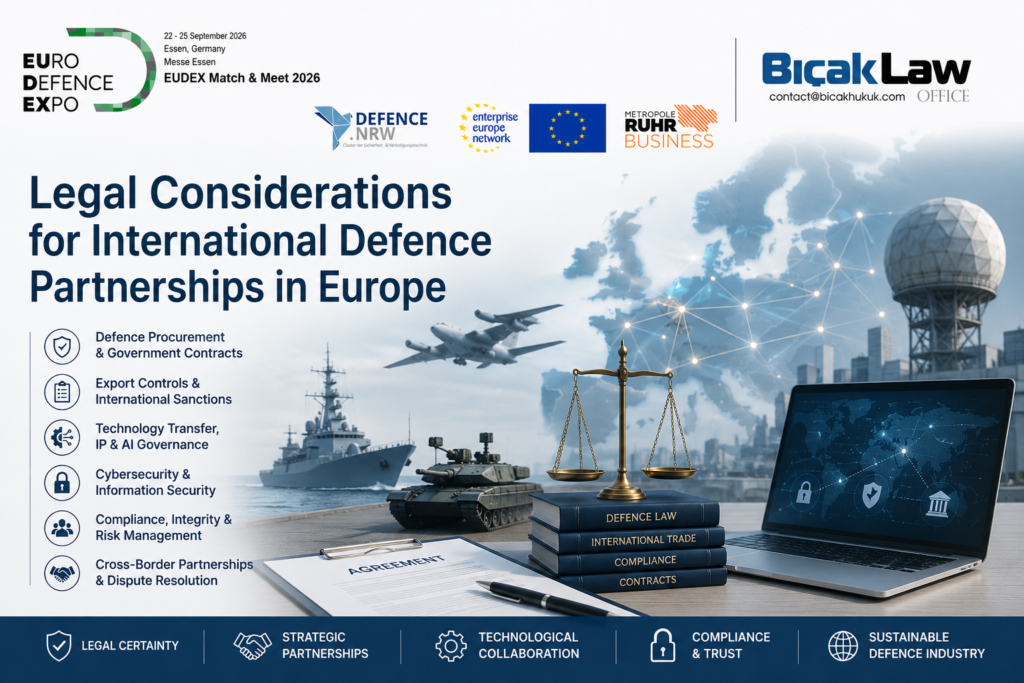
Legal Considerations for Defence Partnerships in Türkiye
1. Introduction: A New Era of Defence Cooperation in Europe
The European defence and security landscape is undergoing one of the most profound transformations since the end of the Cold War. Russia’s invasion of Ukraine, heightened geopolitical competition, growing concerns regarding the resilience of defence supply chains, rapid technological developments, and renewed emphasis on collective deterrence have fundamentally altered the strategic priorities of NATO member states and their partners. Across Europe, governments are increasing defence spending, modernising military capabilities, strengthening industrial resilience and accelerating cooperation with trusted international partners.
Within this rapidly evolving environment, defence industrial cooperation has become a strategic priority rather than merely a commercial opportunity. Governments increasingly recognise that military capability depends not only upon armed forces and operational readiness, but also upon resilient defence industries capable of designing, manufacturing and sustaining advanced military technologies. Consequently, industrial capacity, innovation, secure supply chains and trusted international partnerships have become essential components of collective security.
This transformation is reflected in several important international initiatives. NATO has significantly increased its focus on defence production, industrial preparedness and innovation. The NATO Defence Industry Forum, to be held alongside the 2026 NATO Summit in Ankara, illustrates this new approach by bringing together governments, armed forces, defence manufacturers, technology companies and investors to strengthen industrial cooperation across the Alliance.
At the European level, the European Defence Fund (EDF), the EU Defence Innovation Scheme (EUDIS), the Enterprise Europe Network (EEN) and numerous cross-border research initiatives are creating unprecedented opportunities for collaborative research, joint development and industrial partnerships. At the same time, NATO’s Defence Innovation Accelerator for the North Atlantic (DIANA) has established an entirely new ecosystem connecting governments, investors, research institutions, start-ups and legal advisers in support of dual-use innovation and emerging technologies.
These developments are also reflected in the establishment of EUDEX 2026, Europe’s new international platform dedicated to defence and security technologies. Unlike traditional trade exhibitions, EUDEX combines an international exhibition, high-level policy discussions, business-to-business matchmaking, research cooperation and government engagement under a single framework. The event brings together defence manufacturers, aerospace companies, cybersecurity providers, artificial intelligence developers, procurement organisations, armed forces, research institutions and public authorities, all seeking opportunities for international cooperation within an increasingly integrated European defence ecosystem.
Against this strategic background, Türkiye has assumed a particularly important position. Over the past two decades, the country has transformed itself from a largely import-dependent defence market into one of the world’s fastest-growing defence manufacturing and export centres. Turkish companies have become internationally recognised in areas such as unmanned aerial systems, armoured vehicles, naval platforms, electronic warfare, aerospace manufacturing and defence software. Increasing industrial capability, competitive production capacity and strong engineering expertise have positioned Türkiye as an increasingly attractive partner for governments, defence manufacturers and technology companies seeking reliable industrial cooperation within the Euro-Atlantic security architecture.
As international defence cooperation expands, however, commercial opportunities are inevitably accompanied by increasingly sophisticated legal and regulatory challenges. Cross-border defence projects require careful consideration of export control regimes, international sanctions, procurement regulations, technology transfer, intellectual property protection, cybersecurity obligations, compliance programmes, government contracting requirements and investment structures. The legal framework governing defence cooperation has become substantially more complex, reflecting both the strategic sensitivity of defence technologies and the growing interconnectedness of international supply chains. Accordingly, legal advisers today perform a role that extends well beyond the traditional drafting of commercial agreements. They increasingly contribute to the design of compliant partnership structures, assist clients in navigating multiple regulatory regimes, facilitate international technology collaboration, manage legal risks associated with defence innovation, and support companies throughout the lifecycle of complex international defence projects.
Against this evolving strategic and industrial landscape, international defence companies are increasingly seeking to establish commercial partnerships, participate in joint development projects, transfer technology, invest in manufacturing capacity, or expand their presence in the Turkish market. While these opportunities are considerable, they also involve a complex legal and regulatory framework that extends far beyond traditional commercial law. The purpose of this article is to provide international companies participating in EUDEX 2026, the NATO Defence Industry Forum, and other European defence and security initiatives with a practical overview of the principal legal and regulatory considerations involved in establishing successful defence partnerships or entering the Turkish defence market. By identifying the key legal issues that arise throughout the lifecycle of international defence cooperation – from market entry and procurement to export controls, technology transfer and regulatory compliance – this article aims to assist businesses in managing legal risk while building sustainable, legally compliant and commercially successful partnerships in Türkiye.
2. Türkiye’s Growing Role in the European Defence Ecosystem
Türkiye occupies a unique position within the contemporary European and transatlantic defence architecture. Geographically situated at the intersection of Europe, the Middle East, the Black Sea and the Eastern Mediterranean, and possessing NATO’s second-largest standing military, Türkiye has long been recognised as an indispensable contributor to Allied security. In recent years, however, the country’s importance has increasingly extended beyond its military capabilities. Türkiye has emerged as one of Europe’s most dynamic defence industrial partners, combining advanced manufacturing capacity, technological innovation, competitive production costs and expanding export capabilities.
This transformation has not occurred by coincidence. Rather, it is the result of sustained public investment, long-term industrial planning and a strategic objective of reducing dependence on foreign defence suppliers while simultaneously expanding indigenous production capabilities. During the past two decades, Türkiye has invested heavily in research and development, defence manufacturing infrastructure, systems integration and engineering capabilities. Today, Turkish defence companies manufacture an increasingly sophisticated range of products including unmanned aerial systems, armoured vehicles, naval platforms, electronic warfare systems, missile technologies, command and control systems, aerospace components, military software and advanced communication technologies.
The remarkable growth of the Turkish defence industry has attracted increasing international attention. According to publicly available industry data and recent international reporting, Turkish defence exports have expanded significantly during the last several years, with exports reaching record levels and extending to dozens of countries across Europe, the Middle East, Africa and Asia. European markets, in particular, have become increasingly important destinations for Turkish defence products as governments seek reliable industrial partners capable of delivering modern defence capabilities within shorter procurement cycles. Several factors explain this growing interest in cooperation with Turkish industry.
First, Turkish defence manufacturers have demonstrated considerable flexibility in responding to customer requirements. Unlike many traditional defence suppliers operating within lengthy procurement frameworks, Turkish companies have developed a reputation for adapting products to specific operational requirements and delivering solutions within comparatively shorter timeframes.
Secondly, Türkiye possesses an increasingly integrated defence industrial base. Rather than focusing solely on final assembly, many Turkish companies now participate throughout the defence value chain, including research and development, systems engineering, software development, advanced manufacturing, testing, certification and lifecycle support. This integrated approach enhances both technological independence and opportunities for international industrial cooperation.
Thirdly, the Turkish defence sector has become increasingly innovation-oriented. Investments in artificial intelligence, autonomous systems, robotics, advanced materials, cybersecurity, electronic warfare and aerospace technologies closely mirror many of the priority capability areas identified by NATO, the European Defence Fund and NATO DIANA. Consequently, international companies increasingly view Turkish organisations not merely as manufacturing partners but also as valuable contributors to collaborative innovation projects.
This evolution has coincided with broader changes within the European defence environment. The war in Ukraine has fundamentally altered defence planning across Europe. Governments are expanding procurement budgets, increasing ammunition production, strengthening industrial resilience and seeking to diversify defence supply chains. Simultaneously, NATO has placed renewed emphasis on industrial preparedness, resilience and production capacity as essential components of collective deterrence.
These developments have created significant opportunities for Türkiye. As European governments accelerate capability development, Turkish manufacturers increasingly participate in cross-border industrial partnerships, technology cooperation projects, joint production initiatives and international supply chains. Bilateral defence agreements with several European countries, strategic investments by Turkish companies abroad, and collaborative manufacturing arrangements illustrate a broader trend towards deeper industrial integration.
Equally significant is the changing political narrative surrounding Türkiye’s role within NATO. While political disagreements between Türkiye and certain European partners have occasionally influenced defence cooperation in previous years, recent developments suggest a growing recognition that Europe’s security architecture cannot be effectively strengthened without meaningful cooperation with non-EU NATO members possessing substantial industrial capabilities. The increasing emphasis on capability development, production capacity and industrial resilience has encouraged a more pragmatic approach to defence cooperation, focusing on operational effectiveness rather than institutional boundaries.
For international companies, these developments create a fundamentally different commercial environment from that which existed only a decade ago. Cooperation with Turkish partners is no longer limited to traditional procurement arrangements or subcontracting relationships. Instead, companies increasingly explore joint research projects, collaborative product development, technology transfer arrangements, industrial partnerships, cross-border manufacturing, investment opportunities and participation in multinational capability programmes. Such cooperation frequently involves not only commercial considerations but also compliance with complex regulatory frameworks governing defence technologies, export controls, intellectual property, cybersecurity and government procurement.
It is precisely because these opportunities have become broader and more sophisticated that legal planning assumes increasing importance. The legal structure chosen at the outset of an international defence partnership may significantly influence regulatory compliance, intellectual property ownership, export licensing obligations, dispute resolution mechanisms and long-term commercial success. Accordingly, before entering the Turkish market or establishing defence-related cooperation with Turkish companies, international businesses should carefully consider the legal and regulatory framework within which such partnerships will operate.
3. Choosing the Right Market Entry and Cooperation Model
The success of an international defence partnership depends not only upon technological capability or commercial compatibility, but also upon selecting an appropriate legal structure at the outset of the relationship. Unlike many ordinary commercial sectors, defence cooperation typically involves long-term commitments, sensitive technologies, government oversight, export licensing, intellectual property considerations and extensive regulatory compliance obligations. Consequently, the legal framework governing cooperation should be viewed as a strategic business decision rather than merely a contractual formality.
There is no universally appropriate model for entering the Turkish defence market. The most suitable structure depends upon several factors, including the nature of the products or technologies involved, the anticipated duration of cooperation, the level of investment, applicable export control restrictions, security requirements, intellectual property considerations and the commercial objectives of the parties. For many foreign companies, cooperation initially begins with relatively straightforward commercial arrangements before gradually evolving into more integrated industrial partnerships. Legal advisers therefore frequently assist clients not only in selecting the most appropriate entry model but also in designing contractual frameworks capable of accommodating future expansion.
3.1. Distribution Agreements
For manufacturers seeking immediate market access without establishing a local corporate presence, appointing a Turkish distributor often represents the most practical initial solution. Under a distribution model, the foreign manufacturer supplies products to an independent Turkish distributor, who subsequently markets and sells those products within Türkiye. Depending upon the commercial strategy, the distributor may also provide technical support, after-sales services, maintenance, training and customer liaison. Distribution arrangements offer several advantages:
- relatively low initial investment;
- rapid market access;
- utilisation of established local commercial networks;
- reduced administrative burden;
- local knowledge of procurement practices.
However, defence-sector distribution agreements require significantly greater attention than ordinary commercial distribution contracts. Among other matters, parties should carefully regulate:
- compliance with export control legislation;
- sanctions screening obligations;
- end-user restrictions;
- confidentiality;
- handling of controlled technical data;
- anti-corruption compliance;
- protection of trade secrets;
- warranty responsibilities;
- cybersecurity obligations;
- termination rights.
In practice, poorly drafted distribution agreements frequently create difficulties regarding customer ownership, intellectual property, post-termination competition and access to government procurement opportunities. These issues become particularly significant where defence technologies or sensitive software are involved.
3.2. Commercial Agency Arrangements
In certain circumstances, particularly where government procurement procedures require direct contractual relationships between the foreign supplier and the purchasing authority, appointing a commercial agent may be preferable to establishing a distributorship. Unlike distributors, commercial agents generally act on behalf of the principal rather than purchasing products for resale. Their principal function consists of introducing business opportunities, facilitating negotiations and representing the foreign company within agreed contractual limits. Agency structures may be advantageous where:
- products involve complex technical specifications;
- negotiations require continuous manufacturer involvement;
- contracts are individually negotiated;
- long-term governmental relationships are important.
Nevertheless, companies should appreciate that commercial agency relationships frequently raise questions concerning exclusivity, termination compensation, post-contract obligations and regulatory compliance. These matters should therefore be addressed carefully during contract negotiations.
3.3. Establishing a Turkish Subsidiary
As commercial activity expands, many international defence companies eventually establish a wholly-owned Turkish subsidiary. A local subsidiary offers several strategic advantages. First, it demonstrates long-term commitment to the Turkish market, which may strengthen commercial credibility with both public authorities and industrial partners. Secondly, it facilitates local recruitment, technical support, contract management and customer relations. Thirdly, a subsidiary may simplify participation in industrial cooperation projects, research initiatives and certain procurement opportunities requiring local operational capacity. However, establishing a local company also creates additional legal responsibilities. These typically include:
- corporate governance obligations;
- accounting and auditing requirements;
- employment law compliance;
- tax planning;
- competition law considerations;
- personal data protection;
- cybersecurity obligations;
- internal compliance programmes.
Accordingly, corporate establishment should not be viewed merely as an administrative exercise but rather as the creation of a long-term legal and operational platform.
3.4. Representative Offices
Some companies initially prefer to establish representative offices rather than commercial subsidiaries. Representative offices generally perform non-commercial functions such as:
- market research;
- liaison activities;
- coordination;
- communication;
- relationship management.
They may provide an effective mechanism for understanding the Turkish defence ecosystem before undertaking commercial activities. Nevertheless, representative offices are subject to important legal limitations and generally cannot conduct revenue-generating commercial operations. Companies should therefore carefully evaluate whether a representative office adequately supports their long-term objectives.
3.5. Joint Ventures and Strategic Alliances
Perhaps the most significant trend within the European defence industry today is the increasing use of collaborative industrial partnerships. Rather than relying solely upon traditional buyer-seller relationships, companies increasingly establish:
- joint ventures;
- strategic alliances;
- co-production arrangements;
- collaborative manufacturing projects;
- integrated research programmes.
These structures enable parties to combine complementary capabilities while sharing technological expertise, manufacturing capacity and commercial opportunities. Such cooperation has become particularly attractive within the defence sector because governments increasingly encourage domestic industrial participation, local manufacturing and technology cooperation. However, collaborative arrangements also introduce considerably greater legal complexity. Among the principal issues requiring careful consideration are:
- governance structures;
- decision-making mechanisms;
- ownership of jointly developed technology;
- allocation of intellectual property rights;
- confidentiality;
- licensing arrangements;
- export licensing responsibilities;
- investment obligations;
- liability allocation;
- dispute resolution.
Failure to address these issues comprehensively at the outset frequently results in disputes many years after cooperation has commenced. Accordingly, parties should resist the temptation to rely upon simplified memoranda of understanding where long-term strategic cooperation is anticipated. Instead, comprehensive contractual documentation should clearly regulate both the commercial relationship and future contingencies.
3.6. Technology Transfer and Licensing
Technology transfer has become one of the defining characteristics of contemporary international defence cooperation. Increasingly, foreign companies entering the Turkish market do not merely supply finished products. Instead, they collaborate with Turkish partners in areas such as:
- software development;
- component manufacturing;
- systems integration;
- advanced materials;
- autonomous technologies;
- artificial intelligence;
- aerospace engineering;
- electronics.
These arrangements frequently involve licensing of intellectual property, transfer of know-how, access to technical documentation and collaborative research activities. Technology transfer agreements should therefore address, among other matters:
- ownership of pre-existing intellectual property;
- ownership of jointly developed technology;
- permitted use restrictions;
- sublicensing rights;
- confidentiality;
- cybersecurity requirements;
- export control compliance;
- termination consequences;
- continuing access to improvements;
- protection of proprietary information.
Given the strategic sensitivity of defence technologies, parties should also ensure that contractual arrangements remain fully consistent with applicable national export control legislation and any restrictions imposed by third-country jurisdictions.
3.7. Research and Development Cooperation
Another rapidly expanding area concerns collaborative research and development. Programmes supported by the European Defence Fund, NATO DIANA and other innovation initiatives increasingly encourage multinational research partnerships involving industry, universities, research institutes and technology start-ups. Such projects require sophisticated contractual arrangements regulating:
- consortium governance;
- intellectual property ownership;
- publication rights;
- confidentiality;
- funding obligations;
- exploitation of research results;
- technology commercialisation.
Unlike conventional commercial contracts, R&D agreements frequently continue for many years and involve multiple stakeholders operating under different legal systems. Early legal planning therefore contributes significantly to reducing future disputes while encouraging effective innovation.
3.8. Selecting the Appropriate Structure
Ultimately, selecting the appropriate market entry model should not be viewed solely as a corporate law exercise. Rather, it should form part of a broader legal and commercial strategy that reflects the company’s long-term objectives, regulatory environment and anticipated industrial relationships. In the defence sector, legal structures frequently evolve alongside commercial development. A company may initially appoint a distributor, subsequently establish a representative office, later incorporate a subsidiary and eventually participate in a joint venture or multinational research consortium. Each stage introduces new legal considerations and regulatory obligations.
For this reason, experienced legal advisers should ideally become involved before negotiations begin rather than after commercial terms have already been agreed. Early legal involvement allows companies to structure transactions in a manner that supports commercial flexibility while reducing regulatory risk and facilitating future expansion. The choice of an appropriate cooperation model also influences many of the issues examined in the following sections of this article, particularly defence procurement, export controls, sanctions compliance and technology transfer. These regulatory frameworks increasingly determine not only whether a project may proceed, but also how international defence partnerships should be structured from their inception.
4. Defence Procurement and Government Contracting in Türkiye
For many international defence companies, entering the Turkish market ultimately means participating – directly or indirectly – in defence procurement programmes. Whether supplying components to Turkish prime contractors, participating in joint development projects, providing specialised technologies, or seeking long-term industrial cooperation, companies should appreciate that defence procurement differs fundamentally from ordinary commercial procurement. It operates within a highly regulated environment where commercial, strategic, security and political considerations frequently intersect. Unlike conventional public procurement, defence procurement often involves issues of national security, technological sovereignty, industrial policy, supply-chain resilience and international cooperation. Consequently, successful participation requires not only competitive products and technologies but also a clear understanding of the legal and institutional framework governing defence acquisitions in Türkiye.
4.1. Understanding the Turkish Defence Procurement Environment
Türkiye has developed one of the most sophisticated defence industrial ecosystems within the NATO Alliance. Over the past two decades, procurement policy has gradually evolved from a model primarily focused on importing defence equipment towards one emphasising domestic production, industrial participation, technology development and international collaboration. Today, defence procurement increasingly serves multiple objectives simultaneously. In addition to acquiring military capabilities, procurement projects are expected to:
- strengthen domestic industrial capacity;
- encourage research and development;
- facilitate technology transfer;
- support export potential;
- develop resilient supply chains;
- increase technological independence;
- foster international industrial partnerships.
For foreign companies, this means that participation in Turkish defence programmes frequently extends beyond supplying products. Increasingly, successful projects involve broader industrial cooperation, including local manufacturing, engineering support, software development, collaborative research, maintenance services or joint production arrangements.
4.2. Institutional Framework
International companies should familiarise themselves with the principal public institutions that shape Türkiye’s defence procurement environment. Although the institutional responsibilities of individual authorities differ according to the nature of each project, defence acquisitions generally involve close cooperation among governmental bodies responsible for defence policy, procurement, industrial development, research, security and international cooperation. In practice, procurement decisions frequently require consideration of:
- operational military requirements;
- industrial participation;
- technology development objectives;
- export potential;
- interoperability with NATO systems;
- long-term lifecycle support;
- national security interests.
Consequently, procurement processes often extend beyond purely commercial evaluation and incorporate broader strategic considerations. For foreign companies, this institutional environment highlights the importance of engaging experienced local legal advisers who understand not only applicable legislation but also the practical operation of defence procurement procedures and institutional decision-making.
4.3. Procurement is Increasingly Partnership-Oriented
One of the most significant developments within both NATO and European defence policy is the growing emphasis on industrial cooperation rather than simple procurement transactions. This broader trend is equally visible within Türkiye. Increasingly, procurement projects seek to establish long-term relationships between foreign technology providers and Turkish industry through:
- co-development;
- licensed production;
- subcontracting;
- technology transfer;
- joint research;
- industrial participation;
- local manufacturing.
This evolution closely reflects the broader strategic priorities discussed in our analysis of the NATO Defence Industry Forum in Ankara, where industrial cooperation, production capacity and innovation were identified as essential elements of collective defence. Consequently, companies approaching the Turkish market should view procurement not merely as a sales opportunity but as the beginning of a long-term industrial relationship.
4.4. Government Contracts Require Careful Legal Structuring
Defence contracts differ substantially from ordinary commercial agreements. In addition to traditional contractual provisions concerning price, delivery and warranties, defence agreements frequently include detailed clauses addressing:
- confidentiality obligations;
- classified information;
- security requirements;
- export licensing;
- end-use restrictions;
- intellectual property ownership;
- cybersecurity obligations;
- industrial participation;
- local content commitments;
- quality assurance;
- lifecycle support;
- audit rights;
- force majeure in strategic supply chains.
Many of these provisions continue to apply long after delivery has been completed. For this reason, defence contracts should never be treated as standard procurement documents. They require careful negotiation to ensure that commercial objectives remain consistent with applicable legal and regulatory obligations.
4.5. Industrial Participation Is Becoming More Important
Throughout Europe, governments increasingly seek to maximise the domestic economic benefits generated by defence procurement. Türkiye is no exception. Foreign suppliers may therefore encounter requests concerning:
- local production;
- engineering cooperation;
- supply-chain participation;
- workforce development;
- maintenance capability;
- technology cooperation;
- investment.
These arrangements should not merely be regarded as commercial obligations. Rather, they frequently form part of a broader industrial cooperation strategy designed to strengthen national technological capability. Accordingly, companies should carefully evaluate the legal implications of industrial participation commitments before incorporating them into contractual documentation.
4.6. Procurement Compliance
Participation in defence procurement also requires robust internal compliance systems. Increasingly, procurement authorities expect companies to demonstrate high standards of corporate governance and ethical conduct. Areas requiring particular attention include:
- anti-corruption measures;
- third-party due diligence;
- sanctions screening;
- export control compliance;
- conflicts of interest;
- procurement integrity;
- record keeping;
- whistleblowing procedures;
- cybersecurity governance.
Strong compliance programmes not only reduce legal risk but also enhance commercial credibility during procurement processes. Indeed, within today’s defence sector, compliance has become a competitive advantage rather than merely a legal requirement.
4.7. Dispute Resolution and Risk Allocation
Defence procurement projects frequently involve long implementation periods, multiple subcontractors and substantial financial commitments. Consequently, parties should carefully consider contractual mechanisms addressing:
- change management;
- delays;
- technical modifications;
- acceptance procedures;
- limitation of liability;
- liquidated damages;
- termination rights;
- governing law;
- arbitration;
- expert determination.
Early attention to dispute prevention is often considerably more valuable than resolving disputes after projects have become operational. Well-drafted contracts should therefore anticipate future challenges rather than merely document the initial commercial agreement.
4.8. Procurement as Part of a Broader Industrial Strategy
Perhaps the most important lesson for international companies is that defence procurement should no longer be viewed solely through the traditional lens of purchasing military equipment. Across NATO and Europe—including Türkiye—procurement increasingly functions as a mechanism for strengthening industrial resilience, promoting technological innovation, enhancing supply-chain security and encouraging international collaboration. Companies that approach procurement with this broader perspective are generally better positioned to establish sustainable long-term relationships with Turkish partners. Rather than asking, “How can we sell products into Türkiye?”, international businesses should increasingly ask, “How can we contribute to Türkiye’s defence industrial ecosystem while creating mutual long-term value?” This shift in perspective aligns with the broader transformation currently taking place across the Euro-Atlantic defence community and provides the foundation for successful cross-border partnerships.
5. Export Controls, International Sanctions and Trade Compliance
Few areas of law have become as strategically significant for the defence industry as export controls and international sanctions. Once regarded primarily as technical regulatory matters, they now influence virtually every stage of international defence cooperation – from research and development to manufacturing, technology transfer, financing, logistics and after-sales support. In today’s geopolitical environment, export controls and sanctions are no longer peripheral compliance issues; they have become essential instruments of national security, foreign policy and international trade.
For companies seeking to establish partnerships with Turkish defence manufacturers or enter the Turkish market, understanding this regulatory landscape is therefore indispensable. Even projects that appear commercially straightforward may trigger licensing requirements, technology transfer restrictions or sanctions-related obligations arising under multiple jurisdictions. Consequently, legal compliance must be integrated into commercial planning from the earliest stages of a project rather than addressed only immediately before shipment or contract execution.
5.1. Export Controls: More Than Licensing Requirements
Export controls are often misunderstood as rules applying only to the physical export of military equipment. In reality, modern export control regimes regulate a much broader range of activities. Depending upon the applicable jurisdiction and the nature of the technology involved, export controls may affect:
- transfers of defence equipment;
- dual-use goods;
- software;
- technical documentation;
- engineering drawings;
- manufacturing know-how;
- source code;
- cloud-based technical information;
- research collaboration;
- maintenance services;
- training programmes;
- technical assistance.
Accordingly, many international defence projects become subject to export control obligations long before any physical product crosses an international border. For example, sharing controlled technical information during preliminary negotiations, providing software updates to overseas partners or participating in collaborative engineering activities may all require careful legal assessment.
5.2. Multiple Export Control Regimes May Apply Simultaneously
One of the principal challenges facing international defence companies is that a single transaction may be subject to several export control systems at the same time. A collaborative project involving European and Turkish partners may potentially involve:
- Turkish export control requirements;
- European Union export control regulations;
- national export licensing regimes of EU Member States;
- United States export control legislation where U.S.-origin technology is incorporated;
- contractual restrictions imposed by technology licensors;
- NATO security requirements relating to classified information.
The interaction between these various legal frameworks can be highly complex. Compliance with one jurisdiction’s requirements does not necessarily satisfy the obligations imposed by another. Companies should therefore avoid assuming that an export licence obtained in one country automatically authorises all aspects of an international defence project. Instead, multinational projects frequently require coordinated legal analysis across several jurisdictions.
5.3. Technology Transfer Requires Particular Attention
As discussed in the previous section, contemporary defence cooperation increasingly involves technology transfer rather than merely the sale of finished products. Technology transfer may occur through:
- licensing agreements;
- joint development programmes;
- collaborative engineering;
- software integration;
- technical assistance;
- manufacturing support;
- research cooperation.
Each of these activities may trigger export control obligations depending upon the technologies involved and the jurisdictions concerned. This is particularly relevant within the defence sector because advanced technologies – including artificial intelligence, autonomous systems, cybersecurity solutions, advanced materials, communications systems and aerospace technologies – often fall within sophisticated regulatory frameworks designed to protect national security interests. Accordingly, companies should carefully evaluate export control implications before commencing collaborative research or exchanging technical information.
5.4. International Sanctions: A Dynamic Compliance Environment
Alongside export controls, international sanctions have become one of the defining legal considerations affecting cross-border defence cooperation. Unlike export controls, which primarily regulate the movement of controlled items and technologies, sanctions frequently target:
- individuals;
- companies;
- financial institutions;
- governments;
- specific industrial sectors;
- particular economic activities;
- geographical regions.
Sanctions programmes continue to evolve rapidly in response to geopolitical developments. For international defence companies, sanctions compliance therefore requires continuous monitoring rather than one-time legal review. Even where a defence transaction is technically lawful under export control legislation, it may nevertheless be prohibited or restricted under applicable sanctions programmes. Accordingly, sanctions analysis should form an integral part of every significant international defence transaction.
5.5. End-User and End-Use Verification
Modern export control systems increasingly focus not only upon what is being exported, but also upon:
- who receives the products;
- how they will be used;
- where they will ultimately be deployed.
Consequently, companies should conduct appropriate due diligence concerning:
- end-users;
- intermediaries;
- distributors;
- subcontractors;
- logistics providers;
- financing arrangements.
End-user verification should not be regarded as a bureaucratic formality. Rather, it constitutes one of the most important elements of an effective compliance programme. Failure to identify risks associated with intermediary companies or ultimate recipients may expose businesses to significant regulatory, contractual and reputational consequences.
5.6. Compliance Should Begin Before Negotiations
One of the most common mistakes made by companies entering new markets is postponing export control analysis until commercial negotiations have largely concluded. By that stage, substantial commercial commitments may already have been made. A more effective approach integrates legal analysis from the outset. Before entering substantive negotiations, companies should consider questions such as:
- Does the proposed technology fall within applicable export control regimes?
- Will any licences likely be required?
- Are any sanctions restrictions potentially applicable?
- Will technical discussions involve controlled information?
- Does the proposed cooperation structure create additional regulatory obligations?
- Are there restrictions concerning re-export or onward transfer?
- What contractual mechanisms should be included to allocate compliance responsibilities?
Early legal involvement frequently avoids delays that might otherwise jeopardise commercial opportunities.
5.7. Internal Compliance Programmes
Export controls and sanctions cannot be managed solely through contractual drafting. Companies increasingly require structured internal compliance programmes capable of identifying and managing regulatory risks throughout the lifecycle of defence projects. Although the specific content of compliance systems naturally varies according to company size and operational profile, effective programmes commonly include:
- written export control policies;
- sanctions screening procedures;
- customer due diligence;
- employee training;
- internal reporting mechanisms;
- record-keeping procedures;
- periodic compliance audits;
- technology access controls;
- third-party risk management;
- management oversight.
Increasingly, major defence contractors and government procurement authorities expect suppliers to demonstrate the existence of robust compliance frameworks as part of procurement and supplier qualification processes. Compliance has therefore become not merely a legal necessity but also an important element of commercial credibility.
5.8. Contractual Risk Allocation
International defence agreements should clearly allocate responsibility for export control and sanctions compliance. Among other matters, contracts frequently address:
- responsibility for obtaining export licences;
- cooperation in licensing procedures;
- notification obligations;
- sanctions representations;
- compliance warranties;
- termination rights where licences are refused or sanctions change;
- force majeure arising from regulatory restrictions;
- obligations concerning re-export;
- confidentiality relating to licensing documentation.
Carefully drafted contractual provisions cannot eliminate regulatory risk, but they significantly reduce uncertainty should regulatory circumstances change during the implementation of long-term projects.
5.9. Export Controls as a Strategic Business Consideration
Perhaps the most significant development during the past decade has been the transformation of export controls and sanctions from purely legal compliance issues into strategic business considerations. Increasing geopolitical tensions, rapidly changing sanctions regimes and greater governmental scrutiny mean that regulatory compliance increasingly influences:
- investment decisions;
- supply-chain design;
- technology partnerships;
- research cooperation;
- procurement strategies;
- financing arrangements.
Successful defence companies therefore incorporate export control and sanctions expertise into strategic decision-making rather than treating compliance as an administrative function. International businesses seeking long-term cooperation with Turkish partners should adopt the same approach. Legal advisers should be involved not merely when preparing licence applications or reviewing contracts, but throughout the planning, negotiation and implementation of defence projects. This proactive approach enables companies to identify regulatory challenges at an early stage, design legally sustainable cooperation structures and minimise disruption caused by evolving geopolitical developments. For companies entering the Turkish defence market, comprehensive export control and sanctions advice is therefore not simply about avoiding legal liability. It is about creating the legal certainty necessary for successful international cooperation within one of the world’s most highly regulated and strategically significant industries.
6. Technology Transfer, Intellectual Property, Artificial Intelligence and Cybersecurity
Innovation has become the principal driver of contemporary defence capability. While traditional defence cooperation often focused on the acquisition of finished military equipment, modern partnerships increasingly revolve around the joint development of technologies, software, advanced manufacturing processes and digital capabilities. Artificial intelligence, autonomous systems, cybersecurity, quantum technologies, advanced materials and integrated software architectures now constitute the technological foundation of next-generation defence systems.
This evolution has fundamentally altered the legal landscape surrounding international defence cooperation. For many projects, the most valuable asset is no longer the physical product itself but rather the underlying technology, intellectual property, software, algorithms, engineering expertise and technical know-how that make the product possible. Consequently, companies entering the Turkish defence market should devote particular attention to the legal framework governing technology transfer and intellectual property from the earliest stages of cooperation.
6.1. Technology Transfer as a Strategic Partnership Rather than a Commercial Transaction
Technology transfer should not be understood merely as the licensing of patents or the delivery of technical documentation. Within the defence sector, technology transfer frequently encompasses a much broader range of collaborative activities, including:
- joint engineering;
- collaborative software development;
- systems integration;
- manufacturing know-how;
- production methodologies;
- testing procedures;
- technical training;
- maintenance capabilities;
- lifecycle support;
- research cooperation.
Increasingly, governments and defence procurement authorities view technology transfer as a means of strengthening industrial capability, improving technological resilience and promoting sustainable defence ecosystems. Consequently, foreign companies entering Türkiye may encounter opportunities- or, in certain projects, expectations – to cooperate with Turkish partners in developing local technological capabilities. Such cooperation should be regarded as a long-term strategic relationship rather than a one-off commercial transaction.
6.2. Intellectual Property Is Frequently the Most Valuable Asset
In many contemporary defence projects, intellectual property represents the greatest commercial value. This may include:
- patents;
- software;
- source code;
- algorithms;
- industrial designs;
- engineering drawings;
- databases;
- trade secrets;
- manufacturing processes;
- confidential technical documentation.
Unlike tangible products, intellectual property can easily be shared, copied, modified or integrated into new technologies if appropriate legal safeguards are not established. Accordingly, parties should determine at the outset of any collaborative project:
- which intellectual property already exists before cooperation begins;
- which party owns that background intellectual property;
- what rights are granted to the other party;
- whether any improvements may be made;
- who will own jointly developed technology;
- whether licences are exclusive or non-exclusive;
- what restrictions apply to future commercial exploitation.
Failure to resolve these questions at the beginning of a project frequently leads to disputes after considerable investment has already been made.
5.3. Background Intellectual Property and Foreground Intellectual Property
One of the most common mistakes in collaborative defence projects is failing to distinguish between: Background Intellectual Property and Foreground Intellectual Property. Background intellectual property consists of technologies, patents, software, engineering solutions or know-how that existed before the collaboration commenced. Foreground intellectual property refers to technologies, inventions or developments created during the collaborative project. This distinction is particularly important in multinational defence projects involving:
- research institutions;
- universities;
- defence manufacturers;
- software companies;
- AI developers.
Contracts should clearly regulate:
- ownership;
- licensing;
- commercial exploitation;
- publication rights;
- future improvements;
- rights following project completion.
Careful drafting at this stage significantly reduces future uncertainty.
6.4. Confidential Information and Trade Secrets
Most international defence cooperation begins long before formal contracts are signed. Companies exchange:
- technical presentations;
- feasibility studies;
- design concepts;
- software demonstrations;
- engineering documentation;
- manufacturing capabilities.
At this preliminary stage, commercially sensitive information may already possess considerable value. Accordingly, robust confidentiality arrangements should be implemented before substantive discussions commence. Confidentiality agreements within the defence sector should extend beyond traditional commercial non-disclosure provisions and address matters such as:
- technical documentation;
- classified information where applicable;
- cybersecurity requirements;
- secure communication channels;
- data storage;
- access controls;
- subcontractor obligations;
- return or destruction of confidential information.
Given the strategic importance of many defence technologies, confidentiality should be viewed as a continuous obligation rather than a preliminary procedural step.
6.5. Artificial Intelligence: A New Legal Frontier
Artificial intelligence has rapidly become one of the defining technologies of the modern defence sector. AI increasingly supports:
- autonomous systems;
- intelligence analysis;
- decision support;
- logistics;
- predictive maintenance;
- surveillance;
- cybersecurity;
- mission planning;
- command systems.
At the same time, AI raises novel legal and regulatory questions that extend beyond traditional intellectual property law. Companies collaborating on AI-enabled defence technologies should consider issues including:
- ownership of AI-generated outputs;
- allocation of liability;
- transparency;
- human oversight;
- data governance;
- algorithmic accountability;
- software licensing;
- contractual allocation of risk.
As regulatory frameworks concerning artificial intelligence continue to develop internationally, companies should ensure that contractual arrangements remain sufficiently flexible to accommodate future legal developments. For organisations operating across multiple jurisdictions, this increasingly requires coordinated legal advice combining technology law, cybersecurity, export controls and defence regulation.
6.5. Cybersecurity Has Become a Contractual Obligation
Historically, cybersecurity was often viewed primarily as an operational or technical issue. Today, cybersecurity has become a legal, contractual and commercial requirement throughout the defence industry. International defence projects routinely involve:
- cloud-based engineering environments;
- digital supply chains;
- collaborative software development;
- remote maintenance;
- connected manufacturing systems;
- digital communications.
Consequently, cybersecurity failures may expose companies not only to operational disruption but also to contractual liability, regulatory investigation and reputational damage. Contracts increasingly address cybersecurity obligations concerning:
- information security;
- incident reporting;
- vulnerability management;
- access controls;
- encryption;
- software updates;
- subcontractor security;
- business continuity;
- audit rights.
Companies should therefore ensure that cybersecurity requirements are integrated into contractual negotiations rather than treated as purely technical matters.
6.6. Supply Chain Security
The growing digitalisation of defence manufacturing has significantly expanded supply-chain risks. Modern defence platforms frequently incorporate technologies originating from numerous suppliers operating across different jurisdictions. Accordingly, companies should undertake appropriate due diligence concerning:
- software suppliers;
- cloud providers;
- component manufacturers;
- subcontractors;
- technology licensors.
Increasingly, governments and major defence contractors expect suppliers to demonstrate not only product quality but also secure supply-chain management. This trend is likely to accelerate as NATO and European defence policy continue to emphasise industrial resilience and trusted supply chains.
6.7. Research Collaboration and Innovation Ecosystems
One of the most significant developments within the European defence sector is the increasing importance of collaborative innovation ecosystems. Initiatives such as:
- NATO DIANA;
- the European Defence Fund;
- the EU Defence Innovation Scheme;
- Enterprise Europe Network initiatives;
encourage companies, universities and research institutions to collaborate in developing next-generation defence technologies. These collaborative environments create substantial opportunities. However, they also require careful legal management. Particular attention should be given to:
- consortium agreements;
- intellectual property ownership;
- publication rights;
- commercialisation strategies;
- funding conditions;
- technology licensing;
- confidentiality.
Companies should recognise that innovation partnerships frequently continue well beyond the initial research phase and therefore require legal structures capable of supporting long-term commercial development.
6.8. Legal Advice as an Innovation Enabler
Technology transfer, intellectual property, artificial intelligence and cybersecurity are often discussed as separate legal disciplines. In practice, however, they are closely interconnected. A collaborative AI project may simultaneously involve:
- intellectual property licensing;
- export controls;
- cybersecurity requirements;
- confidential information;
- government procurement;
- sanctions compliance.
Consequently, legal advice should likewise be integrated. Rather than addressing individual legal issues in isolation, companies should adopt a comprehensive legal strategy supporting the entire innovation lifecycle—from preliminary discussions and research collaboration to technology commercialisation, procurement and international deployment. As international defence cooperation becomes increasingly technology-driven, legal advisers no longer perform merely a protective function. They contribute directly to creating legally secure environments in which innovation can flourish, partnerships can develop and advanced technologies can be transferred with confidence across international borders.
7. Compliance Expectations in the Defence Sector
As international defence cooperation becomes increasingly sophisticated, compliance has evolved from a supporting corporate function into a fundamental element of strategic business management. Defence companies are no longer assessed solely on the quality of their products, engineering capabilities or technological innovation. Governments, procurement authorities, prime contractors and international partners increasingly evaluate whether a company possesses the governance structures, internal controls and compliance culture necessary to operate within one of the world’s most highly regulated industries.
This development reflects a broader transformation occurring across both NATO and the European defence ecosystem. Defence resilience today depends not only upon industrial production and technological innovation but also upon transparency, accountability, supply-chain integrity and responsible corporate governance. Accordingly, companies seeking to establish partnerships in Türkiye should recognise that compliance has become an essential prerequisite for participation in modern defence projects rather than merely a legal obligation.
7.1. Compliance as a Competitive Advantage
Historically, compliance programmes were often regarded primarily as mechanisms for avoiding regulatory penalties. That perception has changed significantly. Today, robust compliance systems frequently determine whether companies are invited to participate in procurement procedures, collaborative research projects or international industrial partnerships. Government authorities and major defence contractors increasingly expect suppliers to demonstrate that they possess appropriate procedures concerning:
- corporate governance;
- ethics;
- anti-corruption;
- export controls;
- sanctions compliance;
- cybersecurity;
- data protection;
- supply-chain management;
- internal reporting.
Companies with mature compliance frameworks are generally perceived as lower-risk business partners, particularly in long-term projects involving sensitive technologies and substantial public investment. Consequently, compliance should be viewed not simply as a defensive legal measure but as a source of commercial credibility and competitive advantage.
7.2. Corporate Governance and Management Responsibility
Effective compliance begins with sound corporate governance. Increasingly, regulatory authorities expect compliance to receive active support from senior management rather than being delegated exclusively to legal or compliance departments. Accordingly, companies should establish governance structures ensuring that:
- compliance responsibilities are clearly allocated;
- management receives regular compliance reporting;
- significant risks are identified and assessed;
- appropriate internal controls are implemented;
- corrective measures are adopted where necessary.
Corporate governance is particularly important within the defence sector because procurement authorities frequently evaluate the organisational reliability of suppliers in addition to their technical capabilities. A strong governance culture therefore contributes not only to regulatory compliance but also to long-term commercial reputation.
7.3. Anti-Corruption and Procurement Integrity
Public procurement within the defence sector inevitably requires high standards of integrity. Defence contracts often involve:
- substantial financial value;
- long implementation periods;
- complex technical evaluations;
- confidential information;
- multiple subcontractors;
- extensive governmental interaction.
These characteristics create an environment in which anti-corruption measures assume particular importance. International companies should therefore maintain comprehensive policies concerning:
- gifts and hospitality;
- conflicts of interest;
- third-party intermediaries;
- facilitation payments;
- sponsorship;
- charitable contributions;
- procurement ethics.
Equally important is ensuring that employees understand these policies through regular training and practical guidance. Procurement integrity extends beyond compliance with criminal law. It also encompasses ethical conduct, transparency and responsible business practices that strengthen confidence among customers, public authorities and commercial partners.
7.4. Third-Party Due Diligence
International defence projects frequently involve numerous external participants. Depending upon the structure of a particular project, companies may cooperate with:
- distributors;
- commercial agents;
- consultants;
- subcontractors;
- technology partners;
- logistics providers;
- maintenance organisations;
- research institutions.
Each third party may create additional legal and reputational risks. Consequently, companies should conduct appropriate due diligence before entering significant commercial relationships. Although the scope of due diligence naturally varies according to the circumstances, companies commonly consider matters such as:
- corporate structure;
- ownership;
- beneficial ownership;
- reputation;
- sanctions screening;
- litigation history;
- regulatory compliance;
- financial stability;
- technical capability.
Effective due diligence should not be regarded as a one-time exercise completed before contract signature. Rather, it should continue throughout the commercial relationship, particularly where projects extend over many years.
7.5. Internal Investigations
No compliance programme can entirely eliminate the possibility of misconduct. Accordingly, companies should establish procedures enabling potential compliance concerns to be identified, investigated and resolved appropriately. Circumstances that may require internal investigation include:
- suspected export control violations;
- sanctions compliance concerns;
- procurement irregularities;
- conflicts of interest;
- misuse of confidential information;
- cybersecurity incidents;
- fraud;
- financial misconduct;
- violations of corporate policies.
Internal investigations should be conducted promptly, objectively and in accordance with applicable legal requirements. Experienced legal advisers play an important role in ensuring that investigations protect legal privilege where available, preserve relevant evidence and minimise unnecessary disruption to ongoing business operations.
7.6. Whistleblowing and Internal Reporting
Modern compliance systems increasingly encourage early identification of risks through confidential internal reporting mechanisms. Employees should feel able to report genuine concerns without fear of retaliation. Appropriate whistleblowing procedures may include:
- confidential reporting channels;
- independent investigation processes;
- protection against retaliation;
- documentation requirements;
- management oversight;
- follow-up procedures.
An effective reporting culture enables companies to address potential problems before they develop into regulatory investigations or contractual disputes.
7.7. Supply-Chain Compliance
One of the defining characteristics of contemporary defence manufacturing is the complexity of international supply chains. A single defence platform may incorporate components originating from numerous suppliers located across multiple jurisdictions. This complexity creates legal risks extending beyond the activities of the primary contractor. Companies increasingly bear responsibility for ensuring that their suppliers maintain appropriate standards concerning:
- export controls;
- sanctions compliance;
- cybersecurity;
- quality assurance;
- human rights;
- environmental standards;
- anti-corruption;
- information security.
Accordingly, supplier management has become an integral element of corporate compliance. Contractual provisions should be supported by ongoing monitoring, periodic review and appropriate audit rights where commercially justified.
7.8. Compliance in Collaborative Innovation Projects
The expansion of collaborative research initiatives under programmes such as the European Defence Fund and NATO DIANA has introduced additional compliance considerations. Research partnerships involving multiple organisations frequently require careful management of:
- intellectual property;
- confidentiality;
- export-controlled technologies;
- funding conditions;
- publication rights;
- conflicts of interest;
- cybersecurity.
Because such projects frequently involve universities, research institutions, SMEs and multinational corporations operating under different legal systems, compliance responsibilities should be clearly allocated within consortium documentation from the outset.
7.9. Compliance Culture
Policies and procedures alone cannot create an effective compliance system. Ultimately, compliance depends upon organisational culture. Companies operating within the defence sector should seek to foster an environment in which:
- ethical behaviour is encouraged;
- compliance is regarded as a shared responsibility;
- management demonstrates visible commitment;
- employees receive regular training;
- concerns are addressed constructively;
- continuous improvement is encouraged.
A positive compliance culture enhances resilience, strengthens commercial relationships and reduces long-term legal risk.
7.10. Compliance and International Competitiveness
As the European defence industry becomes increasingly interconnected, companies seeking international partnerships will face growing expectations concerning governance and compliance. Prime contractors, government procurement authorities and multinational research programmes increasingly evaluate potential partners using criteria extending well beyond technical capability. Demonstrating mature compliance systems may therefore influence:
- supplier selection;
- participation in joint ventures;
- eligibility for collaborative research;
- access to international markets;
- investor confidence;
- long-term strategic partnerships.
In this respect, compliance has become an essential component of international competitiveness. Companies entering the Turkish defence market should therefore regard investment in compliance not as an administrative cost but as a strategic investment supporting sustainable commercial growth.
7.12. The Role of Legal Counsel
Developing an effective compliance framework requires more than preparing standard policies. Legal advisers increasingly assist defence companies by:
- assessing regulatory risks;
- designing compliance programmes;
- conducting due diligence;
- reviewing third-party relationships;
- supporting internal investigations;
- advising on procurement integrity;
- strengthening governance structures;
- delivering compliance training;
- responding to regulatory enquiries.
As defence regulation continues to evolve in response to changing geopolitical conditions, legal advice should likewise become an integral component of strategic business planning. For international companies operating in Türkiye, an effective compliance programme not only reduces legal exposure but also enhances credibility with Turkish partners, government authorities and international stakeholders. In an industry where trust, reliability and regulatory integrity are essential, compliance increasingly distinguishes those organisations capable of building successful long-term partnerships from those whose opportunities become limited by avoidable legal and reputational risks.
8. Structuring Successful Cross-Border Defence Partnerships
Successful international defence partnerships are rarely established through a single transaction. More commonly, they develop gradually, beginning with exploratory discussions, progressing through confidentiality arrangements and feasibility studies, and eventually evolving into long-term industrial cooperation, technology transfer, joint development or manufacturing partnerships. Each stage introduces new legal considerations that should be addressed proactively rather than reactively.
8.1. Legal Planning Should Begin Before Negotiations
Many legal risks arise long before the first commercial contract is signed. Initial discussions often involve the exchange of commercially valuable information, preliminary technical assessments or strategic planning. Companies should therefore establish an appropriate legal framework before substantive negotiations commence. This typically includes:
- confidentiality agreements;
- identification of export control implications;
- clarification of negotiation authority;
- preliminary intellectual property arrangements;
- conflict of interest assessment.
Early legal planning helps establish mutual confidence while reducing the likelihood of future disputes.
8.2. Contractual Clarity Reduces Commercial Risk
Defence cooperation agreements should clearly define the respective rights and obligations of each party. Particular attention should be paid to:
- scope of cooperation;
- allocation of responsibilities;
- ownership of deliverables;
- project governance;
- milestones and performance criteria;
- confidentiality;
- regulatory compliance;
- change management;
- termination procedures.
Well-drafted contracts create commercial certainty while allowing sufficient flexibility to accommodate technological development and changing operational requirements.
8.3. Selecting an Appropriate Dispute Resolution Mechanism
Cross-border defence projects frequently involve parties from different legal systems. Accordingly, contracts should expressly address:
- governing law;
- jurisdiction;
- arbitration;
- mediation;
- expert determination.
International arbitration is often preferred for complex defence transactions because it provides neutrality, confidentiality and enforceability across multiple jurisdictions. Selecting an appropriate dispute resolution mechanism at the outset frequently avoids uncertainty should disagreements arise during project implementation.
8.4. Long-Term Relationships Require Ongoing Legal Support
Unlike many commercial sectors, defence cooperation frequently extends over many years. Legal advice therefore continues well beyond contract execution and commonly includes:
- contract amendments;
- regulatory updates;
- export licensing;
- compliance reviews;
- procurement support;
- dispute avoidance;
- technology licensing;
- supply-chain management.
Accordingly, legal advisers should be viewed not merely as transaction lawyers but as long-term strategic partners supporting the entire lifecycle of international defence cooperation.
9. Common Legal Mistakes Made by Foreign Defence Companies
Experience demonstrates that many legal difficulties encountered by international defence companies do not arise from complex legislation but from avoidable planning failures. Among the most common mistakes are:
- delaying legal advice until commercial terms have already been agreed;
- underestimating export control obligations during preliminary technical discussions;
- relying upon generic commercial agreements for strategically sensitive projects;
- failing to regulate ownership of jointly developed intellectual property;
- conducting insufficient due diligence on distributors or local partners;
- overlooking cybersecurity obligations in collaborative software projects;
- treating compliance as a documentation exercise rather than a management responsibility;
- neglecting long-term contractual mechanisms for technology transfer, maintenance and lifecycle support.
In many cases, these issues can be substantially mitigated through early legal planning and comprehensive contractual documentation.
10. Conclusion: Building Legally Secure Defence Partnerships with Türkiye
The European defence sector is entering a period of unprecedented transformation. Increased defence investment, rapid technological innovation, evolving geopolitical challenges and the growing emphasis on industrial resilience have fundamentally changed the nature of international defence cooperation. Manufacturing capacity, research collaboration, artificial intelligence, cybersecurity and secure supply chains have become integral components of collective security across both NATO and Europe.
Within this evolving environment, Türkiye has established itself as an increasingly significant defence industrial partner. Its expanding manufacturing capabilities, advanced engineering expertise, competitive industrial base and strategic position within the Euro-Atlantic security architecture create substantial opportunities for international companies seeking reliable long-term partnerships.
These opportunities, however, exist within a highly sophisticated legal and regulatory environment. Defence procurement, export controls, sanctions, technology transfer, intellectual property, cybersecurity and corporate compliance increasingly influence every stage of international cooperation. Companies that integrate legal considerations into their commercial strategy from the earliest stages are significantly better positioned to establish sustainable, compliant and commercially successful partnerships.
Legal advisers therefore play an increasingly strategic role within the defence ecosystem. Their function extends far beyond contract drafting or regulatory advice. They contribute to designing partnership structures, managing regulatory risk, protecting valuable technologies and enabling innovation across international borders.
As initiatives such as the NATO Defence Industry Forum, EUDEX, the European Defence Fund and NATO DIANA continue to strengthen international defence cooperation, the demand for integrated legal advice combining commercial, regulatory and strategic expertise is likely to increase further. Companies that recognise this development and invest in robust legal planning will be better equipped to participate in the next generation of European defence partnerships.
11. Supporting International Defence Companies in Türkiye
Bıçak Law Firm advises domestic and international companies operating in the defence, aerospace, security and dual-use technology sectors throughout the lifecycle of cross-border projects involving Türkiye. Our services include, among others:
- Defence procurement and government contracting;
- Export controls and international sanctions;
- International trade compliance;
- Technology transfer and licensing;
- Artificial intelligence governance;
- Cybersecurity and information governance;
- Corporate compliance programmes;
- Internal investigations and white-collar crime;
- Government and regulatory investigations;
- Cross-border commercial agreements;
- Joint ventures and strategic partnerships;
- International arbitration and dispute resolution.
Bıçak Law Firm combines legal practice with long-standing academic expertise in national security law, international regulatory compliance and cross-border commercial transactions. The Firm has published extensively on NATO, defence industrial cooperation, export controls, sanctions, cybersecurity and emerging technologies, reflecting its commitment to supporting international businesses operating in strategically sensitive sectors. Companies interested in the broader strategic context of defence cooperation are also invited to consult our related publications:
- The NATO Defence Industry Forum in Ankara
- Defence, Security & Aviation
- Defence Industry and Espionage Charges in Turkey
- Legal and Compliance Considerations for the International Firearms Industry
- Firearms Manufacturing and Export Law in Türkiye
Together, these publications provide a comprehensive overview of the strategic, regulatory and commercial issues shaping today’s international defence ecosystem and reinforce Bıçak Law Firm’s commitment to assisting clients in building legally secure, commercially sustainable and internationally compliant partnerships in Türkiye.







Comments
No comments yet.