 English
 Türkçe
 Français
 Deutsch

Financial fraud in Turkey affects both individuals and businesses, particularly in an era of digital banking, cross-border transactions, and cryptocurrency markets. Turkish law provides a dual framework of criminal prosecution and civil compensation mechanisms to address fraudulent conduct and recover misappropriated assets. Effective recovery depends not only on proving deception and financial loss, but also on timely asset tracing and the strategic use of freezing and precautionary measures. Victims must act quickly to preserve evidence, notify financial institutions, and evaluate both domestic and international enforcement options. Criminal proceedings offer investigative leverage, while civil litigation provides a direct pathway to compensation and enforceable judgments. In cross-border cases, mutual legal assistance and recognition of foreign judgments play a decisive role in securing assets located abroad. Digital and cryptocurrency fraud introduces additional technical and jurisdictional complexities that require coordinated legal and forensic action. Bıçak supports clients in developing structured, time-sensitive strategies for financial fraud litigation and asset recovery in Turkey.
Financial Fraud and Asset Recovery in Turkey
1. Introduction
Financial fraud has become one of the most pressing legal risks affecting both individuals and corporations operating in Turkey. With the rapid expansion of digital banking, cross-border transactions, fintech platforms, and cryptocurrency markets, fraudulent schemes have grown increasingly sophisticated and international in scope. Victims often face not only financial loss but also complex procedural challenges when attempting to recover misappropriated assets. In Turkey, financial fraud cases require a strategic legal approach that combines criminal prosecution mechanisms with civil asset recovery tools. Reporting a fraud to authorities may initiate a criminal investigation; however, effective recovery of assets frequently depends on parallel civil actions, precautionary measures, and timely evidence preservation. Understanding the distinction between punishment of the offender and recovery of assets is therefore essential.
This guide provides a structured overview of:
- How financial fraud is defined under Turkish law
- The main types of fraud encountered in practice
- Immediate steps victims should take
- Available civil and criminal remedies
- Asset tracing and freezing mechanisms
- Cross-border enforcement considerations
The objective is not merely to explain the legal framework, but to outline the practical pathways available to victims seeking recovery in Turkey.
2. Legal Definition of Financial Fraud Under Turkish Law
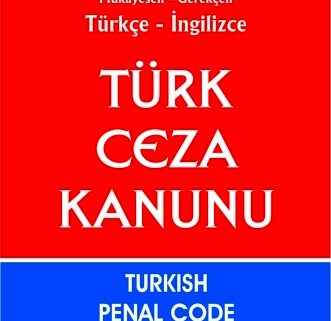
Financial fraud in Turkey is primarily regulated under the Turkish Penal Code (Türk Ceza Kanunu – TCK), particularly Articles 157 and 158, which define the offence of fraud (dolandırıcılık) and aggravated fraud (nitelikli dolandırıcılık). Although Turkish legislation does not use the term “financial fraud” as a standalone statutory category, the concept encompasses a range of fraudulent acts committed for financial gain.
2.1. Basic Fraud (TCK Article 157)
Under Article 157, fraud occurs when a person:
- Deceives another through fraudulent conduct,
- Causes that person or a third party to suffer financial damage,
- Obtains a benefit for themselves or another.
The core elements are:
- Fraudulent conduct (hileli davranış): Active deception, misrepresentation, or concealment.
- Deception of the victim: The conduct must be capable of misleading a reasonable person.
- Causal link: The deception must directly lead to financial loss.
- Intent (kast): Fraud is an intentional offence; negligence is insufficient.
The offence is complete once unlawful financial benefit is obtained and damage occurs.
2.2. Aggravated Fraud (TCK Article 158)
Article 158 provides enhanced penalties when fraud is committed under specific aggravating circumstances, including:
- Abuse of religious beliefs or emotions
- Exploitation of public institutions or professional authority
- Use of information systems, banks, or credit institutions
- Fraud committed in the context of commercial activity
- Fraud targeting vulnerable persons
In practice, most financial fraud cases involving banking transactions, online systems, or corporate misrepresentation fall within the aggravated fraud category.
2.3. Fraud via Information Systems and Digital Platforms
Modern financial fraud frequently involves digital infrastructure. Turkish courts treat fraud committed through:
- Online banking systems
- E-commerce platforms
- Email-based wire transfer manipulation
- Cryptocurrency platforms
as aggravated fraud where information systems are instrumental to the deception. The digital medium does not alter the fundamental legal elements but affects evidentiary and jurisdictional issues.
2.4. Distinction from Related Offences
Financial misconduct may overlap with other offences under Turkish law, such as:
- Breach of trust (güveni kötüye kullanma)
- Embezzlement (zimmet)
- Forgery of documents (resmi veya özel belgede sahtecilik)
- Money laundering (suçtan kaynaklanan malvarlığı değerlerini aklama)
Correct legal qualification is critical, as it determines procedural strategy, burden of proof, and asset recovery tools.
2.5. Civil Law Perspective
Beyond criminal liability, fraudulent conduct also constitutes a civil wrong under the Turkish Code of Obligations. Victims may seek:
- Compensation for direct financial losses
- Loss of profit (yoksun kalınan kar)
- Moral damages in certain circumstances
Civil claims operate independently of criminal proceedings, and strategic coordination between both avenues often strengthens recovery efforts.
2.6. International Context
From a comparative perspective, the elements of fraud under Turkish law align with global legal principles:
- Intentional deception
- Financial harm
- Unlawful gain
However, procedural tools for asset recovery vary significantly between jurisdictions. Therefore, in cross-border fraud cases, understanding both domestic law and international cooperation mechanisms becomes essential.
3. Common Types of Financial Fraud in Turkey
Financial fraud in Turkey manifests in multiple forms, ranging from traditional commercial deception to technologically sophisticated cyber schemes. While the legal qualification generally falls under Articles 157 and 158 of the Turkish Penal Code, the factual patterns vary significantly depending on the sector involved and the method of execution.
3.1. Corporate and Commercial Fraud
Corporate fraud remains one of the most economically damaging categories. It often arises in the context of commercial transactions, shareholder relations, or management activities. Common scenarios include misrepresentation of financial statements, concealment of liabilities during company sales, manipulation of partnership agreements, and diversion of corporate funds by directors or authorized representatives. In mergers and acquisitions, fraud may occur where sellers deliberately distort valuation metrics or hide material risks. In such cases, both criminal proceedings for aggravated fraud and civil claims for contractual liability may be pursued simultaneously.
3.2. Banking and Wire Transfer Fraud
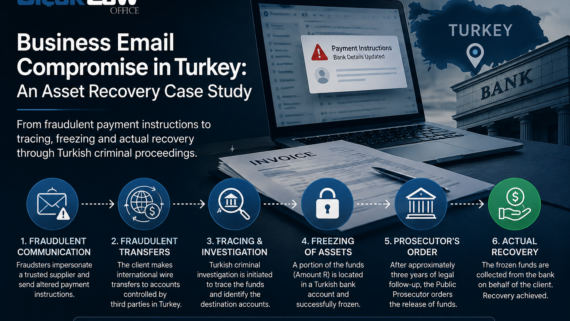
Fraud involving banks and financial institutions has increased significantly, particularly in cross-border trade. One of the most frequent forms is business email compromise (BEC), where fraudsters impersonate corporate executives or suppliers and instruct companies to redirect payments to fraudulent accounts. In these cases, timing is critical. Immediate legal intervention may allow for freezing of recipient accounts before funds are transferred onward. Turkish courts may issue precautionary measures, but recovery often depends on swift coordination with banks and, where applicable, foreign jurisdictions.
3.3. Real Estate and Title Deed Fraud
The real estate sector presents unique fraud risks, especially in high-value transactions involving foreign investors. Fraud may involve forged title deeds, unauthorized sales by individuals lacking legal authority, or deliberate concealment of encumbrances. Because property transfers in Turkey are executed before the Land Registry, procedural irregularities can be decisive. Asset recovery in these cases may require annulment actions, civil compensation claims, and criminal prosecution for aggravated fraud and forgery.
3.4. Investment and Ponzi Schemes
Investment fraud frequently takes the form of high-return promises in unregulated markets. Fraudsters may present themselves as licensed advisors or representatives of fictitious financial entities. In recent years, schemes have increasingly targeted international investors through digital platforms. Ponzi-style operations, where returns are paid from incoming funds rather than genuine profit, are prosecuted under aggravated fraud provisions. These cases often involve complex asset tracing, particularly when funds are layered through multiple accounts or offshore structures.
3.5. Cryptocurrency and Digital Asset Fraud
The rapid expansion of cryptocurrency markets has created new opportunities for fraudulent conduct. Common scenarios include fake crypto exchanges, phishing attacks targeting digital wallets, fraudulent initial coin offerings (ICOs), and unauthorized transfers resulting from compromised private keys. Although cryptocurrencies are not traditional financial instruments, Turkish courts treat fraudulent schemes involving digital assets under general fraud provisions. Recovery presents technical challenges, particularly when assets are transferred across decentralized networks. Effective tracing often requires specialized forensic analysis and cross-border cooperation.
3.6. Cross-Border and International Fraud
Many financial fraud cases in Turkey involve foreign parties, offshore accounts, or assets located outside the country. International trade fraud, fraudulent export-import schemes, and manipulation of letters of credit are frequent in commercial practice. Where multiple jurisdictions are involved, victims must consider not only Turkish criminal and civil law but also recognition and enforcement mechanisms abroad. Mutual legal assistance procedures and cooperation with foreign financial intelligence units become central components of recovery strategy.
3.7. Emerging Technological Fraud Trends
Recent years have seen the emergence of AI-assisted scams, deepfake impersonation of executives, and highly sophisticated social engineering attacks. These methods exploit technological trust mechanisms rather than traditional document-based deception. Although the technological tools evolve, the legal assessment remains grounded in intentional deception and financial harm. However, evidentiary complexity increases, requiring early preservation of digital logs, communication records, and server data.
4. Immediate Steps to Take After Discovering Fraud
The first hours and days following the discovery of fraud are often decisive. Asset recovery success frequently depends on how quickly and strategically the victim responds. Delay may allow funds to be transferred, dissipated, or converted into other assets, significantly reducing the likelihood of recovery.
4.1. Preserve All Evidence Immediately
The foremost priority is evidence preservation. Victims should secure all relevant documentation, including contracts, invoices, bank transfer receipts, email correspondence, messaging records, and transaction logs. Digital evidence must be protected in its original form to maintain evidentiary integrity. Where fraud involves online systems or cryptocurrency platforms, technical data such as IP logs, wallet addresses, server timestamps, and blockchain transaction identifiers should be documented without alteration. In certain cases, forensic IT specialists may be necessary to prevent loss or manipulation of electronic data. Destruction or alteration of evidence – whether intentional or accidental – can severely weaken both criminal and civil proceedings.
4.2. Contact Financial Institutions Without Delay
If funds have been transferred through banks or financial intermediaries, immediate notification is essential. In some cases, banks may be able to temporarily block or flag suspicious transactions, particularly if funds remain in intermediary accounts. Time sensitivity is critical. International wire transfers may move through multiple jurisdictions within hours. Early intervention increases the possibility of freezing assets before further dissipation. Formal written notification to the bank should follow any verbal communication, creating a documented trail of prompt action.
4.3. Conduct a Preliminary Legal Assessment
Before initiating formal proceedings, a structured legal assessment should be conducted to determine:
- The proper legal classification of the offence
- The location of assets and defendants
- Whether urgent precautionary measures are feasible
- The optimal combination of criminal and civil remedies
This stage often determines the overall recovery strategy. A premature or poorly framed complaint may limit available procedural tools.
4.4. Initiate Criminal Proceedings Where Appropriate
Filing a criminal complaint before the Public Prosecutor’s Office can trigger investigative powers unavailable in purely civil proceedings. Prosecutors may request bank records, communication data, and financial intelligence through official channels. However, criminal prosecution primarily aims at punishment, not compensation. Therefore, victims should carefully consider parallel civil action to secure financial recovery.
4.5. Consider Urgent Civil Precautionary Measures
Under Turkish procedural law, courts may grant precautionary measures such as freezing orders or attachment of assets. These measures are particularly important when there is a risk that the defendant may conceal, transfer, or dissipate property. To obtain such measures, applicants must demonstrate:
- A prima facie claim
- Risk of irreparable harm or asset dissipation
- Urgency
In certain cases, courts may require a security deposit to grant interim relief. Early application for precautionary measures significantly improves recovery prospects.
4.6. Assess Cross-Border Dimensions
If assets or defendants are located abroad, immediate evaluation of jurisdictional and enforcement issues is necessary. International fraud cases may require:
- Mutual legal assistance requests
- Coordination with foreign counsel
- Recognition and enforcement planning
Cross-border strategy should be designed from the outset rather than after domestic remedies are exhausted.
4.7. Avoid Direct Confrontation Without Legal Guidance
Victims sometimes attempt to negotiate directly with suspected fraudsters. While communication may occasionally lead to partial recovery, it can also:
- Alert perpetrators and accelerate asset dissipation
- Compromise evidentiary value
- Expose victims to further manipulation
Strategic communication, if any, should occur under legal supervision.
5. Criminal and Civil Legal Remedies in Turkey
In financial fraud cases, victims in Turkey may pursue two primary legal pathways: criminal prosecution and civil litigation. Although these mechanisms are distinct in purpose and procedure, they often operate in parallel. A coordinated strategy that integrates both avenues significantly enhances the likelihood of asset recovery.
5.1. Criminal Proceedings
Criminal proceedings begin with a complaint filed before the Public Prosecutor’s Office. Fraud, particularly aggravated fraud under Article 158 of the Turkish Penal Code, is generally prosecuted ex officio once authorities are informed. The prosecutor conducts a preliminary investigation, which may include:
- Obtaining bank records and transaction histories
- Seizing digital devices
- Collecting witness statements
- Requesting technical forensic analysis
Unlike civil proceedings, prosecutors have compulsory investigative powers that private parties do not possess.
During the investigation phase, courts may impose protective measures such as:
- Seizure of assets
- Freezing of bank accounts
- Confiscation of property connected to the offence
These measures are primarily designed to preserve evidence and secure eventual confiscation. However, they can indirectly support asset recovery if properly coordinated with civil claims.
Turkish criminal procedure allows victims to participate as intervening parties (katılan). Although criminal courts focus on punishment, victims may request compensation within the criminal case. In practice, however, comprehensive compensation is more effectively pursued through separate civil litigation. Criminal judgments may nevertheless provide strong evidentiary support in subsequent civil claims.
Criminal proceedings offer investigative leverage and coercive authority. Yet they may be lengthy and focused on penal sanctions rather than financial restitution. Recovery through confiscation mechanisms is possible but depends on the identification and traceability of assets. Therefore, reliance solely on criminal prosecution may not ensure timely recovery.
5.2. Civil Remedies
Civil litigation constitutes the primary mechanism for direct financial compensation. Under the Turkish Code of Obligations, fraudulent conduct constitutes a wrongful act (haksız fiil). Victims may claim:
- Direct material damages
- Loss of profit
- Interest from the date of loss
- In certain circumstances, moral damages
The burden of proof rests on the claimant, who must establish unlawful conduct, fault, causation, and quantifiable damage.
Where fraud arises within a contractual relationship, victims may pursue claims based on:
- Invalidity of consent due to deception
- Annulment of contract
- Restitution of transferred assets
- Additional damages for breach
Strategic selection between tort and contractual claims depends on the factual matrix.
One of the most powerful civil tools in fraud cases is precautionary attachment (ihtiyati haciz). This mechanism allows creditors to secure assets before final judgment when there is a risk of non-collection. Courts may grant such measures upon prima facie demonstration of the claim and urgency. A security deposit may be required. Timely use of precautionary measures often determines whether recovery remains possible.
Once a favorable judgment is obtained, enforcement proceedings may be initiated through Turkish enforcement offices. If assets are insufficient domestically, recognition and enforcement proceedings abroad may be necessary.
Criminal and civil proceedings are independent but interconnected. A criminal conviction may strengthen civil claims by establishing key factual findings. Conversely, civil precautionary measures may secure assets while criminal investigations continue. However, procedural coordination must be carefully managed. Strategic considerations include:
- Timing of filings
- Jurisdictional competence
- Statute of limitation periods
- Risk of asset dissipation
A fragmented approach may weaken recovery prospects, whereas an integrated strategy enhances both procedural efficiency and financial outcome.
Fraud-related claims are subject to limitation periods under both criminal and civil law. Criminal limitation periods vary depending on whether the offence qualifies as basic or aggravated fraud. Civil claims for damages are generally subject to specific time limits calculated from the date the victim becomes aware of both the damage and the perpetrator. Failure to act within statutory periods may permanently bar recovery.
6. Asset Tracing, Freezing and Recovery Mechanisms
Identifying, securing, and ultimately recovering assets is the central objective in financial fraud cases. Legal success is not measured solely by obtaining a favorable judgment, but by transforming that judgment into actual monetary recovery. This requires a structured process: tracing assets, freezing them before dissipation, and enforcing claims through appropriate mechanisms. Asset tracing is the investigative phase aimed at determining where misappropriated funds or property are located and in whose name they are held.
Financial tracing typically involves analysis of:
- Bank transfers and intermediary accounts
- Corporate structures and shareholder registries
- Real estate records
- Vehicle registries and commercial assets
Where fraud involves layered transactions, tracing may require forensic accounting techniques to reconstruct the flow of funds across multiple accounts. In criminal proceedings, prosecutors may request financial intelligence and banking data directly. In civil proceedings, disclosure mechanisms are more limited, which makes early coordination with criminal authorities strategically valuable.
Fraudsters often attempt to conceal assets through shell companies or nominee shareholders. Identifying the beneficial owner behind formal structures is frequently decisive. Turkish courts may disregard formal ownership structures where abuse of legal personality is proven. However, piercing the corporate veil requires clear demonstration of misuse intended to evade liability.
Digital assets present distinct challenges. Blockchain analysis tools may identify wallet movements, but tracing becomes complex when assets pass through mixers, exchanges, or foreign platforms. Early technical analysis is critical before data becomes inaccessible or accounts are closed.
Tracing alone is insufficient if assets are allowed to dissipate. Therefore, freezing mechanisms play a central role in recovery strategy. During criminal investigations, courts may order seizure of:
- Bank accounts
- Real estate
- Vehicles
- Digital assets
These measures aim to preserve property connected to the offence and may ultimately lead to confiscation upon conviction. However, confiscation serves penal purposes. Victims must still take active steps to assert compensation rights.
In civil proceedings, precautionary attachment allows claimants to secure assets before final judgment. Courts evaluate:
- Existence of a prima facie claim
- Risk of irreparable harm or asset dissipation
- Urgency of protection
Where granted, enforcement offices may immediately place attachment annotations on bank accounts, real estate, or movable assets. The effectiveness of this tool depends heavily on accurate prior asset identification.
In certain circumstances, courts may issue injunctions preventing transfer of specific property or requiring preservation of evidence. These measures are especially relevant in cases involving intellectual property rights, corporate control disputes, or digital assets.
Upon criminal conviction, courts may order confiscation of assets derived from the offence. Confiscation aims to deprive offenders of illicit gains. From a victim’s perspective, confiscated assets do not automatically translate into compensation unless procedural steps are taken to assert claims. Therefore, coordination between confiscation proceedings and civil enforcement is essential.
Modern financial fraud frequently extends beyond national borders. Funds may be transferred abroad within hours of the initial transaction. When assets are located outside Turkey, prosecutors may initiate mutual legal assistance procedures. These requests allow foreign authorities to:
- Freeze accounts
- Seize assets
- Provide banking records
However, international cooperation can be time-consuming and depends on bilateral or multilateral agreements.
If a Turkish civil judgment must be enforced abroad, recognition and enforcement proceedings are required in the foreign jurisdiction. Conversely, foreign judgments may be recognized and enforced in Turkey subject to statutory conditions. Cross-border enforcement planning should begin at the earliest stage of litigation.
Even where legal tools exist, recovery may be hindered by:
- Rapid asset dissipation
- Insolvency of the perpetrator
- Transfer of assets to third parties
- Complex offshore structures
Accordingly, success often depends less on abstract legal entitlement and more on speed, coordination, and accurate asset mapping.
7. Criminal vs. Civil Strategy: Choosing the Optimal Approach
One of the most critical decisions in financial fraud cases is whether to prioritize criminal prosecution, civil litigation, or pursue both simultaneously. While Turkish law permits parallel proceedings, the strategic implications of each route differ significantly. The optimal approach depends on the factual matrix, the location of assets, the solvency of the perpetrator, and the urgency of recovery.
Criminal proceedings are primarily designed to determine culpability and impose penal sanctions. Their focus is on protecting public order and deterring unlawful conduct. Although victims may participate and seek compensation within the criminal case, financial restitution is not the central objective of the process. Civil proceedings, by contrast, are compensation-oriented. Their sole purpose is to quantify financial damage and secure enforceable monetary recovery. From a purely economic perspective, civil litigation is often the more direct path to restitution. Accordingly, where the principal objective is recovery rather than punishment, civil strategy may require greater emphasis.
Criminal proceedings offer substantial investigative advantages. Prosecutors may compel disclosure of bank records, telecommunications data, and corporate information through official channels. This coercive authority can be decisive in uncovering concealed assets. Civil proceedings, however, provide greater procedural control to the claimant. The plaintiff determines the scope of claims, the timing of filings, and the procedural strategy. Civil courts are not bound by prosecutorial discretion. In cases where asset location is unclear, initiating criminal proceedings may provide valuable intelligence that later strengthens civil claims.
Time sensitivity often dictates strategy. Criminal investigations may take considerable time before an indictment is filed. While seizure measures can be imposed during investigation, victims do not fully control the pace. Civil precautionary attachment, on the other hand, can sometimes be obtained rapidly if sufficient prima facie evidence exists. Where asset dissipation risk is high, urgent civil interim measures may be indispensable. The decision frequently hinges on which pathway offers faster protective relief under the circumstances.
A criminal conviction can significantly reinforce civil claims by establishing factual findings regarding fraudulent conduct. Turkish civil courts are not automatically bound by criminal judgments, but such decisions carry substantial evidentiary weight. Conversely, a civil judgment does not require a prior criminal conviction. Civil liability may be established even if criminal responsibility is not conclusively proven. Therefore, parallel proceedings may create evidentiary synergy, particularly in complex commercial disputes.
Criminal complaints generally do not require court fees. Civil litigation, however, entails filing fees, expert costs, and possible security deposits for interim measures. Risk analysis must also consider solvency. Even if criminal conviction is secured, recovery may remain limited if the defendant lacks attachable assets. In such cases, asset tracing and early freezing become decisive, regardless of the procedural pathway chosen.
In cross-border fraud cases, criminal proceedings may facilitate international cooperation through mutual legal assistance channels. However, enforcement of compensation abroad often requires civil judgment recognition procedures. When assets are located outside Turkey, strategy must be aligned with enforcement realities in the relevant foreign jurisdiction.
In practice, the most effective approach in significant financial fraud cases is often an integrated model:
- Filing a criminal complaint to trigger investigative powers
- Simultaneously initiating civil proceedings to secure compensation
- Applying for interim freezing measures at the earliest opportunity
- Coordinating domestic and cross-border enforcement
Fragmented or sequential strategies may allow perpetrators time to restructure or conceal assets. A coordinated dual-track approach minimizes that risk.
8. International and Cross-Border Considerations
Financial fraud increasingly transcends national borders. Funds may be transferred across multiple jurisdictions within hours, perpetrators may reside in one country while operating through entities in another, and assets may be dispersed globally. In such cases, recovery strategy must extend beyond domestic Turkish procedures and incorporate international cooperation mechanisms from the outset. The first issue in cross-border fraud is jurisdiction. Turkish courts may assert jurisdiction where:
- The fraudulent act was committed in Turkey,
- The financial damage occurred in Turkey, or
- The offender is located within Turkish territory.
However, parallel jurisdiction may exist in other countries. Strategic evaluation is required to determine where proceedings should be initiated to maximize enforcement efficiency. Jurisdictional competition may also influence the availability of interim measures and the speed of asset freezing.
When assets or evidence are located abroad, Turkish prosecutors may submit mutual legal assistance requests through diplomatic or treaty-based channels. These requests may seek:
- Freezing of foreign bank accounts
- Seizure of property
- Disclosure of financial records
- Identification of beneficial ownership
The effectiveness of such requests depends on the existence of bilateral or multilateral agreements and the responsiveness of the requested jurisdiction. Because international cooperation may be time-consuming, early initiation of requests is critical where cross-border transfers are suspected.
Where a civil judgment is obtained in Turkey but assets are located abroad, recognition and enforcement proceedings must be initiated in the relevant foreign jurisdiction. Conversely, foreign judgments may be recognized and enforced in Turkey provided that statutory conditions are satisfied, including:
- Reciprocity between jurisdictions
- Proper jurisdiction of the foreign court
- Absence of violation of Turkish public order
- Observance of due process rights
Recovery planning must anticipate these enforcement stages before final judgment is obtained.
Cross-border fraud recovery is often determined less by legal entitlement and more by asset mapping. Key questions include:
- Where are the funds currently located?
- Are they in bank accounts, corporate structures, real estate, or digital wallets?
- Has the asset been transferred to third parties?
In some cases, the optimal strategy may involve initiating proceedings in the jurisdiction where assets are most accessible rather than where the fraud occurred.
Turkey participates in international financial intelligence cooperation frameworks. Through these channels, authorities may exchange information concerning suspicious financial flows, money laundering risks, and beneficial ownership structures. Where fraud involves complex international financial layering, coordination between domestic authorities and foreign financial intelligence units can significantly improve tracing outcomes.
Digital assets introduce additional jurisdictional complexity. Blockchain-based transfers may not correspond to traditional territorial concepts. Exchanges and service providers may operate under foreign regulatory regimes. Effective recovery may therefore require:
- Identification of the exchange platform holding assets
- Coordination with foreign regulatory authorities
- Technical forensic expertise
In cryptocurrency cases, speed is particularly decisive due to the fluidity of transfers.
International fraud cases present several practical risks:
- Delays in cooperation between authorities
- Differences in procedural standards
- Insolvency proceedings in foreign jurisdictions
- Transfer of assets to uncooperative states
Strategic planning must anticipate these obstacles and incorporate contingency measures.
9. Managing Digital and Cryptocurrency Fraud
The expansion of digital finance, online trading platforms, and cryptocurrency markets has significantly altered the landscape of financial fraud. While the legal foundation remains grounded in traditional fraud provisions under the Turkish Penal Code, the technical and evidentiary dimensions of digital fraud introduce unique challenges. Unlike conventional fraud cases involving identifiable bank accounts or tangible assets, cryptocurrency and digital fraud often operate within decentralized and pseudonymous systems. Effective recovery therefore requires both legal and technical coordination.
Turkish legislation does not contain a separate offence titled “cryptocurrency fraud.” Instead, fraudulent conduct involving digital assets is prosecuted under general fraud provisions (Articles 157 and 158 of the Turkish Penal Code). Where the offence is committed through information systems, it typically qualifies as aggravated fraud. If digital platforms or banking infrastructure are used as instrumental tools of deception, courts apply enhanced penalties. The digital nature of the asset does not alter the fundamental elements of fraud: deception, financial harm, and intentional unlawful gain.
In practice, several patterns have emerged:
- Investment schemes promising unrealistic returns through unlicensed crypto platforms, often targeting international investors.
- Phishing attacks that obtain private keys or wallet credentials, enabling unauthorized transfers.
- Fraudulent initial coin offerings (ICOs) or token sales with no genuine underlying project.
- Fake exchange platforms that simulate trading activity but block withdrawals.
- Social engineering scams, including impersonation of executives or platform representatives.
Although these schemes vary in structure, they typically involve rapid dissipation of assets across multiple wallets or exchanges.
Digital fraud cases present distinctive evidentiary concerns. Cryptocurrency transactions are recorded on public blockchains, yet identifying the natural person behind a wallet address requires additional investigative steps.
Critical evidence may include:
- Blockchain transaction records
- IP logs
- Platform registration data
- Two-factor authentication records
- Email correspondence and metadata
Preserving digital evidence at the earliest stage is essential. Delay may result in data loss, account deletion, or jurisdictional complications.
Blockchain analysis tools allow forensic specialists to track wallet movements across networks. While cryptocurrency transactions are transparent on-chain, tracing becomes more complex when assets pass through:
- Mixers or tumblers designed to obscure origin
- Decentralized exchanges
- Cross-chain bridges
- Foreign centralized exchanges
The identification of a custodial exchange holding the assets can provide an opportunity for freezing measures, provided that legal cooperation mechanisms are promptly activated.
Turkish courts may order seizure of digital assets in criminal investigations. Where cryptocurrency is held through centralized exchanges operating within Turkey, enforcement may be more straightforward. If assets are held abroad, international cooperation becomes necessary. Time sensitivity is particularly acute, as digital transfers can occur instantly and without geographic limitation. Civil precautionary measures may also be sought if the defendant’s wallet or exchange account can be sufficiently identified.
Turkey has introduced regulatory measures concerning crypto asset service providers, focusing primarily on anti-money laundering compliance and financial transparency. Although cryptocurrencies are not recognized as legal tender, they are treated as assets subject to seizure and enforcement. Regulatory compliance obligations imposed on service providers may assist in identifying account holders during investigations.
In cryptocurrency fraud, recovery prospects depend largely on:
- Speed of response
- Technical forensic capability
- Identification of exchange intermediaries
- International legal coordination
Where assets are transferred into fully decentralized wallets without identifiable custodians, recovery becomes significantly more difficult. Therefore, integrated legal and technical action at the earliest possible stage is indispensable.
10. Practical Checklist for Victims and Businesses
Financial fraud often creates urgency, confusion, and emotional pressure. A structured response reduces both legal and financial risk. The following checklist is designed to guide individuals and companies through the critical first stages of response and recovery planning.
10.1. Secure and Preserve Evidence
Immediately preserve all relevant documentation in its original form. This includes contracts, invoices, payment instructions, bank transfer confirmations, internal communications, email metadata, and digital transaction logs. Avoid altering electronic files. Where necessary, create secure backups. In digital or cryptocurrency cases, record wallet addresses, transaction hashes, and timestamps without delay. Failure to preserve evidence can significantly weaken both criminal and civil claims.
10.2. Notify Financial Institutions Promptly
If funds have been transferred through banks or payment intermediaries, notify the institution immediately. Request urgent review and potential blocking of suspicious transactions. Document all communications with the bank in writing. Even if reversal is unlikely, early notification demonstrates diligence and may prevent further dissipation.
10.3. Conduct an Internal Risk Assessment
Businesses should initiate an internal review to determine:
- Whether the fraud is isolated or systemic
- Whether internal control weaknesses were exploited
- Whether additional accounts or assets may be at risk
Internal investigation should be conducted discreetly to avoid alerting potential wrongdoers prematurely.
10.4. Seek Immediate Legal Evaluation
A rapid legal assessment allows determination of:
- The proper legal classification of the conduct
- The feasibility of precautionary attachment or freezing orders
- Jurisdictional considerations
- Applicable limitation periods
Delays at this stage often reduce the effectiveness of interim measures.
10.5. Evaluate Criminal and Civil Pathways
Determine whether to initiate:
- A criminal complaint before the Public Prosecutor’s Office
- Civil compensation proceedings
- Both simultaneously
In many cases, a coordinated dual-track strategy offers the strongest protection.
10.6. Consider Interim Protective Measures
If assets have been identified, assess the feasibility of precautionary attachment or freezing applications. These measures are often decisive in preserving recovery prospects. Timing is critical. Once assets are transferred to third parties or converted into other forms, recovery becomes substantially more complex.
10.7. Assess Cross-Border Implications
If the fraud involves foreign accounts, offshore companies, or international transfers, evaluate:
- Whether mutual legal assistance may be required
- The location of enforceable assets
- Potential need for foreign counsel
International coordination should begin early rather than after domestic remedies are exhausted.
10.8. Avoid Informal Negotiation Without Legal Strategy
Direct confrontation with suspected fraudsters may:
- Trigger rapid asset dissipation
- Compromise evidence
- Expose the victim to further manipulation
Communication strategy should be carefully managed and documented.
10.9. Review Compliance and Internal Controls (For Businesses)
After immediate crisis management, companies should reassess internal safeguards, including:
- Payment authorization procedures
- Segregation of duties
- Cybersecurity protocols
- Vendor verification systems
Strengthening internal controls reduces future exposure and demonstrates responsible corporate governance.
10.10. Monitor Limitation Periods
Fraud-related claims are subject to statutory limitation periods under both criminal and civil law. Missing these deadlines may permanently bar recovery. Early legal consultation ensures timely procedural action.
11. How We Can Assist in Financial Fraud and Asset Recovery Cases
Financial fraud disputes require more than technical knowledge of criminal and civil law. They demand strategic coordination, speed of response, cross-border awareness, and precise procedural execution. Effective recovery depends on combining investigative insight with legally sound action at each stage of the process. Bıçak Law Firm provides structured legal assistance in complex financial fraud and asset recovery matters, representing both domestic and international clients.
11.1. Strategic Case Assessment
Each case begins with a detailed legal and factual analysis. This assessment includes:
- Classification of the alleged conduct under Turkish criminal and civil law
- Evaluation of available evidence
- Identification of potential assets and enforcement opportunities
- Risk analysis concerning limitation periods and jurisdiction
The objective is to design an integrated recovery strategy rather than pursue fragmented procedural steps.
11.2. Criminal Representation and Victim Participation
Where appropriate, we initiate and monitor criminal proceedings before the Public Prosecutor’s Office. This includes:
- Drafting structured criminal complaints
- Requesting investigative measures
- Following asset seizure applications
- Representing clients as intervening parties during prosecution
Close monitoring of criminal investigations ensures that victim interests remain protected throughout the process.
11.3. Civil Litigation and Precautionary Measures
We represent clients in civil compensation proceedings and seek interim protective measures at the earliest possible stage. Particular emphasis is placed on:
- Precautionary attachment (ihtiyati haciz) applications
- Freezing measures against identified assets
- Contract annulment and restitution claims
- Enforcement proceedings following judgment
In high-value cases, timing and procedural accuracy are decisive.
11.4. Asset Tracing and Cross-Border Coordination
Where assets are dispersed across jurisdictions, recovery requires international coordination. Our approach includes:
- Cooperation with foreign counsel where necessary
- Strategic planning for recognition and enforcement of judgments
- Coordination with financial institutions and regulatory bodies
- Structured management of cross-border litigation strategy
This is particularly relevant in cases involving international trade, offshore structures, or cryptocurrency transfers.
11.5. Digital and Cryptocurrency Fraud Cases
Digital asset disputes require both legal and technical awareness. We assist in:
- Structuring evidence in cryptocurrency fraud cases
- Coordinating forensic analysis
- Seeking seizure of digital assets through appropriate procedural channels
- Addressing regulatory compliance implications
Given the speed of digital transfers, early intervention is prioritized.
11.6. Preventive Advisory Services
In addition to recovery, we advise businesses on risk mitigation strategies, including:
- Strengthening internal control systems
- Reviewing contractual safeguards
- Structuring fraud-response protocols
- Compliance alignment with Turkish financial regulations
Prevention remains the most effective risk management tool. Financial fraud and asset recovery litigation demands a comprehensive, coordinated, and time-sensitive approach. Through structured strategy, procedural precision, and international awareness, Bıçak Law Firm supports clients in protecting their financial interests and pursuing recovery through all available legal avenues under Turkish law.




Comments
No comments yet.