 English
 Türkçe
 Français
 Deutsch

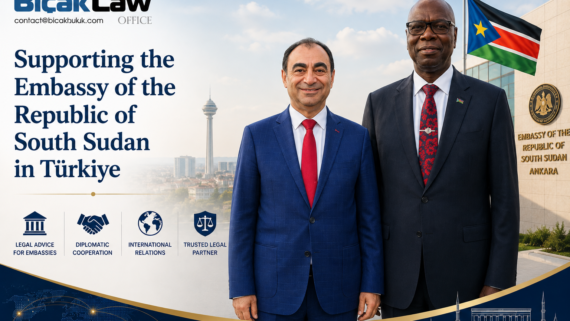
Embassies, consulates, international organisations and other foreign representations in Türkiye frequently employ locally recruited personnel for administrative, technical, security, translation and support functions. As a general rule, locally employed staff working in Türkiye are subject to Turkish employment and social security law, even though their employer operates within a diplomatic or international framework. Missions should therefore use properly drafted employment contracts, complete social security and payroll formalities, and maintain accurate records concerning working time, leave, remuneration and performance. Recruitment, background screening, confidentiality, cybersecurity, employee monitoring and personal-data processing must also be managed in accordance with applicable Turkish law and the mission’s legitimate security needs. Termination decisions require particular care because notice periods, severance pay, reinstatement protection, employee defence rights and mandatory mediation may apply. Diplomatic or state immunity does not automatically prevent Turkish courts from hearing local employment disputes, especially where the employee performs ordinary administrative or support duties rather than sovereign governmental functions. Jurisdictional immunity, enforcement immunity and the inviolability of mission premises are separate legal concepts and must be assessed individually. Bıçak Law Firm advises embassies, consulates and international organisations throughout Türkiye on local employment contracts, compliance, investigations, termination, mediation, litigation and immunity-related issues.

Local Staff Employment by Embassies in Türkiye
1. Introduction
Embassies, consulates, international organisations and other foreign representations operating in Türkiye frequently employ locally recruited personnel to carry out administrative, technical, translation, communications, security, maintenance, driving, accounting and support functions. These employees may work within an international or diplomatic environment, but their employment relationships should not be treated as legally detached from the host country. As a general rule, Turkish nationals and third-country nationals lawfully residing and working in Türkiye who are recruited locally by a foreign mission are subject to Turkish employment legislation. The Turkish Ministry of Foreign Affairs has expressly stated that locally employed personnel working for foreign missions accredited to Türkiye are governed by Turkish labour law. The Ministry also expects missions to notify it of local appointments by providing the relevant employment contract and evidence of social security coverage, and to maintain an updated list of locally employed staff.
The diplomatic character of the employer nevertheless introduces legal issues that are not normally encountered in ordinary employment relationships. These include the correct identification of the employer, diplomatic and state immunity, service of legal documents, the enforcement of judgments, access to mission premises, confidentiality, national security, foreign-law clauses, privileges granted under host-country agreements and the distinction between sovereign and non-sovereign functions. Local employment by an embassy is therefore neither an entirely ordinary private employment relationship nor an area in which the mission may simply rely on its international status. It requires the coordinated application of Turkish employment law, social security law, private international law, diplomatic law, data-protection rules and the specific international instruments applicable to the relevant mission or organisation. This guide explains the principal legal issues that embassies, consulates, diplomatic missions, international organisations and locally recruited personnel should consider when establishing, managing or terminating an employment relationship in Türkiye.
2. Who Is Considered Locally Employed Staff?
Locally employed staff are generally individuals recruited in Türkiye to perform work for a foreign mission, consular post, international organisation or comparable representative body. They commonly include:
- administrative assistants;
- translators and interpreters;
- secretaries and reception personnel;
- accountants and finance staff;
- drivers;
- maintenance and technical personnel;
- local advisers and analysts;
- communications and information-technology personnel;
- security and access-control staff;
- cleaners, gardeners and other support personnel; and
- cultural, commercial or public-relations employees.
For the purposes of the Turkish Ministry of Foreign Affairs’ procedures, local staff may include Turkish nationals and third-country nationals holding a valid residence status. The Ministry requires diplomatic missions, consular posts and international organisations employing such personnel to provide the employment contract and documentation showing social security coverage. Missions are also expected to keep their local-staff records updated. A locally recruited employee should be distinguished from:
- a diplomatic agent posted by the sending state;
- a consular officer;
- a member of the administrative and technical staff sent from abroad;
- a member of the service staff enjoying recognised mission status;
- a civil servant of the sending state temporarily assigned to Türkiye;
- a secondee whose legal status is governed by a bilateral agreement;
- a private servant personally employed by a diplomatic or consular officer; and
- an independent contractor providing services through a separate commercial arrangement.
The employee’s job title is not conclusive. The authorities and courts may examine the actual recruitment process, residence status, payroll arrangements, functions, reporting lines, workplace, social security registration and the degree of integration into the mission. Calling an employee a “consultant,” “freelancer” or “service provider” will not necessarily prevent the relationship from being classified as employment where the individual works personally, continuously and under the direction and control of the mission.
3. Which Institutions Are Covered?
The legal framework discussed in this guide is relevant not only to embassies. It may also apply, with necessary modifications, to:
- consulates and consulates general;
- permanent representations;
- international organisations;
- United Nations agencies;
- European and regional institutions;
- cultural institutes;
- trade and investment offices;
- defence, liaison and cooperation offices;
- foreign-government agencies operating in Türkiye;
- representative offices benefiting from privileges or immunities; and
- diplomatic residences employing staff through the mission.
The legal position of an international organisation may differ from that of a foreign state. Its privileges and immunities may arise from a founding treaty, headquarters agreement, host-country agreement, domestic implementing legislation or another international instrument. Accordingly, the employment status of personnel working for an international organisation must be assessed against the particular legal regime applicable to that organisation. The rules governing one organisation should not automatically be applied to another. The Turkish Ministry of Foreign Affairs explains that the privileges and immunities applicable in Türkiye derive from the 1961 Vienna Convention on Diplomatic Relations, the 1963 Vienna Convention on Consular Relations, relevant United Nations conventions, host-country agreements, Turkish law and the principle of reciprocity. It also notes that its diplomatic guide is intended as general guidance rather than a substitute for the governing legal instruments and circular notes.
4. Does Turkish Employment Law Apply?
The central principle is clear: locally recruited personnel working in Türkiye will generally be protected by Turkish employment law. In its circular note concerning local employment, the Turkish Ministry of Foreign Affairs stated that Turkish nationals and third-country nationals holding valid residence status who are employed by foreign missions accredited to Türkiye are subject to Labour Law No. 4857. It further stated that administrative-technical and service staff may also fall within Turkish employment law unless otherwise provided by bilateral or multilateral agreements. The practical consequence is that a mission employing local staff should normally consider, among other matters:
- the form and content of the employment contract;
- the distinction between fixed-term and indefinite-term employment;
- working hours and overtime;
- weekly rest;
- annual paid leave;
- public holidays;
- salary and benefits;
- equal treatment and non-discrimination;
- occupational health and safety;
- disciplinary measures;
- termination procedures;
- notice periods;
- severance and notice compensation;
- reinstatement exposure;
- mandatory mediation; and
- social security registration and contributions.
The application of Turkish labour law does not mean that diplomatic or international-law considerations become irrelevant. It means that the mission must examine those considerations alongside the employee’s mandatory protections under the law of the place where the work is habitually performed.
5. Identifying the Correct Employer
One of the first questions in any local employment arrangement is: who is the legal employer? Possible formulations include:
- the embassy;
- the sending state acting through its embassy;
- the consulate general;
- a ministry or governmental department of the sending state;
- an international organisation;
- a cultural or trade office;
- a separate local legal entity; or
- an individual ambassador or diplomatic officer.
The employment contract should identify the employer accurately and consistently. The name used in the contract should correspond with payroll records, social security declarations, internal authorisations and communications with the Turkish Ministry of Foreign Affairs. An embassy is generally not a separate commercial company merely because it operates as an administrative unit. Drafting the contract in the name of an undefined “Embassy Office” without identifying the state or public authority represented may later create difficulties concerning authority, service of process and responsibility for employment liabilities.
The signatory should also have appropriate authority. Ideally, the mission should retain an internal authorisation, delegation or other document showing that the person signing the agreement may bind the employer. Where the employee works for several units – for example, the embassy, commercial section and ambassador’s residence – the contract should specify whether there is a single employer, a principal employer with multiple workplaces or more than one employing entity.
6. Recruitment and Equal Treatment
Recruitment procedures should be organised in a manner that is transparent, documented and consistent with Turkish law. A mission may reasonably require linguistic ability, security awareness, knowledge of international relations, cultural familiarity, confidentiality and suitability for work in a sensitive environment. However, recruitment criteria should be connected to the genuine requirements of the position.
Job advertisements, interview notes and selection records should avoid discriminatory criteria based on characteristics protected by law unless a distinction can be objectively and legally justified. The recruitment file should ideally record:
- the job description;
- required qualifications;
- selection criteria;
- interview process;
- identity and residence documents;
- work-permit status where relevant;
- references;
- conflict-of-interest disclosures;
- background-screening consent;
- salary approval;
- security conditions; and
- the identity of the authorised decision-maker.
A diplomatic mission may have heightened security requirements, but security considerations should not be treated as a complete exemption from employment, privacy or data-protection law. Sensitive screening should be proportionate to the duties and conducted under a defined legal basis.
7. Employment of Foreign Nationals as Local Staff
A foreign national residing in Türkiye is not automatically entitled to work merely because the individual has a residence permit. The mission should determine whether the person:
- holds a valid work permit;
- benefits from an applicable work-permit exemption;
- is covered by a diplomatic or consular status;
- falls under a host-country or international agreement; or
- must complete a separate authorisation process.
The Ministry of Foreign Affairs’ guidance defines locally employed staff as including third-country nationals holding valid residence status, but immigration and employment authorisation remain separate questions. The mission should therefore verify both lawful residence and lawful access to employment before the person begins work.
Failure to obtain the required work authorisation may expose both the employer and the employee to administrative consequences. Türkiye publishes annually updated penalties relating to unauthorised foreign employment and failures to comply with notification obligations. The position must also be distinguished from that of administrative, technical or service staff officially sent by the sending state and recognised under the diplomatic regime.
8. Preparing the Employment Contract
Although some employment relationships may arise without a detailed written agreement, a comprehensive written contract is strongly advisable for every locally employed member of staff. For embassy employment, the contract should address not only standard labour-law matters but also the mission’s international, security and institutional requirements. A well-drafted contract should ordinarily cover:
- the identity of the employer;
- the employee’s title and duties;
- commencement date;
- place of work;
- reporting lines;
- employment type;
- probationary period;
- working hours;
- salary and payment currency;
- benefits and allowances;
- overtime approval;
- annual leave;
- public holidays;
- social security;
- tax and payroll deductions;
- confidentiality;
- diplomatic and institutional information;
- data protection;
- cybersecurity;
- intellectual property;
- use of devices and communications systems;
- conflicts of interest;
- disciplinary rules;
- security-clearance requirements;
- return of documents and equipment;
- termination procedures;
- applicable law; and
- dispute-resolution arrangements.
The contract should be prepared in Turkish or in a bilingual format where appropriate. Where two languages are used, the agreement should state how inconsistencies will be resolved. The employee should receive a signed copy. An internal embassy template imported from another jurisdiction should not be used without review. Clauses that are enforceable in the sending state may conflict with mandatory Turkish protections.
9. Fixed-Term and Indefinite-Term Employment
Embassies sometimes prefer fixed-term contracts because diplomatic postings, budgets and organisational priorities change. However, the contract’s classification should reflect the genuine nature of the employment. A fixed-term agreement should be supported by an objective reason, such as:
- replacement of an employee on leave;
- a time-limited project;
- a temporary programme;
- a defined funding period;
- a particular event or assignment; or
- a position genuinely tied to a limited operational need.
Repeated fixed-term contracts without a valid objective basis may be treated as an indefinite-term relationship. The fact that an ambassador or head of mission has a limited posting does not necessarily mean that every local employee may automatically be hired on a fixed-term basis. The function itself, rather than the duration of the diplomat’s assignment, should be examined. For continuing functions such as reception, accounting, driving, translation or administration, an indefinite-term contract may often more accurately reflect the relationship.
10. Probationary Periods
A probationary period may be included within the limits permitted by Turkish law. During the probationary period, either party may generally terminate the employment without the ordinary notice requirement, while the employee remains entitled to salary and accrued rights for work already performed. The probationary period should be expressly stated in the written agreement. It should not be extended informally merely because the mission has not completed internal evaluations. Security screening or administrative accreditation processes should ideally be completed before work begins. If continued employment depends on a specific approval or clearance, the legal effect of that condition should be drafted carefully.
11. Job Descriptions and Sovereign Functions
The job description is particularly important in diplomatic employment because the nature of the employee’s duties may later affect an immunity analysis. A locally employed driver, cleaner or general administrative assistant will not necessarily be treated in the same manner as an employee directly involved in:
- diplomatic negotiations;
- defence or security policy;
- coded communications;
- governmental decision-making;
- intelligence functions;
- consular decision-making;
- exercise of public authority; or
- access to highly classified state information.
International jurisprudence increasingly examines the employee’s actual functions rather than relying solely on the employer’s diplomatic identity. The mission should therefore prepare accurate job descriptions and avoid artificially describing ordinary support functions as sovereign duties. Conversely, where the role genuinely involves governmental or national-security functions, that should be documented carefully without unnecessarily disclosing protected information.
12. Salary and Payments in Foreign Currency
The contract should state:
- the gross or net character of the salary;
- the currency of denomination;
- the currency and method of payment;
- the payment date;
- exchange-rate methodology where relevant;
- social security and tax treatment;
- allowances;
- bonuses;
- transport, meal, housing or insurance benefits; and
- whether any benefit is discretionary or contractual.
Where remuneration is denominated in a foreign currency, the parties should examine the applicable Turkish rules on foreign-currency contracting and payment. They should not assume that diplomatic status automatically resolves all exchange-control issues. Payroll records should clearly separate salary, overtime, bonuses, allowances, expense reimbursements and benefits in kind. Regular payments and measurable benefits may be relevant when calculating certain employment entitlements, including severance-related amounts. The Ministry of Labour explains that recurring monetary and measurable benefits can be taken into account in severance calculations. A mission should avoid informal cash payments or arrangements under which part of the actual remuneration is omitted from payroll and social security records.
13. Working Hours and Overtime
The contract and internal policies should define normal working hours, rest periods and overtime authorisation. Diplomatic work may require:
- attendance at evening receptions;
- weekend events;
- airport transfers;
- official delegations;
- emergency communications;
- travel outside the city;
- national-day celebrations;
- work during Turkish or foreign public holidays; and
- availability outside normal office hours.
The international nature of the workplace does not remove local limits on working time or the obligation to compensate qualifying overtime. Embassies should maintain reliable working-time records. A statement that overtime is “included in salary” should not be used as a general substitute for reviewing actual hours, legal limits and the employee’s remuneration. For drivers, security staff, residence personnel and events teams, working-time arrangements should be reviewed particularly carefully because irregular schedules commonly generate later claims. Where compensatory time is used, it should be administered consistently with Turkish law and documented.
14. Annual Leave and Public Holidays
Employees who satisfy the applicable service requirement are entitled to annual paid leave. The Turkish Ministry of Labour states that the statutory minimum generally increases according to length of service: at least 14 days for employees with between one and five years of service, 20 days for those with more than five but fewer than fifteen years, and 26 days for those with fifteen years or more. Employees aged 18 or younger and those aged 50 or older benefit from a minimum of 20 days. A mission may grant longer contractual leave, including additional days based on the sending state’s holiday calendar. However, contractual leave arrangements should not reduce Turkish statutory minimums. The policy should distinguish between:
- Turkish national and general holidays;
- official holidays of the sending state;
- mission closure days;
- annual leave;
- administrative leave; and
- compensatory time.
Where the mission closes on a foreign national holiday, the legal treatment of the day should be clear. Similarly, if a locally employed person works on a Turkish public holiday, the relevant compensation rules should be observed. Annual leave records should be signed or maintained electronically in a reliable manner. Unused annual leave should not simply be cancelled at year-end.
15. Social Security Registration
Social security compliance is one of the clearest obligations concerning locally employed personnel. The Turkish Ministry of Foreign Affairs has stated that Turkish nationals and locally resident foreign nationals employed by foreign missions must generally be insured under Turkish social security legislation, subject to applicable bilateral social security agreements. It has also requested missions to provide staff lists and insurance information. Current practice should be assessed under the Social Insurance and General Health Insurance Law and any applicable international agreement. A mission should establish:
- whether it must register as an employer;
- the correct workplace registration;
- the employee’s commencement notification;
- monthly premium declarations;
- the correct earnings base;
- treatment of benefits in kind;
- termination notification;
- occupational accident procedures; and
- retention of payroll and employment records.
Türkiye’s bilateral social security agreements may contain special rules for diplomats, consular staff, civil servants, posted workers and other categories. The Social Security Institution explains that the general rule under such agreements is application of the legislation of the country of employment, while certain categories—including some diplomatic and consular personnel—may be subject to special provisions. A bilateral agreement should therefore be reviewed before concluding that Turkish social security contributions do or do not apply.
16. Taxation of Local Staff
The tax treatment of locally employed staff should be distinguished from the privileges that may apply to recognised diplomatic agents or other exempt personnel. A Turkish citizen or locally resident employee does not automatically acquire diplomatic tax immunity merely because the employer is an embassy. The mission should determine:
- whether salary withholding is required;
- whether the employee must file an individual return;
- how foreign-currency remuneration is converted;
- how allowances and benefits are treated;
- whether a bilateral agreement affects the result;
- whether the employee has any recognised status; and
- which party is responsible for payroll compliance.
Tax clauses in the contract should not simply state that the employee is responsible for all taxes without first determining whether mandatory employer obligations exist. Professional tax advice may be necessary where the salary is paid from abroad, the employer has no ordinary Turkish corporate structure or the employee performs duties in more than one country.
17. Confidentiality and Diplomatic Information
Local personnel may have access to politically, commercially or personally sensitive information. A tailored confidentiality framework is therefore essential. The contract and internal policies may address:
- diplomatic correspondence;
- internal cables and reports;
- personal data;
- visa and consular files;
- security plans;
- official visits;
- procurement;
- financial records;
- defence-related information;
- credentials and passwords;
- private information concerning diplomats and their families;
- media communications; and
- post-employment confidentiality.
Confidentiality clauses should be precise enough to identify protected categories while avoiding an unlimited prohibition on lawful reporting, access to justice or disclosure required by law. A breach involving highly sensitive information may justify serious disciplinary action, but the mission should still document the facts, assess proportionality and follow a legally defensible procedure.
18. Data Protection and Employee Monitoring
Embassies process substantial amounts of employee data, including identity information, financial records, health data, family information, criminal-record information, biometric access data and communications logs. The mission should examine the applicability of the Turkish Personal Data Protection Law, international obligations, any relevant exemptions and the interaction with the sending state’s own privacy regime. Key issues include:
- privacy notices;
- legal bases for processing;
- cross-border data transfers;
- storage on foreign-government systems;
- access by headquarters;
- health and disciplinary data;
- CCTV;
- email and internet monitoring;
- biometric access systems;
- retention periods;
- employee requests;
- data breaches; and
- deletion or return of records after termination.
Diplomatic status should not be treated as a general authorisation for unlimited monitoring. Monitoring should be necessary, proportionate, transparent and connected to a legitimate institutional purpose. The mission should distinguish between protecting classified systems and intruding into an employee’s private communications.
19. Cybersecurity and Use of Artificial Intelligence
Foreign missions increasingly use automated systems, cybersecurity tools and artificial intelligence for recruitment, translation, document classification, security screening and productivity monitoring. Before deploying such systems, the mission should consider:
- whether employee data will be transferred abroad;
- whether confidential information may be exposed to an external provider;
- whether automated tools influence recruitment, promotion or termination;
- whether human review is available;
- whether employees have been informed;
- whether monitoring is proportionate;
- whether data are retained for longer than necessary; and
- whether the system creates discrimination or inaccurate profiling.
Employees should also receive clear rules regarding the use of generative AI with mission documents. Uploading confidential diplomatic material into an unauthorised public AI tool may create serious security and privacy risks.
20. Performance Management
Poorly documented performance management is a frequent source of disputes. A mission considering termination for performance reasons should normally establish:
- the employee’s defined duties;
- objective expectations;
- previous evaluations;
- measurable deficiencies;
- warnings;
- support or training provided;
- a reasonable improvement period;
- the employee’s explanation; and
- consistency with treatment of comparable staff.
General statements such as “loss of trust” or “failure to meet diplomatic standards” may not be sufficient where the mission cannot show the factual basis. The Ministry of Labour notes that where an employer intends to terminate an indefinite-term contract because of the employee’s conduct or performance, the employee should generally be given an opportunity to respond to the allegations, and the termination notice must be written and state the reason clearly. Performance concerns should not be documented only after the decision to dismiss has already been taken.
21. Internal Investigations and Disciplinary Procedures
Embassies may need to investigate:
- unauthorised disclosure;
- fraud or misuse of funds;
- harassment;
- discrimination;
- conflicts of interest;
- security violations;
- unauthorised political or commercial activity;
- misuse of official vehicles;
- falsification of records;
- absenteeism; or
- breach of information-security rules.
An internal investigation should preserve both institutional security and procedural fairness. The mission should define:
- who will conduct the investigation;
- how evidence will be collected;
- whether external counsel is required;
- how personal data will be protected;
- how witnesses will be interviewed;
- how confidentiality will be maintained;
- whether the employee will be invited to respond;
- whether diplomatic information must be segregated; and
- how the final decision will be authorised.
Where the alleged conduct may justify immediate termination for just cause, statutory time limits for exercising that right must be considered. The Ministry of Labour notes that termination based on conduct contrary to morality and good faith is generally subject to a six-working-day period from discovery and, subject to specified exceptions, a one-year period from the act. A delayed or informal investigation may therefore jeopardise the legal basis for dismissal.
22. Workplace Harassment and Discrimination
Foreign missions should maintain clear policies against workplace harassment, sexual harassment, bullying, retaliation and discrimination. The international or governmental character of the institution does not eliminate the need to respond to complaints. A suitable procedure should provide:
- confidential reporting channels;
- alternatives where the complaint concerns a senior diplomat;
- protection against retaliation;
- impartial investigation;
- preservation of evidence;
- appropriate interim measures;
- respect for the accused employee’s defence rights; and
- documented findings.
Particular care is needed where the alleged perpetrator is a diplomatic agent who may enjoy personal immunity. The mission’s internal responsibility to respond should not be confused with the procedural status of an individual before local authorities. A failure to investigate or protect the employee may later become relevant to compensation, termination or discrimination claims.
23. Termination with Notice
An indefinite-term employment contract may be terminated by observing the applicable statutory and contractual requirements. According to the Turkish Ministry of Labour, the statutory notice periods are generally:
- two weeks for service of less than six months;
- four weeks for service between six months and eighteen months;
- six weeks for service between eighteen months and three years; and
- eight weeks for service exceeding three years.
These are minimum periods and may be increased contractually. The employer may, where legally permissible, pay compensation in lieu of notice rather than require the employee to continue working throughout the notice period. A termination file should include:
- the legal reason;
- the factual basis;
- relevant records;
- any employee defence;
- management authorisation;
- calculation of final entitlements;
- leave balance;
- notice compensation;
- severance assessment;
- return of equipment;
- social security termination notification;
- confidentiality reminders; and
- a properly drafted termination notice.
The termination notice should not contain unnecessarily accusatory or reputationally harmful language.
24. Termination for Just Cause
Immediate termination without notice may be possible in serious cases defined by law, including certain forms of dishonesty, harassment, breach of trust, unauthorised disclosure, serious misconduct or qualifying absenteeism. However, the threshold is high. The employer must be able to demonstrate the facts and comply with the applicable time limits. For example, the Ministry of Labour explains that qualifying unauthorised absence may justify immediate termination where the statutory pattern of absence is established. Diplomatic missions should avoid treating every breach of internal protocol as just cause. A rule may be important institutionally but may not automatically satisfy the legal test for dismissal without notice or severance. The response should be proportionate to:
- the employee’s duties;
- the seriousness of the breach;
- actual or potential harm;
- intent;
- previous warnings;
- length of service; and
- comparable disciplinary practice.
25. Severance Pay and Final Entitlements
Depending on the circumstances of termination and the employee’s length of service, the employee may be entitled to severance pay, notice compensation, unpaid salary, overtime, unused annual leave and other contractual payments. The mission should calculate final entitlements before issuing the termination notice and should not assume that an employee’s diplomatic workplace prevents ordinary claims. The calculation may require consideration of regular benefits in addition to base salary. The Ministry of Labour confirms that recurring monetary and measurable benefits may be included when calculating severance pay, subject to the applicable statutory ceiling. A broad release signed by the employee should not be relied upon without examining the mandatory conditions governing settlement, timing and payment.
26. Reinstatement Claims
Where the statutory conditions for employment protection are met, an employee may challenge the validity of the termination and seek reinstatement-related remedies. Whether employment-protection rules apply may depend on matters including:
- length of service;
- whether the contract is indefinite;
- the number of employees in the relevant workplace or undertaking;
- the employee’s position;
- whether the employee has authority comparable to the employer’s representative; and
- the stated reason for termination.
For foreign missions, determining the relevant number of employees may require careful analysis. It may not always be obvious whether only locally employed staff in one mission, all workplaces of the employer in Türkiye or a broader organisational structure should be considered. The mission should therefore assess reinstatement exposure before termination rather than only after a claim is filed.
27. Mandatory Mediation
For many employment disputes, an application to mediation is a procedural prerequisite before court proceedings may be initiated. This includes claims involving employee or employer receivables, compensation and reinstatement. The Ministry of Justice and the Ministry of Labour both confirm that mediation is a mandatory precondition for such proceedings. Mediation may be particularly useful in disputes involving diplomatic missions because it can provide:
- confidentiality;
- procedural flexibility;
- controlled disclosure;
- reduced reputational risk;
- a negotiated termination framework;
- settlement of monetary and non-monetary issues;
- return or destruction of sensitive records; and
- a practical alternative to disputed enforcement.
The mission should ensure that its representative at mediation has proper authority to negotiate and conclude a settlement. Settlement documents should be carefully drafted, particularly where they involve confidentiality, security information, tax treatment, payment abroad or waiver of claims.
28. Jurisdiction of Turkish Courts
The involvement of a foreign state does not automatically deprive Turkish courts of jurisdiction over every employment dispute. The Turkish Ministry of Foreign Affairs’ Diplomatic Portal states that employment relations between foreign missions and their locally employed personnel are governed by Turkish labour law and other relevant legislation. It further states that, in employment disputes concerning Turkish nationals or third-country nationals residing in Türkiye, missions do not enjoy judicial immunity under Articles 44 and 49 of the Turkish Private International Law Act.
Article 44 contains a specific jurisdictional rule for individual employment disputes involving a foreign element. Article 49 reflects the restrictive approach to foreign-state immunity in private-law relationships. Nevertheless, immunity remains a fact-sensitive issue. Courts may distinguish between:
- ordinary contractual or employment activity; and
- acts closely connected with sovereign governmental authority.
The employee’s nationality, duties, recruitment method, access to state secrets, status and the relief requested may all be relevant. A mission should therefore avoid two opposite assumptions:
- that diplomatic immunity always prevents an employment claim; or
- that immunity can never apply in a local employment dispute.
The correct result depends on the applicable legislation, treaty framework, nature of the functions and particular proceedings.
29. State Immunity and the Nature of the Employee’s Duties
Modern state-immunity law generally follows a restrictive rather than absolute approach. Under this approach, a foreign state may retain immunity for sovereign acts but not necessarily for private, commercial or ordinary employment relationships. The distinction is often expressed through the concepts of:
- acta jure imperii: acts performed in the exercise of sovereign authority; and
- acta jure gestionis: private or non-sovereign activities.
In employment disputes, the employee’s actual duties may be more important than the formal identity of the employer. Functions involving diplomatic policy, public authority, defence, national security, intelligence or core governmental decision-making may support a stronger immunity argument than routine administrative, technical or support work. The European Court of Human Rights has examined restrictions on access to court in several embassy-employment cases. In Cudak v. Lithuania, the dispute concerned a locally recruited embassy employee whose wrongful-dismissal action had been rejected on state-immunity grounds. The Court’s case law recognises that state immunity may pursue a legitimate aim, but it also requires the restriction on access to a court to reflect generally recognised rules of international law and to remain proportionate. The broader European jurisprudence demonstrates that courts should not grant immunity merely because the employer is an embassy. They should examine the employee’s functions and the international-law basis for any restriction.
30. Diplomatic Immunity Is Not the Same as State Immunity
Several related but distinct concepts are often confused.
Diplomatic immunity: Diplomatic immunity primarily protects diplomatic agents and mission functions under the Vienna Convention on Diplomatic Relations.
State immunity: State immunity concerns whether a foreign state may be sued before the courts of another state.
Immunity from enforcement
Even where a court may hear a claim and issue a judgment, separate restrictions may apply to enforcement against foreign-state property.
Inviolability of mission premises: Mission premises, archives and certain property enjoy special protection. A court’s jurisdiction over an employment claim does not necessarily authorise enforcement officers to enter embassy premises or seize protected property.
These distinctions are essential. The absence of jurisdictional immunity does not automatically mean that all forms of enforcement are available.
31. Service of Legal Documents
Service of court or mediation documents on a foreign mission may require special diplomatic procedures. The Turkish Ministry of Foreign Affairs states that service on missions should be conducted through the Ministry. It also emphasises that the Ministry does not interfere with the merits of the proceedings and recommends that foreign missions submit objections on time and follow the process directly or through legal counsel. A mission should not ignore a document merely because it was not delivered in the same manner as an ordinary domestic corporate notice. It should promptly determine:
- the nature of the document;
- the date and method of service;
- the response deadline;
- whether an immunity objection is available;
- whether local counsel should be appointed;
- whether mediation attendance is required; and
- which internal authority must approve the response.
Delay may result in loss of procedural rights.
32. Enforcement of Judgments
Enforcement is often more complex than obtaining a judgment. Foreign-state property used for diplomatic, consular, military or sovereign purposes may benefit from separate enforcement protections. Mission premises, archives, official bank accounts and property necessary for diplomatic functions may not be treated as ordinary commercial assets. Accordingly, a claimant who succeeds on the merits may still face legal limitations in identifying assets that may lawfully be subject to enforcement. Missions should not interpret this as permission to disregard judgments. Failure to comply may create additional legal, financial and diplomatic consequences. The preferable approach is often to address enforceability during settlement discussions and agree on:
- payment dates;
- payment currency;
- bank details;
- tax treatment;
- consequences of default;
- confidentiality;
- return of mission property; and
- closure of pending proceedings.
33. Choice of Law
A contract with a foreign mission may contain a clause referring to the law of the sending state. Such a clause must be reviewed under Turkish private international law. The fact that the contract chooses foreign law does not automatically remove the employee’s protection under mandatory rules connected with the habitual place of work. Türkiye’s Constitutional Court recently annulled part of Article 27 of the Private International Law Act concerning the effect of a choice-of-law clause in employment contracts. The Court reasoned that a choice made in an employment contract should not permit the employee to be deprived of more protective rules of a more closely connected legal system.
The Constitutional Court has also emphasised that determining the more closely connected law may require consideration of factors such as the parties’ nationalities, language and place of conclusion of the contract, workplace, social security system, residences and the country in which their social and legal relationships are concentrated.
For an employee recruited and working in Türkiye, paid through a Turkish payroll and registered in the Turkish social security system, the connection with Turkish law will ordinarily be substantial. A foreign-law clause should therefore not be inserted into a local employment agreement without a detailed conflicts-of-law assessment.
34. Arbitration Clauses
An embassy may consider including an arbitration clause, particularly where confidentiality is important. However, arbitration is not always appropriate or enforceable for every individual employment dispute. Questions may arise concerning:
- arbitrability;
- employee consent;
- mandatory jurisdictional protections;
- costs;
- language;
- venue;
- interim relief;
- enforcement; and
- compatibility with mandatory mediation.
A general arbitration clause copied from a commercial contract should not be inserted into an employment agreement without specific legal review. For many local-employment matters, properly managed mediation followed, where necessary, by proceedings before the competent Turkish labour court may be more practical.
35. International Organisations and Internal Justice Systems
Some international organisations have internal administrative tribunals, grievance mechanisms or staff rules that govern employment disputes. The decisive questions include:
- whether the employee is an international civil servant or locally recruited worker;
- whether the host-country agreement grants immunity;
- whether the organisation has an effective internal remedy;
- whether the employee has access to an independent tribunal;
- whether the internal system covers the particular dispute; and
- whether Turkish mandatory law remains applicable.
An organisation claiming immunity may need to demonstrate that the employee has access to a reasonable alternative dispute-resolution mechanism. Blanket reliance on institutional immunity without an effective remedy may raise access-to-justice concerns. The employment documentation should identify the applicable internal rules clearly and should not create uncertainty as to whether local courts, an administrative tribunal or another mechanism has jurisdiction.
36. Separation Agreements and Settlement
A negotiated separation agreement may be preferable where:
- the relationship of trust has broken down;
- the mission is restructuring;
- a position is abolished;
- litigation would risk disclosure of sensitive information;
- there is uncertainty regarding immunity;
- the employee has long service; or
- both parties prefer an orderly transition.
The agreement may address:
- termination date;
- salary and benefits;
- notice and severance payments;
- additional settlement compensation;
- unused leave;
- tax and social security treatment;
- return of devices and documents;
- deletion of confidential data;
- confidentiality;
- non-disparagement;
- reference letters;
- withdrawal of claims;
- mediation formalities; and
- dispute closure.
The employee should have a genuine opportunity to review the agreement. A settlement that purports to waive all rights without transparent payment and legally required formalities may later be challenged.
37. Common Risks for Embassies and Diplomatic Missions
The most common legal risks include:
- using an employment template governed only by foreign law;
- failing to identify the employer correctly;
- recruiting a foreign national without checking work authorisation;
- failing to register the employee with social security;
- reporting only part of the actual remuneration;
- treating permanent work as repeated fixed-term employment;
- failing to record overtime;
- confusing foreign public holidays with statutory Turkish holidays;
- cancelling unused annual leave;
- conducting disproportionate employee monitoring;
- using vague confidentiality clauses;
- failing to investigate harassment;
- dismissing an employee without taking a defence;
- relying on “loss of trust” without supporting facts;
- missing the statutory time limit for immediate termination;
- assuming that diplomatic immunity prevents all claims;
- ignoring mediation or court documents;
- attempting to settle without properly authorised representatives; and
- failing to distinguish jurisdictional immunity from enforcement immunity.
Many of these risks can be reduced through preventive legal review rather than litigation.
38. Practical Compliance Checklist for Missions
Before recruitment, the mission should confirm the legal employer, budget authority, job description, candidate’s right to work, security requirements and the appropriate contract type. At commencement, the mission should complete the written employment agreement, social security registration, Ministry of Foreign Affairs notification, payroll setup, privacy information, confidentiality documentation and workplace-policy acknowledgements. During employment, it should maintain accurate records of salary, working time, overtime, leave, performance, disciplinary matters, personal-data processing and equipment issued to the employee. Before termination, it should review the legal reason, evidence, employee defence, notice, severance, leave, mediation exposure, immunity implications and internal authority. After termination, it should complete final payments, social security notifications, return of property, system-access closure, data retention and any settlement formalities.
39. Checklist for Locally Employed Personnel
A locally recruited employee should understand:
- the identity of the actual employer;
- whether the contract is fixed-term or indefinite;
- the applicable law;
- gross and net salary;
- social security registration;
- working hours;
- overtime arrangements;
- annual leave;
- confidentiality duties;
- monitoring policies;
- disciplinary procedures;
- termination rights;
- mediation requirements; and
- the practical implications of immunity.
Employees should retain copies of the employment contract, payslips, social security records, leave documents, working-time records, performance reviews, warnings and termination correspondence.
40. How Bıçak Law Firm Can Assist
Bıçak Law Firm advises embassies, consulates, diplomatic missions, international organisations and other foreign representations on the complete lifecycle of local employment in Türkiye. Our services may include:
- structuring local employment arrangements;
- determining the correct employing entity;
- preparing Turkish and bilingual employment contracts;
- reviewing fixed-term and indefinite-term contracts;
- advising on foreign-national employment;
- social security and payroll coordination;
- Ministry of Foreign Affairs procedures;
- confidentiality and data-protection documentation;
- workplace policies;
- cybersecurity and employee-monitoring rules;
- performance-management procedures;
- disciplinary investigations;
- harassment and whistleblowing matters;
- termination-risk assessments;
- severance and notice calculations;
- negotiated separation agreements;
- mandatory mediation;
- employment litigation;
- state-immunity analysis;
- service-of-process issues;
- enforcement strategy; and
- ongoing employment-law retainers.
Because diplomatic employment disputes may involve labour law, international law, immunity, security and institutional reputation simultaneously, each matter should be assessed individually rather than handled through a standard domestic employment template.
41. Conclusion
Locally recruited personnel are indispensable to the daily operation of embassies, consulates and international organisations in Türkiye. Their international workplace does not, however, place them outside the protection of the host country’s employment and social security framework.
Foreign missions should treat local employment as a distinct compliance area requiring properly drafted contracts, reliable payroll and social security procedures, transparent personnel policies, proportionate security measures and legally defensible termination practices.
Diplomatic and state immunity remain important, but they do not operate as a universal exemption from Turkish labour law or Turkish court jurisdiction. The employee’s duties, the nature of the disputed act, the applicable treaty framework and the distinction between jurisdiction and enforcement must be analysed carefully. Preventive legal advice is particularly valuable in this field. A contract, disciplinary decision or termination procedure that is reviewed before implementation can substantially reduce the risk of litigation, diplomatic sensitivity, unexpected financial liability and disclosure of confidential institutional information.
Bıçak Law Firm provides integrated employment, diplomatic and dispute-resolution advice to embassies, consulates, international organisations and locally employed personnel throughout Türkiye.
Legal Disclaimer
This publication provides general information and does not constitute legal advice. The applicable rules may vary depending on the employer’s legal status, the employee’s nationality and duties, bilateral or multilateral agreements, host-country arrangements, privileges and immunities, and the facts of the individual employment relationship. Specific legal advice should be obtained before recruitment, disciplinary action, termination, settlement or litigation.

Comments
No comments yet.