 English
 Türkçe
 Français
 Deutsch

The global demand for critical minerals has increased rapidly due to the expansion of renewable energy technologies, electric vehicles, advanced electronics, and defense systems. As a result, minerals such as lithium, cobalt, rare earth elements, and graphite have become strategically important for economic development, technological competitiveness, and national security. The growing concentration of mineral extraction and processing in a limited number of countries has raised concerns about supply chain vulnerabilities and geopolitical competition. In this evolving landscape, Türkiye possesses significant advantages due to its diverse mineral resources, including world-leading boron reserves and newly identified rare earth element deposits. Türkiye’s strategic geographic position between Europe, Central Asia, and the Middle East also enhances its potential role in emerging global supply chains for critical minerals. At the same time, the development of these resources requires effective governance through appropriate legal frameworks, environmental regulations, and investment policies. Export controls, sanctions regimes, and international trade regulations further shape the global movement of critical minerals and require careful compliance by companies operating in the sector. Bıçak provides legal services to investors, mining companies, and international partners in matters related to mining law, regulatory compliance, export controls, and strategic resource governance in Türkiye.
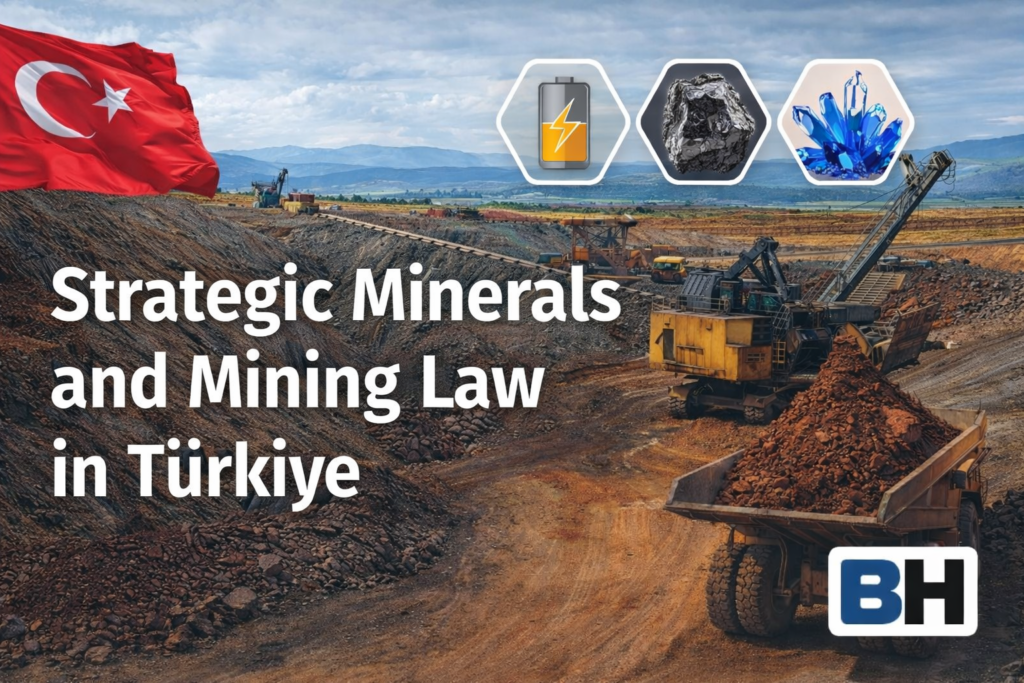
Strategic Minerals and Mining Law in Türkiye
1. Introduction: Critical Minerals and the Transformation of Global Resource Politics
In recent years, critical minerals have emerged as one of the most strategic components of the global political economy. The rapid expansion of renewable energy technologies, electric vehicles, digital infrastructure, and advanced defense systems has dramatically increased global demand for a range of minerals that were previously considered secondary industrial inputs. Today, materials such as lithium, cobalt, rare earth elements, graphite, and nickel are indispensable for the functioning of modern economies. As a result, access to these resources has become a central concern for governments seeking to ensure technological competitiveness, energy security, and national defense capabilities.
The growing importance of critical minerals is closely linked to the structural transformation of the global economy. The transition toward low-carbon energy systems, often referred to as the “energy transition”, requires vast quantities of minerals used in batteries, wind turbines, solar panels, and energy storage systems. Electric vehicles, for example, require significantly larger quantities of mineral inputs than conventional internal combustion engine vehicles. Similarly, renewable energy technologies depend heavily on materials such as rare earth elements and copper for the production of high-efficiency electrical systems. Consequently, the shift toward decarbonization has intensified global competition over mineral resources and the supply chains that support them.
At the same time, the rapid development of digital technologies and advanced manufacturing has further amplified demand for critical minerals. Semiconductor manufacturing, telecommunications infrastructure, robotics, aerospace technologies, and artificial intelligence hardware all rely on specialized mineral inputs that are difficult to substitute. In addition, many of these materials possess dual-use characteristics, meaning that they can be used both for civilian industries and for military applications. Rare earth magnets, for example, are essential for precision-guided weapons, radar systems, and advanced aerospace technologies. This dual-use nature has elevated critical minerals from purely economic commodities to assets of strategic importance in national security planning.
These developments have transformed global resource politics. Historically, geopolitical competition over natural resources focused primarily on energy commodities such as oil and natural gas. Today, however, critical minerals are increasingly viewed as the strategic resources of the twenty-first century. Governments are therefore adopting policies aimed at securing stable supply chains, reducing dependency on foreign sources, and strengthening domestic processing capabilities. Major economies including the United States, the European Union, China, and Japan have introduced national strategies designed to ensure reliable access to critical minerals while promoting technological innovation and industrial resilience.
The global distribution of critical mineral supply chains, however, remains highly uneven. While many countries possess mineral deposits, the extraction, processing, and refining stages of the supply chain are frequently concentrated in a limited number of jurisdictions. In particular, China has established a dominant position in the processing and refining of several key minerals, including rare earth elements and battery materials. This concentration has raised concerns among Western economies about supply chain vulnerability and strategic dependency. As a result, efforts are underway to diversify mineral supply chains by developing new mining projects, strengthening partnerships with resource-rich countries, and investing in alternative processing technologies.
Within this evolving geopolitical landscape, Türkiye occupies a potentially significant position. The country possesses a diverse mineral resource base and is widely recognized as one of the leading producers of boron worldwide. Recent discoveries of rare earth elements and other strategic minerals have further increased interest in Türkiye’s mining potential. At the same time, Türkiye’s geographic location between Europe, Central Asia, and the Middle East places it at the intersection of major trade routes and emerging resource partnerships. These factors have raised the possibility that Türkiye could play a more prominent role in global critical mineral supply chains in the coming decades.
In response to these developments, policymakers and industry stakeholders in Türkiye have begun to place greater emphasis on the strategic importance of mineral resources. New policy initiatives, institutional proposals, and international cooperation agreements reflect a growing recognition that critical minerals may become an essential component of Türkiye’s economic and industrial strategy. At the same time, the development of these resources raises important legal, regulatory, and geopolitical questions concerning mining governance, export controls, environmental protection, and international trade relations.
Against this background, this article examines Türkiye’s role in the evolving global competition for critical minerals. It analyzes the country’s mineral resource potential, the legal and regulatory framework governing mining activities, and the broader geopolitical context in which these resources are becoming increasingly significant. Particular attention is given to issues related to export controls, sanctions risks, and strategic trade regulation, which are likely to play an increasingly important role in the governance of critical mineral supply chains. By situating Türkiye within the broader transformation of global resource politics, the article aims to provide a comprehensive overview of the opportunities and challenges that critical minerals present for the country’s economic and legal landscape.
2. Conceptual Framework: What Are Critical Minerals?
The concept of “critical minerals” has gained increasing prominence in recent years as governments and international organizations seek to address the strategic vulnerabilities associated with global mineral supply chains. Although the term is widely used in policy discussions and academic literature, its precise meaning varies depending on the criteria adopted by different jurisdictions. In general terms, critical minerals refer to mineral resources that are essential for economic development and national security while simultaneously facing significant risks of supply disruption. The classification of a mineral as “critical” therefore depends not only on its physical properties or industrial applications but also on broader economic, technological, and geopolitical considerations.
2.1. Defining Critical Minerals
Most definitions of critical minerals rely on two primary criteria: economic importance and supply risk. A mineral is considered economically important when it plays a key role in strategic industries such as energy, transportation, digital technologies, and defense. Supply risk arises when access to that mineral is vulnerable due to factors such as geographic concentration of production, political instability in producing regions, trade restrictions, or technological barriers to extraction and processing.
Several major economies have developed formal methodologies to identify and periodically update their lists of critical minerals. In the United States, the classification is determined under the Energy Act of 2020, which defines critical minerals as non-fuel minerals essential to the economic or national security of the country whose supply chains are vulnerable to disruption. The U.S. Geological Survey periodically evaluates mineral markets and publishes an official list based on factors such as import dependence, supply concentration, and the potential economic impact of shortages.
The European Union employs a similar approach through its Critical Raw Materials framework. The EU assesses both economic importance and supply risk using a methodology that considers industrial dependency, substitution possibilities, recycling rates, and the geographic concentration of production. Minerals such as lithium, cobalt, graphite, rare earth elements, and tungsten are among those currently classified as critical within the EU’s regulatory framework.
Other countries have adopted comparable strategies. Japan, which relies heavily on imported raw materials, has identified critical minerals through its economic security policy and has implemented strategic stockpiling programs to mitigate supply disruptions. China, meanwhile, has developed a comprehensive strategy aimed at securing both domestic production and global supply chains, particularly in sectors related to rare earth elements and battery materials. Despite variations in terminology and methodology, these national frameworks share a common objective: ensuring stable and secure access to minerals that are essential for technological and industrial development.
2.2. Drivers of Global Demand
The growing importance of critical minerals is closely tied to structural changes in the global economy. One of the most significant drivers is the global transition toward low-carbon energy systems. Renewable energy technologies require substantially larger quantities of mineral inputs compared to traditional energy systems. Wind turbines depend on rare earth magnets for high-efficiency generators, while solar photovoltaic panels require silicon, silver, and other specialized materials. Electric vehicles, which are rapidly replacing conventional internal combustion engines, rely on batteries containing lithium, cobalt, nickel, and graphite. As a result, the electrification of transportation and the expansion of renewable energy infrastructure have dramatically increased global demand for these minerals.
Another important driver is the continued expansion of digital technologies and advanced manufacturing. Modern electronic devices rely on a complex combination of specialized minerals used in semiconductors, sensors, and microelectronic components. Artificial intelligence hardware, high-performance computing systems, telecommunications networks, and data centers all depend on reliable supplies of minerals such as gallium, germanium, and rare earth elements. In many cases, these materials have limited substitutes, making supply disruptions particularly disruptive to industrial production.
Defense and aerospace industries further reinforce the strategic importance of critical minerals. Advanced military technologies – including precision-guided weapons, radar systems, jet engines, and satellite infrastructure – require materials with unique physical and chemical properties. Rare earth elements, for example, are essential for producing high-performance magnets used in missile guidance systems and aircraft components. Because these materials have both civilian and military applications, they are often classified as dual-use resources and may be subject to export controls and strategic trade regulations.
2.3. Critical Minerals and Supply Chain Vulnerability
Despite the growing global demand for critical minerals, their production and processing are often highly concentrated geographically. Many mineral deposits are located in a limited number of countries, and the refining and processing stages of the supply chain are frequently even more concentrated. This concentration can create significant vulnerabilities for countries that rely heavily on imports to meet industrial demand.
In several key mineral markets, a small number of countries dominate global production. For example, the Democratic Republic of Congo accounts for the majority of global cobalt production, while Australia and Chile play major roles in lithium extraction. Even more significant is the concentration of mineral processing capacity. China has developed extensive refining capabilities for rare earth elements, lithium compounds, and other battery materials, allowing it to occupy a central position in many global mineral supply chains.
Such concentration exposes importing countries to potential supply disruptions arising from geopolitical tensions, trade disputes, environmental regulations, or domestic policy changes in producing states. Export restrictions, sanctions, or licensing requirements can quickly affect global supply and create price volatility. Consequently, governments and international organizations have increasingly recognized the need to strengthen supply chain resilience through diversification strategies, strategic stockpiling, and international cooperation.
In this context, the concept of critical minerals is closely linked to broader questions of economic security and industrial policy. Ensuring reliable access to these resources has become a priority for many governments seeking to protect strategic industries and reduce exposure to supply chain shocks. As global competition for mineral resources intensifies, countries possessing significant mineral reserves – including Türkiye – are likely to play an increasingly important role in shaping the future structure of critical mineral supply chains.
3. Türkiye’s Mineral Resource Endowment
Türkiye possesses a rich and diverse mineral resource base that has long played an important role in the country’s economic development. Owing to its complex geological structure and location within the Alpine–Himalayan mineral belt, Türkiye hosts a wide variety of mineral deposits, including many that are increasingly classified as critical or strategic in the global economy. Studies of the Turkish mining sector indicate that approximately seventy-seven different mineral types have been identified within the country, with several of them occurring in commercially significant quantities. This diversity provides Türkiye with a potentially advantageous position in the emerging global competition for critical minerals.
The mining sector has historically contributed to Türkiye’s industrial development by supplying raw materials for construction, metallurgy, chemicals, and energy production. Over time, however, the strategic importance of mineral resources has evolved significantly. Minerals that were once primarily used for conventional industrial purposes are now essential components of advanced technologies, renewable energy systems, and defense applications. As a result, the country’s mineral wealth is increasingly viewed not merely as a source of raw materials but as a strategic asset capable of supporting technological innovation and industrial competitiveness.
3.1. Boron: Türkiye’s Strategic Resource
Among Türkiye’s mineral resources, boron occupies a uniquely strategic position. The country possesses the largest known boron reserves in the world, accounting for approximately seventy percent of global reserves. These deposits are primarily located in the provinces of Eskişehir, Balıkesir, Kütahya, and Bursa. The scale of these reserves has allowed Türkiye to become the dominant supplier of boron products in international markets.
Boron is widely used in a variety of industrial applications. Traditional uses include the production of glass, ceramics, detergents, and fertilizers. In recent decades, however, boron has gained increasing importance in advanced technological applications. It is used in high-strength materials, aerospace components, nuclear reactors, and renewable energy technologies. Boron compounds also play a role in the production of advanced alloys and electronic materials. These expanding applications have elevated boron from a conventional industrial mineral to a resource of strategic importance.
Recognizing the strategic value of boron, the Turkish state has maintained a significant level of control over its production and commercialization. The state-owned enterprise Eti Maden operates the majority of boron mining and processing facilities in the country. Through this institutional framework, the government has sought to ensure both efficient management of reserves and greater participation in downstream value-added production. The strategic management of boron resources therefore illustrates how Türkiye has approached certain mineral resources as national assets rather than purely commercial commodities.
3.2. Rare Earth Elements and the Beylikova Discovery
In addition to its long-established boron reserves, Türkiye has recently attracted international attention due to discoveries of rare earth element deposits. One of the most significant developments in this regard is the rare earth deposit located in the Beylikova district of Eskişehir. Geological surveys have indicated that this deposit may contain hundreds of millions of tons of rare earth-bearing ore, potentially making it one of the largest deposits of its kind in the region.
Rare earth elements comprise a group of seventeen metallic elements that possess unique magnetic, optical, and catalytic properties. These materials are essential for numerous high-technology applications, including electric vehicle motors, wind turbine generators, high-performance magnets, advanced electronics, and military equipment. Because of their importance in both civilian and defense technologies, rare earth elements have become central to global strategic competition.
Despite the presence of large deposits, the development of rare earth resources presents significant technical and economic challenges. Mining rare earth ore is only the first stage in a complex production process that involves separation, purification, and refining of individual elements. These processes require specialized chemical technologies and substantial investment in processing facilities. Consequently, many countries possessing rare earth deposits have historically exported raw materials while relying on foreign processing capabilities. Türkiye’s emerging rare earth sector therefore faces the challenge of developing domestic processing infrastructure in order to capture greater value within the supply chain.
3.3. Other Strategic Minerals in Türkiye
Beyond boron and rare earth elements, Türkiye hosts a range of other minerals that are increasingly recognized as critical within global supply chains. Among the most significant are chromium, graphite, lithium, cobalt, manganese, titanium, copper, antimony, and nickel. These minerals play essential roles in modern industrial production and technological innovation.
Chromium, for example, is widely used in the production of stainless steel and high-performance alloys. Türkiye has historically been one of the major producers of chromite ore, which serves as the primary source of chromium. Graphite and lithium are essential components in battery technologies used for electric vehicles and energy storage systems. Cobalt and nickel are similarly important for advanced battery chemistries. Titanium and manganese contribute to the production of lightweight, high-strength materials used in aerospace and defense applications.
The presence of these minerals highlights the potential for Türkiye to diversify its role in global mineral markets. While traditional mining activities have focused largely on extraction and export of raw materials, growing global demand for advanced materials creates opportunities for the development of domestic processing and manufacturing capabilities. If supported by appropriate technological investment and regulatory frameworks, the country’s mineral resources could contribute significantly to the development of high-value industrial sectors.
Taken together, Türkiye’s mineral resource endowment represents an important foundation for participation in the emerging global critical minerals economy. The combination of large boron reserves, newly identified rare earth deposits, and a broad range of other mineral resources provides the country with considerable potential. However, realizing this potential will depend on effective policy coordination, technological development, and integration into international supply chains. The next section therefore examines how Türkiye fits within the broader geopolitical competition surrounding critical mineral supply chains.
4. Türkiye in the Emerging Geopolitics of Critical Minerals
The growing global demand for critical minerals has fundamentally altered the geopolitical landscape of natural resources. Whereas traditional energy geopolitics was largely shaped by the distribution of oil and natural gas, the twenty-first century is increasingly defined by competition over minerals essential for modern technologies. These materials underpin the global transition toward low-carbon energy systems, the expansion of digital industries, and the modernization of defense capabilities. As a result, critical minerals have become central to the strategic calculations of major powers and are now widely viewed as key elements of economic security.
Within this evolving geopolitical environment, Türkiye occupies a potentially important position. The country’s mineral resource base, combined with its geographic location at the intersection of Europe, Asia, and the Middle East, places it within a complex network of emerging supply chains and strategic partnerships. Understanding Türkiye’s role in the global critical minerals landscape therefore requires examining both the structure of existing supply chains and the efforts of major powers to diversify access to mineral resources.
4.1. China’s Dominance in Critical Mineral Supply Chains
One of the defining features of contemporary critical mineral geopolitics is the dominant position of China in several segments of the global supply chain. Over the past three decades, China has developed extensive capabilities not only in mineral extraction but, more importantly, in the processing and refining stages of production. In particular, China accounts for a substantial share of global processing capacity for rare earth elements, lithium compounds, and other materials used in battery technologies and advanced electronics.
This dominance has emerged through a combination of long-term industrial policy, state-supported investment, and technological development. By establishing integrated supply chains that encompass mining, refining, manufacturing, and export, China has positioned itself as a central supplier of materials required by high-technology industries worldwide. Consequently, many countries rely on Chinese processing facilities even when mineral extraction occurs elsewhere.
The concentration of processing capacity in a single jurisdiction has raised concerns among governments in North America, Europe, and parts of Asia. These concerns stem from the possibility that geopolitical tensions, trade disputes, or domestic regulatory decisions could disrupt access to critical minerals. Episodes in which export restrictions have been imposed on certain mineral products have reinforced the perception that supply chain dependencies may carry strategic risks. As a result, a growing number of countries have begun to explore strategies aimed at diversifying their sources of supply and reducing reliance on a limited number of suppliers.
4.2. Western Strategies to Diversify Supply Chains
In response to these vulnerabilities, Western economies have launched a range of policy initiatives designed to strengthen the resilience of critical mineral supply chains. The United States, for example, has introduced legislation and policy programs aimed at supporting domestic mineral production, promoting recycling technologies, and securing supply agreements with allied countries. Similarly, the European Union has adopted the Critical Raw Materials Act, which seeks to expand European access to strategic minerals by developing domestic resources, strengthening international partnerships, and investing in processing infrastructure.
These strategies reflect a broader shift toward what is sometimes described as “resource diplomacy”. Governments are increasingly seeking to establish long-term relationships with resource-rich countries in order to secure stable supplies of critical minerals. Such partnerships may involve investment agreements, joint exploration projects, technological cooperation, and infrastructure development. In this context, countries that possess significant mineral reserves or strategic geographic locations may find themselves playing increasingly prominent roles within global supply networks.
4.3. Türkiye’s Strategic Geographic Position
Türkiye’s geographic location provides a distinctive advantage within this evolving landscape. Situated at the crossroads of Europe, Central Asia, and the Middle East, the country occupies a position that historically has served as a bridge between major economic regions. This position allows Türkiye to participate simultaneously in several emerging mineral supply networks.
On the one hand, Türkiye maintains strong economic ties with European markets, which are among the largest consumers of advanced industrial materials. The European Union’s efforts to diversify its mineral supply chains have therefore generated growing interest in cooperation with nearby countries capable of supplying or processing critical minerals. Türkiye’s mineral reserves, particularly its substantial boron deposits, make it a potentially important partner in this regard.
On the other hand, Türkiye’s geographic proximity to resource-rich regions of Central Asia and the Caucasus creates opportunities for regional cooperation in mineral exploration and development. Several countries in these regions possess significant deposits of strategic minerals, and improved transportation and logistics networks could facilitate the integration of these resources into broader supply chains connecting Asia and Europe.
4.4. Regional Cooperation and Strategic Partnerships
Recent developments suggest that Türkiye is increasingly seeking to expand its international cooperation in the field of mineral resources. Agreements and discussions with countries such as Uzbekistan have focused on strengthening collaboration in exploration, mining technologies, and mineral processing. Such initiatives reflect a broader effort to develop regional supply chains that can contribute to global mineral markets.
These partnerships may also play a role in enhancing technological capabilities within the mining sector. Developing domestic processing facilities and advanced material technologies requires substantial investment and specialized expertise. By cooperating with international partners, Türkiye may be able to accelerate the development of its mineral industries while simultaneously strengthening its position within global supply chains.
At the same time, Türkiye must navigate a complex geopolitical environment in which major powers are competing for influence in resource-rich regions. Balancing relationships with Western economies, emerging Asian partners, and neighboring countries will likely remain an important element of the country’s resource strategy. In this context, the development of critical minerals policy is not only an economic issue but also a matter of strategic diplomacy.
Taken together, these geopolitical dynamics illustrate the growing significance of critical minerals in international relations. As governments seek to secure reliable access to these resources, countries possessing significant reserves or strategic locations are likely to play increasingly influential roles. Türkiye’s emerging position within this landscape underscores the importance of understanding how mineral resources, legal frameworks, and international partnerships interact in shaping the future of global supply chains. The following section therefore examines the national policy developments and institutional initiatives that are beginning to define Türkiye’s approach to critical minerals.
5. National Policy Developments and Institutional Initiatives in Türkiye
The increasing global importance of critical minerals has prompted many governments to adopt strategic policies aimed at securing mineral supply chains, promoting domestic processing capabilities, and strengthening industrial competitiveness. Türkiye is gradually developing its own policy framework in response to these global developments. Although the country has long maintained an established mining sector, recent technological and geopolitical shifts have highlighted the need for a more coordinated approach to managing strategic mineral resources. As a result, a number of policy initiatives, institutional proposals, and research platforms have emerged with the aim of strengthening Türkiye’s role in the global critical minerals economy.
5.1. National Critical Minerals Strategy
In recent years, policymakers in Türkiye have begun to place greater emphasis on the strategic value of mineral resources in national economic planning. The growing demand for materials used in renewable energy systems, battery technologies, and advanced manufacturing has increased the perceived importance of securing reliable access to mineral inputs. Consequently, government institutions and policy analysts have initiated discussions on the development of a national strategy aimed at enhancing Türkiye’s participation in global mineral supply chains.
Such a strategy would typically involve several key objectives. First, it would seek to expand geological exploration activities in order to identify additional mineral deposits across the country. Although Türkiye already possesses a diverse mineral resource base, significant portions of its geological potential remain underexplored. Advances in geological surveying technologies and data analysis may therefore reveal additional deposits that could contribute to future industrial development.
Second, a national strategy would emphasize the development of domestic processing and refining capabilities. As discussed in earlier sections, the global critical minerals supply chain often involves multiple stages, ranging from extraction of raw ore to the production of refined materials and advanced components. Countries that focus exclusively on extraction may capture only a limited share of the economic value generated by these supply chains. By contrast, investment in processing technologies allows countries to move further along the value chain and participate more actively in high-technology industries.
Third, strengthening supply chain resilience is likely to become an increasingly important policy objective. Governments around the world are seeking to reduce vulnerabilities arising from concentrated mineral supply chains. In this context, Türkiye may benefit from developing partnerships with both resource-producing and industrialized countries in order to create diversified and stable supply networks.
5.2. Proposal for a Critical Minerals Authority
One of the most notable policy discussions currently underway concerns the proposal to establish a national authority dedicated to critical minerals. The proposed institution would be responsible for coordinating the various governmental activities related to mineral resource management, including exploration, licensing, technological development, and international cooperation. The rationale for such an institution lies in the complex nature of modern mineral supply chains. Effective management of critical minerals requires coordination between multiple policy domains, including mining regulation, industrial policy, environmental protection, foreign trade, and international diplomacy. A dedicated authority could serve as a central platform for integrating these policy areas and ensuring that strategic mineral resources are managed in a coherent and long-term manner.
Among the potential responsibilities of such an authority would be the mapping and assessment of national mineral reserves. Comprehensive geological data is essential for effective resource management, and a centralized institution could facilitate the collection and analysis of information related to mineral deposits throughout the country. In addition, the authority could play a role in coordinating research initiatives aimed at developing advanced extraction and processing technologies. Another potential function of the proposed authority would be to strengthen international cooperation in the field of critical minerals. As mineral supply chains become increasingly globalized, collaboration with other countries is often necessary to secure access to resources, technologies, and investment capital. A specialized institution could therefore act as a focal point for international partnerships related to mining and mineral processing.
5.3. Research Platforms and Policy Initiatives
In parallel with governmental discussions, several research and policy platforms have emerged in Türkiye to promote dialogue and analysis concerning critical minerals. Initiatives such as the Critical Minerals Initiative Türkiye seek to bring together stakeholders from government, academia, industry, and civil society in order to examine the strategic implications of mineral resources for the country’s economic development. These platforms serve several important functions. They provide a forum for discussing emerging global trends in mineral supply chains and evaluating how these trends may affect Türkiye’s economic interests. They also facilitate the exchange of knowledge between researchers and policymakers, helping to ensure that policy decisions are informed by up-to-date scientific and economic analysis.
In addition, such initiatives contribute to raising awareness of the importance of critical minerals within the broader public policy community. Historically, mining policy in many countries has been viewed primarily through the lens of industrial production and regional economic development. However, the growing strategic importance of minerals used in energy transition technologies and advanced manufacturing has broadened the scope of policy discussions. As a result, mineral resources are increasingly recognized as key components of national economic security and technological competitiveness.
Taken together, these policy initiatives and institutional proposals reflect an evolving recognition within Türkiye of the strategic importance of critical minerals. While the country’s mining sector has long been an important contributor to economic activity, the emergence of new technological and geopolitical dynamics is prompting a reassessment of how mineral resources should be managed in the future. The development of a coherent national strategy, supported by appropriate institutional structures and research initiatives, may therefore play a decisive role in determining how effectively Türkiye can position itself within the rapidly evolving global critical minerals economy.
6. Legal Framework Governing Mining and Strategic Minerals in Türkiye
The development, management, and exploitation of mineral resources in Türkiye are governed by a comprehensive legal framework that combines constitutional principles, statutory regulations, and administrative procedures. This framework aims to balance several policy objectives, including the efficient utilization of natural resources, environmental protection, economic development, and the safeguarding of national interests in strategically important minerals. Understanding this legal structure is essential for evaluating how Türkiye regulates its mineral sector and how it may adapt its regulatory system to address the growing strategic importance of critical minerals.
6.1. Constitutional Framework
The constitutional basis for the regulation of natural resources in Türkiye is found in Article 168 of the Constitution of the Republic of Türkiye. According to this provision, natural resources and wealth – including mineral deposits – belong to the State and are subject to its control and supervision. The Constitution authorizes the State to determine the conditions under which these resources may be explored and exploited. Although the ownership of mineral resources rests with the State, the Constitution allows exploration and exploitation rights to be granted to private entities through licensing arrangements. These rights may be granted to Turkish or foreign investors under conditions established by law. However, the State retains ultimate authority over the management of these resources and may regulate their use in accordance with national interests. This constitutional framework reflects a model commonly found in many resource-rich countries, where natural resources are considered public assets that must be managed in the interest of the nation as a whole. In practice, this approach enables the State to maintain strategic oversight of mineral resources while still allowing private investment and technological development in the mining sector.
6.2. Mining Law No. 3213
The primary legislative instrument governing mineral exploration and exploitation in Türkiye is the Mining Law No. 3213, which was originally enacted in 1985 and has since undergone several amendments. The law establishes the legal and administrative framework for mining activities and sets out the procedures for obtaining exploration and operating licenses.
Under the Mining Law, mineral resources are classified into several categories, each subject to specific regulatory requirements. The licensing system typically involves multiple stages. The first stage is the exploration license, which grants the right to conduct geological surveys and exploratory drilling within a designated area. If exploration activities confirm the presence of economically viable mineral deposits, the license holder may apply for an operation license that authorizes the development and extraction of the resource.
The operation license allows the holder to undertake mining activities subject to compliance with various regulatory obligations. These obligations include the payment of royalties and fees, adherence to technical and safety standards, and compliance with environmental regulations. The Mining Law also requires operators to submit detailed project plans and feasibility studies to the relevant authorities before commencing production.
The regulatory authority responsible for implementing mining legislation is the General Directorate of Mining and Petroleum Affairs (Maden ve Petrol İşleri Genel Müdürlüğü, commonly known as MAPEG), which operates under the Ministry of Energy and Natural Resources. MAPEG oversees the licensing process, monitors compliance with mining regulations, and maintains national geological data related to mineral resources.
6.3. Strategic Regulation of Boron Resources
While the Mining Law provides the general framework for mineral resource management, certain minerals are subject to special legal regimes reflecting their strategic importance. Boron is the most notable example in Türkiye. Given the country’s dominant position in global boron reserves, the production and commercialization of boron minerals are subject to additional regulatory provisions designed to protect national interests.
Under Law No. 2840 concerning the operation of boron minerals, the exploration and exploitation of boron deposits are reserved primarily for state-controlled enterprises. The state-owned company Eti Maden plays a central role in the extraction, processing, and export of boron products. This legal arrangement reflects the strategic significance attributed to boron as a resource with important industrial and technological applications. By maintaining a strong level of state involvement in the boron sector, Türkiye seeks to ensure that the economic benefits derived from these resources are retained within the national economy. Moreover, state control allows for coordinated management of reserves and facilitates the development of downstream industries that utilize boron compounds in advanced technological applications.
6.4. Environmental and ESG Regulations
Mining activities inevitably raise environmental and social concerns, particularly with regard to land use, water resources, and ecosystem protection. For this reason, the Turkish legal framework includes several regulatory mechanisms designed to ensure that mining operations are conducted in an environmentally responsible manner.
One of the most important regulatory instruments in this regard is the Environmental Impact Assessment (Çevresel Etki Değerlendirmesi, commonly referred to as the ÇED process). Under the Environmental Law and related regulations, major mining projects must undergo a comprehensive environmental impact assessment before they can proceed to the development stage. The assessment process evaluates the potential environmental consequences of the proposed project and identifies measures to mitigate adverse impacts.
In addition to environmental assessments, mining operators are required to comply with regulations concerning waste management, land rehabilitation, and occupational safety. Operators may also be required to provide financial guarantees to ensure that environmental restoration obligations can be fulfilled after the completion of mining activities.
In recent years, environmental, social, and governance (ESG) considerations have gained increasing prominence in the global mining industry. International investors and financial institutions often require mining projects to meet ESG standards related to environmental protection, community engagement, and responsible resource management. As Türkiye seeks to attract investment in its mining sector – particularly in projects involving critical minerals – compliance with such standards is likely to become increasingly important.
Overall, the legal framework governing mining in Türkiye provides a structured system for regulating the exploration and exploitation of mineral resources while maintaining state oversight of strategically important assets. As the global importance of critical minerals continues to grow, this legal framework may evolve further to address new regulatory challenges related to supply chain security, export controls, and international trade. The next section therefore examines how export controls, sanctions regimes, and strategic trade regulations intersect with the global market for critical minerals and what implications these developments may have for Türkiye.
7. Export Controls, Sanctions, and Strategic Trade Regulation
The increasing strategic importance of critical minerals has led many governments to adopt regulatory measures aimed at controlling their production, trade, and transfer across national borders. These measures often take the form of export controls, investment restrictions, and sanctions regimes designed to protect national security interests and ensure the stability of domestic supply chains. As minerals such as rare earth elements, lithium, cobalt, and graphite have become essential inputs for high-technology industries and defense systems, their trade has gradually become integrated into broader frameworks of strategic trade regulation.
7.1. Export Controls on Critical Minerals
Export controls are regulatory mechanisms through which governments restrict or regulate the transfer of certain goods, technologies, or services to foreign entities. Traditionally associated with military equipment and sensitive technologies, export controls have increasingly been applied to critical minerals due to their dual-use characteristics and strategic economic value.
In many jurisdictions, export controls on minerals are implemented through licensing systems that require exporters to obtain government authorization before shipping certain materials abroad. Licensing decisions may take into account a variety of factors, including the destination country, the intended end-use of the material, and the identity of the receiving entity. Such controls are designed to prevent materials with potential military applications from being diverted to actors that may pose security risks.
In recent years, several countries have expanded export control measures covering mineral resources and related technologies. China, which plays a dominant role in the processing and refining of rare earth elements, has introduced licensing requirements for the export of certain strategic minerals and processing technologies. These measures have been interpreted by some analysts as part of a broader strategy to strengthen China’s influence within global mineral supply chains. Export restrictions imposed during periods of geopolitical tension have demonstrated how mineral supply chains can be affected by political decisions and regulatory actions.
Other major economies have responded by developing policies aimed at strengthening their own supply chain resilience. The United States and the European Union have implemented regulatory frameworks designed to monitor and control the export of technologies associated with critical mineral processing and advanced manufacturing. Although these regulations do not necessarily prohibit the export of raw minerals, they may restrict the transfer of specialized equipment, software, or technical knowledge required to process these materials.
7.2. Global Sanctions Risks in Mineral Supply Chains
In addition to export controls, international sanctions regimes can also affect the production and trade of critical minerals. Sanctions are typically imposed by governments or international organizations in order to achieve foreign policy or national security objectives. They may target specific countries, companies, financial institutions, or individuals engaged in activities considered contrary to international norms or national interests.
Within the mineral sector, sanctions may affect multiple stages of the supply chain. Mining companies operating in sanctioned jurisdictions may face restrictions on access to international financial markets, insurance services, and transportation networks. Similarly, commodity traders and logistics providers may be prohibited from engaging in transactions involving certain entities or geographic regions. Financial institutions that facilitate transactions related to mineral exports may also be subject to compliance obligations designed to prevent violations of sanctions regulations.
The complexity of global mineral supply chains means that companies involved in extraction, processing, and trade must carefully assess sanctions risks when conducting international transactions. A single supply chain may involve multiple jurisdictions, transportation routes, and financial intermediaries. As a result, companies operating in the mineral sector often implement comprehensive compliance programs that include sanctions screening, due diligence procedures, and internal monitoring mechanisms.
For investors and companies engaged in the development of mining projects, awareness of sanctions risks is particularly important when operating in politically sensitive regions or when partnering with entities that may be subject to international restrictions. Failure to comply with applicable sanctions regulations can lead to significant financial penalties, reputational damage, and restrictions on future business activities.
7.3. Strategic Trade Policy in Türkiye
Compared with some other major economies, Türkiye has not yet adopted a comprehensive export control regime specifically targeting critical minerals. Nevertheless, the country maintains a regulatory framework governing the export of goods with strategic or dual-use characteristics. This framework is implemented through a combination of customs regulations, foreign trade legislation, and international obligations related to non-proliferation and strategic trade control.
In practice, Turkish export control regulations primarily focus on military equipment, dual-use technologies, and materials that could contribute to the development of weapons of mass destruction. However, as the strategic importance of critical minerals continues to increase, policymakers may consider whether additional regulatory mechanisms are necessary to protect national interests in this sector.
Several factors may influence future regulatory developments. First, the discovery of new mineral deposits – particularly rare earth elements – may prompt discussions about how to ensure that these resources contribute to long-term economic development rather than being exported in raw form without value-added processing. Second, international developments in strategic trade policy may encourage Türkiye to align its regulatory framework with those of major trading partners, particularly within the European Union and other Western economies. Finally, the growing integration of mineral supply chains with high-technology industries may lead to closer coordination between mining policy and broader industrial policy objectives. Governments increasingly view access to critical minerals as an essential component of technological competitiveness, and regulatory frameworks may evolve accordingly.
Overall, the intersection of export controls, sanctions regimes, and strategic trade policy represents an important dimension of the global critical minerals landscape. As mineral resources become more closely linked to national security and technological leadership, governments are likely to expand their regulatory oversight of these sectors. For countries such as Türkiye, which possess significant mineral resources and strategic geographic advantages, the challenge will be to design regulatory policies that balance economic development with the protection of national interests in an increasingly competitive global environment.
8. Critical Minerals and Export Control Law: A Compliance Perspective
As critical minerals become increasingly integrated into global supply chains for advanced technologies and defense systems, companies operating in the mining, processing, and trading of these materials must navigate a complex and evolving regulatory environment. Export control laws, sanctions regimes, and strategic trade regulations are now central components of international economic governance, particularly where materials possess dual-use characteristics or strategic technological significance. For businesses involved in critical mineral supply chains, compliance with these regulatory frameworks is essential in order to mitigate legal, financial, and reputational risks.
8.1. Export Licensing and Regulatory Compliance
Export control regimes generally operate through licensing systems administered by national authorities. Under such systems, exporters may be required to obtain government authorization before transferring certain goods, technologies, or services across national borders. Licensing requirements typically apply when materials or technologies have potential military applications, contribute to sensitive technological capabilities, or are destined for jurisdictions subject to international restrictions.
Although raw minerals themselves are not always subject to export licensing, technologies used in mineral processing or refining may fall within the scope of dual-use export control regimes. Equipment used in chemical separation processes, specialized metallurgical techniques, or advanced materials production may therefore be regulated under national export control laws. As a result, companies involved in the development of mineral processing facilities must carefully assess whether the technologies they intend to import, export, or transfer are subject to licensing requirements.
Compliance with export control regulations requires companies to implement internal procedures for evaluating the classification of goods, verifying the identity of customers, and assessing the intended use of exported materials or technologies. In many jurisdictions, companies are expected to establish internal compliance programs that include training, record-keeping, and reporting obligations designed to prevent unauthorized transfers.
8.2. Sanctions Screening and Due Diligence
Sanctions regulations represent another important component of the compliance environment for companies engaged in the critical minerals sector. These regulations may prohibit transactions with certain individuals, companies, financial institutions, or countries designated under national or international sanctions programs. As mineral supply chains frequently involve cross-border transactions and multiple contractual relationships, companies must ensure that their business partners are not subject to such restrictions.
Sanctions compliance typically requires companies to conduct due diligence on counterparties involved in commercial transactions. This process may involve screening customers, suppliers, financial intermediaries, and logistics providers against official sanctions lists issued by authorities such as the United Nations, the European Union, the United States Treasury’s Office of Foreign Assets Control, or other national regulatory agencies.
In addition to screening business partners, companies must also assess the geographic routes through which mineral products are transported. Shipping routes that pass through sanctioned jurisdictions or involve restricted ports may trigger regulatory concerns, even if the original transaction appears legitimate. Consequently, sanctions compliance programs often include monitoring mechanisms designed to track shipments and financial transactions throughout the supply chain.
8.3. Dual-Use Technology Controls
The dual-use nature of many technologies associated with critical mineral processing further complicates the regulatory landscape. Dual-use items are goods, software, or technologies that can be used for both civilian and military purposes. Governments regulate such items in order to prevent their diversion to activities that could threaten international security. Within the context of critical minerals, dual-use controls may apply to technologies used in refining, separation, and advanced materials production. For example, equipment used to process rare earth elements or specialized alloys may fall under export control regimes if it is considered capable of contributing to military applications. Companies engaged in the development of mineral processing facilities must therefore evaluate whether the acquisition or transfer of such technologies requires export authorization. Failure to comply with dual-use export control regulations can result in severe penalties, including financial sanctions, revocation of export privileges, and criminal liability for responsible individuals. For this reason, companies operating in sectors involving advanced materials often employ legal and technical experts to ensure that their operations remain fully compliant with applicable regulations.
8.4. Compliance Challenges in Global Mineral Supply Chains
Critical mineral supply chains are typically complex, involving multiple actors across different jurisdictions. A single supply chain may include mining operations in one country, processing facilities in another, manufacturing plants in a third, and final consumers located in multiple markets. Each stage of this chain may be subject to different regulatory requirements, creating significant compliance challenges for companies operating internationally. These challenges are further complicated by the evolving nature of export control and sanctions regulations. Governments frequently update regulatory lists, expand the scope of controlled technologies, or impose new restrictions in response to geopolitical developments. Companies must therefore remain vigilant in monitoring regulatory changes and adapting their compliance procedures accordingly.
For firms seeking to invest in or operate within Türkiye’s mining sector, understanding both domestic legal requirements and international compliance obligations is particularly important. While Türkiye’s mining legislation governs exploration and production activities within the country, companies engaged in international trade must also comply with the export control and sanctions regulations of the jurisdictions in which they operate or conduct financial transactions.
The integration of compliance considerations into corporate governance structures has therefore become a central aspect of responsible resource development. Effective compliance programs not only protect companies from legal liability but also enhance investor confidence and facilitate access to international markets. In this context, the regulation of critical mineral supply chains illustrates the growing convergence between resource governance, international trade law, and national security policy. The next section examines how Türkiye navigates these dynamics by balancing its relationships with major economic powers and positioning itself within competing global mineral supply networks.
9. Türkiye Between Competing Supply Chains: Strategic Balancing Between East and West
The growing geopolitical importance of critical minerals has created a complex international environment in which countries must carefully balance economic opportunities with strategic considerations. As major powers compete to secure reliable access to mineral resources, global supply chains are increasingly shaped by political alliances, industrial strategies, and trade regulations. Within this evolving landscape, Türkiye occupies a unique position due to its geographic location, mineral resource base, and longstanding economic relationships with both Western and Asian partners. These factors place Türkiye at the intersection of competing supply networks and create both opportunities and challenges for the country’s mineral sector.
9.1 Türkiye’s Position Between Western Industrial Markets and Asian Supply Chains
Türkiye maintains deep economic integration with European markets, which are among the largest consumers of advanced industrial materials and high-technology components. The European Union, in particular, has become increasingly concerned about its reliance on external suppliers for critical minerals. In response, the EU has introduced policy initiatives designed to strengthen the resilience of its supply chains and diversify sources of raw materials. Within this context, nearby countries possessing significant mineral resources have gained strategic importance.
Türkiye’s substantial boron reserves and emerging rare earth deposits position it as a potential partner in European efforts to secure stable supplies of critical minerals. Furthermore, the country’s developed industrial base and established trade relationships with EU member states make it a natural participant in regional supply chains supporting advanced manufacturing and renewable energy technologies. Infrastructure links, customs arrangements, and geographic proximity further reinforce Türkiye’s potential role as a supplier and processing hub for mineral resources destined for European markets.
At the same time, Türkiye has cultivated expanding economic relations with Asian economies, including China and several countries in Central Asia. China’s central role in global mineral processing and manufacturing means that cooperation with Chinese firms can provide access to technological expertise and investment capital. Similarly, partnerships with Central Asian countries – many of which possess significant mineral reserves – may contribute to the development of regional supply chains linking resource extraction with downstream industrial production.
9.2 Strategic Opportunities for Türkiye
Türkiye’s intermediate position within global supply networks creates several strategic opportunities. First, the country has the potential to become a regional hub for mineral processing and advanced materials production. By investing in refining technologies and downstream manufacturing, Türkiye could capture greater value from its mineral resources and integrate more deeply into global technology supply chains. Second, Türkiye’s geographic location offers logistical advantages for transporting minerals between Asia and Europe. Major transportation corridors passing through the country – including railways, highways, and maritime routes – could facilitate the movement of raw materials and processed minerals across Eurasian markets. As supply chain diversification becomes a priority for many governments, the development of efficient transportation infrastructure may enhance Türkiye’s attractiveness as a transit and processing center. Third, the country’s expanding network of trade agreements and diplomatic partnerships provides opportunities for cooperation in mineral exploration and technology development. Collaborative initiatives with countries possessing complementary resources or technological capabilities could help accelerate the development of Türkiye’s mining sector and strengthen its role in global supply chains.
9.3 Strategic Challenges and Geopolitical Considerations
Despite these opportunities, Türkiye must also navigate several strategic challenges associated with the evolving geopolitics of critical minerals. One challenge arises from the intensifying competition between major economic powers over access to mineral resources and processing technologies. As supply chains become more closely linked to national security concerns, governments may seek to influence the direction of mineral trade and investment flows. In such an environment, countries positioned between competing geopolitical blocs may face pressure to align their resource policies with particular strategic partners. Maintaining balanced economic relationships while preserving national autonomy in resource governance may therefore become an important element of Türkiye’s long-term strategy. Another challenge relates to technological capacity within the mineral processing sector. While Türkiye possesses substantial mineral reserves, the development of advanced refining and materials processing technologies requires significant investment in research, infrastructure, and human capital. Without such capabilities, countries may remain dependent on external partners for high-value stages of the supply chain. Strengthening domestic technological capacity will therefore be crucial if Türkiye seeks to move beyond the export of raw materials toward participation in advanced manufacturing. Environmental and social considerations also present important policy challenges. Mining projects often raise concerns related to land use, environmental protection, and community impacts. Ensuring that mineral development proceeds in a sustainable and socially responsible manner is essential both for maintaining public support and for meeting the environmental, social, and governance standards expected by international investors.
9.4. Strategic Diplomacy and Resource Governance
The evolving geopolitics of critical minerals highlights the growing importance of resource diplomacy. Governments increasingly use diplomatic channels to negotiate access to mineral resources, secure investment agreements, and coordinate supply chain strategies. For Türkiye, participation in such diplomatic initiatives may enhance its ability to attract foreign investment and technological cooperation while strengthening its role in regional resource networks. Effective resource diplomacy requires coordination between economic policy, foreign policy, and industrial strategy. By aligning these policy domains, Türkiye can position itself as a reliable partner in international supply chains while protecting national interests in strategic mineral resources. The development of transparent regulatory frameworks and predictable investment conditions will also play a critical role in attracting international partners and ensuring sustainable growth within the mining sector. In this context, Türkiye’s ability to balance relationships with both Western and Asian partners may represent a significant strategic advantage. Rather than aligning exclusively with one supply network, the country may seek to maintain diversified partnerships that allow it to benefit from multiple sources of investment, technology, and market access. The final section of this article evaluates the legal risks and investment opportunities associated with the development of Türkiye’s mining sector, particularly in light of the growing importance of critical minerals within global supply chains.
10. Legal Risks and Investment Opportunities in Türkiye’s Mining Sector
The growing strategic importance of critical minerals has significantly increased global investment interest in mineral exploration, extraction, and processing. For countries possessing substantial mineral resources, this trend presents important economic opportunities. At the same time, the development of mining projects involves a complex set of legal, regulatory, environmental, and geopolitical considerations that must be carefully managed by investors and policymakers. Türkiye’s mining sector reflects this dual dynamic: it offers considerable potential for investment and industrial development, while also requiring careful navigation of legal frameworks and policy risks.
10.1. Investment Opportunities in the Turkish Mining Sector
Türkiye’s mineral wealth, geographic position, and expanding industrial infrastructure create a favorable environment for investment in the mining sector. The country’s diverse geological resources – including boron, chromium, rare earth elements, and various battery-related minerals -provide opportunities for both traditional mining operations and emerging technologies associated with renewable energy systems and advanced manufacturing.
One of the most important opportunities lies in the development of downstream processing and value-added production. Historically, many mineral-producing countries have focused primarily on the extraction and export of raw materials. However, as global competition for critical minerals intensifies, there is increasing recognition that greater economic value can be generated by developing domestic processing capabilities. Investment in refining facilities, advanced materials production, and related technologies can enable countries to capture a larger share of the value created within mineral supply chains.
Türkiye’s industrial base provides a foundation for such development. The country already hosts manufacturing sectors in areas such as automotive production, electronics, machinery, and chemicals. These industries could potentially benefit from greater integration with domestic mineral supply chains, particularly in sectors related to energy storage technologies and advanced materials. In addition, Türkiye’s strategic location between Europe, Asia, and the Middle East offers logistical advantages for companies seeking to serve multiple regional markets. Efficient transportation networks and established trade links with European economies make the country an attractive platform for exporting processed mineral products to international markets.
10.2. Regulatory and Legal Risks
Despite these opportunities, investors must also consider several regulatory and legal risks associated with mining activities. Mining projects typically involve long investment horizons and substantial capital expenditures. As a result, regulatory stability and legal predictability are critical factors influencing investment decisions.
One potential area of risk arises from the complexity of the licensing process under the Mining Law. Although the legal framework provides a structured system for obtaining exploration and operating licenses, mining projects may require approvals from multiple governmental institutions responsible for environmental protection, land use planning, forestry management, and cultural heritage preservation. Navigating these regulatory requirements can sometimes lead to administrative delays or uncertainties in project timelines.
Environmental regulations represent another important consideration. Mining activities can have significant environmental impacts, particularly with respect to land degradation, water resources, and waste management. Consequently, environmental impact assessments and environmental compliance obligations form an essential part of the regulatory framework governing mining operations in Türkiye. Investors must ensure that their projects meet environmental standards and incorporate appropriate mitigation measures to address potential ecological risks.
Legal disputes may also arise in connection with mining operations, particularly where conflicts occur between resource development projects and local community interests or environmental concerns. Such disputes may lead to administrative litigation or regulatory reviews that affect the implementation of mining projects. Ensuring transparency, stakeholder engagement, and compliance with environmental and social standards can therefore play an important role in minimizing legal risks.
10.3. Infrastructure and Technological Challenges
Beyond legal considerations, the development of critical mineral resources requires substantial investment in infrastructure and technological capacity. Mineral extraction is only the first stage in a complex supply chain that includes processing, refining, and the production of advanced materials. In some cases, the absence of domestic processing facilities may limit the ability of resource-rich countries to participate fully in higher-value segments of the supply chain.
Developing such capabilities often requires cooperation between government institutions, research organizations, and private investors. Technological partnerships with international companies may help accelerate the development of processing facilities and advanced material technologies. At the same time, investment in education, research, and workforce training will be essential to support the growth of technologically sophisticated mining and materials industries.
Transportation infrastructure also plays a key role in the development of mineral supply chains. Efficient logistics networks – including railways, ports, and highways – are necessary for transporting raw materials and processed products to international markets. Türkiye’s existing transportation corridors connecting Europe and Asia provide a strong foundation for such development, but continued investment may be required to support the expansion of large-scale mining projects.
10.4 The Role of Regulatory Certainty in Attracting Investment
For international investors, the most important factor influencing investment decisions is often the predictability and stability of the regulatory environment. Mining projects typically span several decades, making long-term policy stability essential for financial planning and risk management. Governments seeking to attract investment in the mining sector must therefore provide clear legal frameworks, transparent licensing procedures, and consistent enforcement of regulatory standards.
In this regard, Türkiye’s existing mining legislation provides a foundation for the development of the sector. However, as critical minerals become increasingly central to global industrial strategies, regulatory frameworks may need to evolve in order to address new challenges related to supply chain security, technological development, and international trade regulation.
Ensuring that mining policies remain aligned with broader economic and industrial strategies will be essential for maximizing the benefits of the country’s mineral resources. By fostering an environment that encourages responsible investment while safeguarding national interests, Türkiye may be able to position itself as an important participant in the global critical minerals economy.
11. Conclusion
The accelerating global demand for critical minerals has fundamentally transformed the politics and economics of natural resources. As the world transitions toward low-carbon energy systems, advanced digital technologies, and increasingly sophisticated defense capabilities, minerals such as lithium, cobalt, rare earth elements, graphite, and boron have become indispensable components of modern industrial systems. In this context, access to reliable supplies of critical minerals has emerged as a central concern for governments seeking to safeguard economic competitiveness, technological development, and national security. Consequently, global resource politics is undergoing a significant transformation in which mineral supply chains play a strategic role comparable to that historically associated with oil and natural gas.
Within this evolving global landscape, Türkiye possesses several characteristics that position it as a potentially important actor in the emerging critical minerals economy. The country’s diverse mineral resource base, including world-leading boron reserves and newly identified rare earth element deposits, provides a strong foundation for participation in global supply chains for advanced materials. In addition, Türkiye’s geographic location at the crossroads of Europe, Asia, and the Middle East offers logistical advantages that could facilitate the development of regional supply networks connecting resource-rich regions with major industrial markets. However, the effective utilization of these resources requires more than the mere presence of mineral deposits. The analysis presented in this article highlights the importance of coordinated policy development, technological capacity, and legal governance in shaping the future of the mining sector. National strategies aimed at expanding exploration activities, strengthening domestic processing capabilities, and enhancing supply chain resilience are likely to play a decisive role in determining how successfully Türkiye can integrate its mineral resources into high-value industrial supply chains.
Equally important is the legal and regulatory framework governing mining activities. The constitutional principle that natural resources belong to the State provides the foundation for public oversight of mineral exploitation, while the Mining Law establishes the regulatory procedures for exploration, licensing, and production. Environmental regulations and sustainability considerations further shape the conditions under which mining projects may proceed. As the strategic importance of certain minerals increases, regulatory frameworks may evolve to address issues related to resource security, export controls, and technological development.
Another critical dimension concerns the intersection between mineral supply chains and international trade regulation. Export controls, sanctions regimes, and strategic trade policies are increasingly influencing the global movement of critical minerals and related technologies. Companies involved in the extraction, processing, and trade of these materials must navigate complex regulatory environments that span multiple jurisdictions. For Türkiye, the development of policies that align domestic resource governance with international trade obligations will be essential for maintaining competitiveness in global markets.
The geopolitical dimension of critical minerals also presents both opportunities and challenges for Türkiye. The country’s position between Western industrial markets and Asian supply chains places it at the center of a dynamic geopolitical environment characterized by increasing competition over mineral resources. Maintaining balanced relationships with multiple economic partners while protecting national interests in strategic resources will require careful diplomatic and economic coordination.
Looking ahead, the successful development of Türkiye’s critical mineral resources will depend on several key factors. Continued investment in geological exploration will be necessary to identify additional deposits and improve the understanding of existing resources. Equally important will be the development of domestic technological capabilities in mineral processing, materials science, and advanced manufacturing. Such capabilities can enable the country to move beyond the export of raw materials and participate more actively in higher-value segments of global supply chains.
At the same time, sustainable and responsible mining practices must remain central to the sector’s development. Environmental protection, community engagement, and adherence to international environmental, social, and governance standards will be essential for ensuring that mining projects generate long-term economic benefits while minimizing ecological and social impacts. The growing emphasis on sustainability within global mineral markets means that countries capable of combining resource development with responsible governance are likely to attract greater investment and international cooperation.
In conclusion, critical minerals are rapidly becoming central strategic assets in the twenty-first century global economy. For Türkiye, the effective management of these resources offers significant opportunities to strengthen industrial capacity, enhance economic resilience, and expand participation in emerging technology supply chains. Realizing this potential will require coordinated policy initiatives, regulatory clarity, technological investment, and strategic international partnerships. By integrating these elements into a coherent national approach to resource governance, Türkiye may position itself as an important contributor to the evolving global landscape of critical minerals.


Comments
No comments yet.